

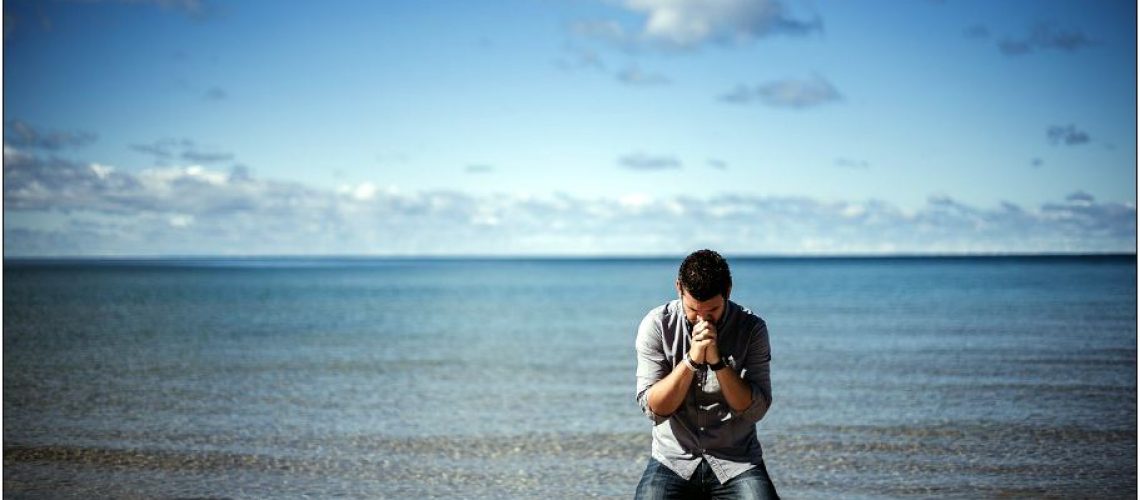
My soul yearns and pines for the courts of the Lord. My heart and flesh cry out for the living God (Ps. 84:3).
It is easy for Christians looking to deepen their prayer life to confuse centering prayer with authentic Christian contemplation. At first glance, the definition of centering prayer appears to be in line with Catholic teaching. Fr. Thomas Keating, OSCO developed Centering Prayer which he defines as:
a receptive method of Christian silent prayer which deepens our relationship with God, the Indwelling Presence…a prayer by which we can experience God’s presence within us (Contemplative Outreach).
Centering prayer evolved in the 1960s and 1970s when Fr. Keating was Abbot at St. Joseph Monastery in Spencer, Massachusetts. Simultaneously Fr. Thomas Merton had renewed interest in contemplation and was particularly drawn to Zen Buddhist practices. Spencer Massachusetts was a cornucopia of retreat houses at the time. Many of these houses had an Eastern orientation. Fr. Keating met multiple people who were seeking to meet a spiritual need with Eastern Meditation while being entirely ignorant of the Christian tradition. Fr. Keating developed Centering Prayer as a way to bridge this gap ( see “Meditation For Christians”).
According to Fr. Basil Pennington, OSCO the practice of Centering prayer is simple and seems innocuous:
- Sit comfortably with your eyes closed, relax, and quiet yourself. Be in love and faith to God.
- Choose a sacred word that best supports your sincere intention to be in the Lord’s presence and open to His divine action within you.
- Let that word be gently present as your symbol of your sincere intention to be in the Lord’s presence.
- Whenever you become aware of anything (thoughts, feelings, perceptions, images, associations, etc.), simply return to your sacred word and use it as your anchor.
Fr. Keating writes, “The method consists in letting go of every kind of thought during prayer, even the most devout thoughts.” (Open Mind, Open Heart, pg. 21). The Centering Prayer website Contemplative Outreach Sheds light on the sacred word and what it can be:
Examples of the sacred word are God, Jesus, Abba, Father, Mother, Mary, Amen, Mercy, Yes, Love, Listen, Peace, Let Go, Silence, Stillness, Faith, Trust. You can even choose a word from another language or a lyrical one such as Kyrie. Please notice if the word you receive causes an emotional reaction within you-whether negative or positive. If it does, you might want to pray for another word, as an emotional reaction during Centering Prayer is considered a thought and will take you out of the prayer.
One might note that several of these suggested sacred words are perhaps attributes or effects of God but are otherwise not representative of God Himself.
Doctor of the Church, St. Teresa of Jesus, OCD defined contemplation as “frequently taking time to be alone with Him who we know loves us” (The Book of Her Life). This is also the first paragraph in the Catechism of the Catholic Church #2709 on contemplation. St. John of the Cross, OCD states that the goal of prayer is the undefinable intimacy of divine union. The Catholic Catechism of the Catholic Church states that prayer is a personal relationship with the living and true God. In Story of a Soul, St. Therese of the Child Jesus and Holy Face expressed that:
For me, prayer is a surge of the heart; it is a simple look turned toward heaven, it is a cry of recognition and of love, embracing both trial and joy.
These descriptions describe a conscious acknowledgment of who one is, who God is, and striving to have an active relationship with Him through prayer. However, centering prayer negates one’s highest attribute, intelligence, and strives to empty the mind.
One argument against Centering prayer is that it baptizes Buddhism. Zazen is considered the heart of Japanese Sōtō Zen Buddhist practice. The aim of zazen is just sitting, that is, suspending all judgmental thinking and letting words, ideas, images, and thoughts pass by without getting involved in them. In the case of Centering prayer, if one finds themselves thinking about the water bill or what they want for lunch, we are instructed to repeat the sacred word which may, or may not be, related directly to God.
The Buddhist principle of “emptiness” is a goal one seeks to achieve that is not detachment described in the writings of St. John of the Cross. It is aimed at perceiving the true reality out of this existential nothingness. There is being and nothingness and to perceive something or someone as they truly are one must be empty. One would hope this does not mean a flat line of mental activity. What is quoted above about the use of the sacred word in Centering Prayer thought and feelings are not allowed. Fr. Keating noted that no thought, even the most devout, must be allowed.
This reminds me of the verse “When an unclean spirit goes out of a person it roams through arid regions searching for rest but finds none. Then it says, ‘I will return to my home from which I came.’ But upon returning, it finds it empty, swept clean, and put in order (Mt 12:43-44).” If Centering Prayer opens a door, how would one know who they are in relation with? It does not seem to be a leap of reason that the practice of Centering Prayer could lead to a door that lets the wrong one in.
More so if there have been doors opened by receiving the eucharist and not believing in the real presence and the opinion that chastity is optional. To my knowledge, there has never been a death certificate that stated a man or woman died due to lack of premarital sex. Our culture states sex is a need of high priority. involvement with the occult, Ouija boards, Tarot Cards, channeling, and the misuse of alcohol or drugs doors can be opened that would allow the enemy into one’s life. Why lay oneself open to attack whether one has a history of these, or not?
It could be said that Centering Prayer falls under New Age practices. The Pontifical Document Jesus Christ the Bearer of the Water of Life: A Christian Reflection of the “New Age” states:
And that is precisely why it is important to discover and recognize the fundamental characteristics of New Age ideas. What is offered is often described as simply “spiritual”, rather than belonging to any religion. (Fr. Keating advises that Centering Prayer is not to replace other types of prayer such as the rosary.) but there are much closer links to particular Eastern religions than many (“seekers”) realize. This is obviously important in “prayer” groups to which people choose to belong…All meditation techniques need to be purged of presumption and pretentiousness. Christian prayer is not an exercise in self-contemplation, stillness and self-emptying, but a dialogue of love, one which “implies an attitude of conversion, a flight from ‘self’ to the ‘You’ of God.
Fr. Thomas Merton in Mystics and Zen Masters relates,
insofar as Buddhists consider such affirmations and denials to be dualistic, therefore irrelevant to the main purpose of Buddhism, which is emancipation from all forms of dualistic thought.
Buddhism is not atheistic, agnostic nor theistic in and of itself. According to the tenets of Buddhism it is “OK” to believe in a God or gods but that deity, or deities, is not the end… God is neither confirmed nor denied in Buddhism (Catholicism and Buddhism). In Christianity having knowledge of who you are and an idea of who God is, and having a personal relationship with Him IS the end. It is having a real relationship with a real God made manifest in Jesus and being conscience of the relationship.
The Congregation of Doctrine and issued the Letter to the Bishops of the Catholic Church on Some Aspects of Christian Meditation in 1989. In paragraph 12 the document states that it is an error to fuse Christian meditation with that which is not Christian Another error is committed. Another is to place the process of being empty is put same level as the revealed majesty of God in Jesus Christ whose shadow only can be seen in temporal reality. It can also be said that Centering prayer is a distortion of The Cloud of Unknowing and the writings of the early church Fathers on prayer and meditation. Supporters of Centering Prayer claim that these Vatican documents do not pertain to them since neither Centering Prayer nor Fr. Keating are directly named. My response is “If the shoe fits, wear it.”
St. Teresa Benedicta of the Cross saw the Carmelite charism of mental/contemplative prayer as “To stand before the face of God” (Edith Stein). The realization of this requires an “I” and “Thou” and the awareness that one is in relation with the Other. Fr. Keating also wrote on the practice of Lectio Divina which uses the word of God as the launching point for contemplation. Lectio Divina, mental prayer as taught by Sts. John of the Cross and Teresa of Jesus, the Jesus Prayer, the Rosary etc. are all tried and true ways to contemplate God and marvel at Him.
In the case of the Jesus prayer one could seek to be still and in the presence of God and repeat the prayer to focus which would be Christ-based, biblical, relational, and allow one to know who they are addressing. In the process of negating thoughts, images, emotions, et. al. how would one be sure they were not negating the “still quiet voice” of God that led Elijah to hide his face in his mantle? I do not believe that St. Bernard of Clairvaux, one of the founders of the Cistercian Order of Strict Observance, would approve of Centering Prayer brought to us by his son, Fr. Thomas Keating OCSO, now deceased.
It does not take much investigation to find that Centering Prayer is not Christ-centred, not Bible-based, or Christian and to be avoided.
Scripture texts in this work are taken from the New American Bible, revised edition © 2010, 1991, 1986, 1970. Confraternity of Christian Doctrine, Washington D.C. and are used by permission of the copyright owner. All Rights Reserved. No part of the New American Bible may be reproduced in any form without permission in writing from the copyright owner.




2 thoughts on “Centering Prayer: Don’t Let the Wrong One In”
One can’t achieve the inner peace fostered by Buddhism if one also believes one might end up in the flames of Hell or Purgatory.
This is an absolutely vital article. At least as far back as 2010, the Vatican had reported that there were “Too many cases where Catholic centres of spirituality are actively involved in diffusing New Age religiosity in the Church” (https://www.amazon.com/gp/aw/review/0819839787/R342TVIUK11X3S?ref=pf_ov_at_pdctrvw_srp). Did this get any better or did we just collectively move on to other topics? If not any better, this appears like glaring negligence.
Canon Law (#212) reminds knowledgeable lay people of the duty to make their voices heard.