

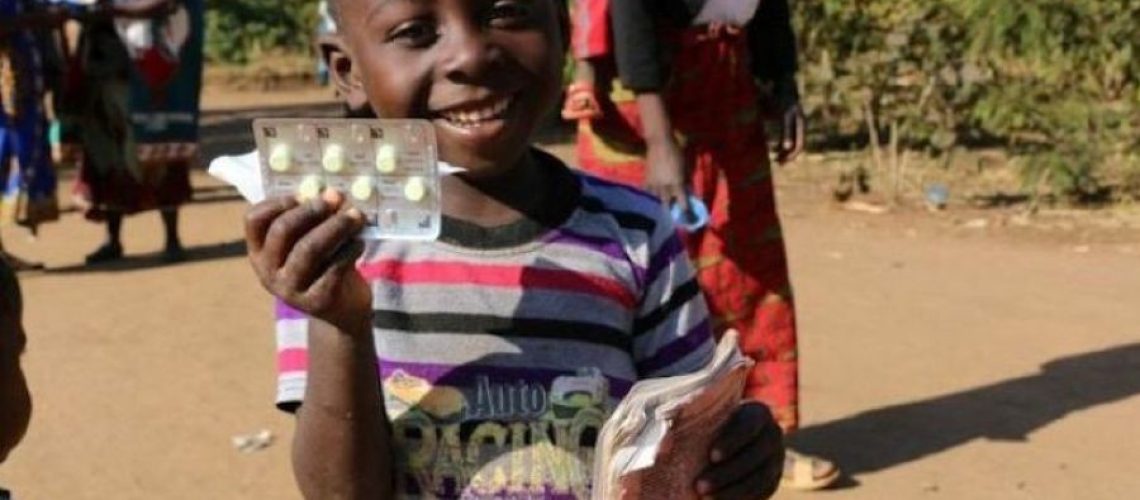
As one of the two most pressing of the corporal works of mercy, feeding the hungry is not just a nice thing for Catholics to do—it’s a moral imperative. Thus, two years ago, when I was asked to help recruit a CROP Walk team at my parish, I was eager to serve…but not without first undertaking a little cautionary research. So many charities that look good on paper have become inextricably entangled with abortion, contraception, the homosexual lifestyle, transgenderism, and other distortions antithetical to the natural law. These days, it is inadvisable to buy a cupcake from a little girl in pigtails without demanding her credentials.
Dimly recalling some controversy over CROP Walk years ago in Catholic circles, I prayed that my participation in this charitable venture could proceed wholeheartedly and uncomplicatedly. Unfortunately, as I began to investigate the policies of Church World Service, the walk’s parent organization, I felt a familiar sinking feeling in the pit of my stomach. Despite its appealing branding as a force against worldwide food insecurity, Church World Service has a darker side: early in its inception, it became involved with population control efforts. In “Crop Walk Stumbles: Two Dioceses Back Out” (National Catholic Register, October 13, 2002), Joseph O’Brien reported Church World Service’s involvement, dating back to the 1960s, with a dubious organization called Friends of Family Planning, later to become a Planned Parenthood affiliate. Judy McDowell, Church World Service’s community fundraising director, admitted that some of the nonprofit’s partners provided birth control. However, the agency’s support for contraceptives did not end there. In his article, O’Brien noted that roleplaying material on the nonprofit’s website characterized a poor mother’s access to birth control as critical to her family’s survival.
In addressing the controversy, Dr. Arthur Hippler of the LaCrosse Diocese noted that some Catholics had been attempting to morally participate in the CROP WALK by earmarking their donations for Catholic Relief Services (CRS), the humanitarian arm of the USCCB in the developing world. However, in the face of income-tracking challenges acknowledged by Church World Service, as well as confusing and contradictory statements about their position on family-planning measures, Dr. Hippler discouraged Catholics from involvement in the CROP Walk at all. Instead, he advised, Catholic dioceses should hold a dedicated walk for Catholic Relief Services. Since its 1943 establishment as the War Relief Services, CRS has held a respected place in the hearts of Catholics in the pews, to whom the little cardboard Rice Bowls assembled each Lent (where does that tab go into?) are as familiar as the smudges on their foreheads on Ash Wednesday.
While the idea of the alternative walk never took off, apparently, and I could find no evidence that Church World Service had changed its stance on the promotion of contraceptives, the agency seems to have made efforts to pursue a rapprochement with Catholics over the next few years. In the Diocese of Harrisburg, PA, the Lancaster Online stated that Bishop Kevin Rhodes had restored the CROP Walk to favor in 2006, after a three-year hiatus, thanks to a new procedure. Harrisburg walk organizers agreed to provide sponsorship forms to Catholic Charities personnel, who would specifically label the forms, funneling donations directly to Catholic Relief Services.
Since I could find no later instances of Catholic dioceses boycotting the CROP Walk, I concluded that Church World Service had, in fact, streamlined the donation process for Catholic parishes and that I could breathe easily about our parish donations going directly to a trusted Catholic agency. I accordingly suggested to my pastor that we direct all donations to CRS, and he willingly agreed.
However, when I attempted to navigate the CROP Walk donation portal for our local event, I found it cumbersome. In order to ensure that parish funds did reach Catholic Relief Services, I was forced to compile a step-by-step set of instructions to give to prospective donors, many of whom might not have had the patience for such a process, even if they were in sympathy with the reason for it. When I approached my pastor for help, he was unable to get clear directives from the local fundraising coordinator on earmarking donations. I can only speculate that since the firestorm of opposition to CROP Walk was localized to individual dioceses across the United States over a period of 3-4 years and now has virtually disappeared, accommodation for Catholic donors is no longer conscientiously and universally applied, if it ever was in the first place.
I was disappointed and distressed after the conclusion of the 2024 CROP Walk. Little did I know that my sense of helplessness in the face of warped charitable practices was only beginning. For better or for worse, there is a considerable smattering of Pollyanna in my character, so when I was asked the following year to help with the walk, I nearly took on the job. After all, I reasoned, last year had only been a trial run. Perhaps, this year, I would be able to develop a better system for making sure that parish donations reached Catholic Relief Services, a reliable, Church-approved organization infused with the Gospel of Life, not a troubled entity in collaboration with extremists pushing a population control agenda.
Even as I envisioned a positive outcome to the charity quandary, I had my doubts. In the intervening year, I had gotten some mixed messages about Catholic Relief Services; I had found myself unable, that Lent, to turn in my Rice Bowl donations at church or to grab a handful of extra cartons to peddle to my Sunday-morning middle school catechism class. I no longer expected to be able to type “CRS” into a Google search bar next to terms like “contraceptives” and “condoms” and absorb the consoling reassurance of “results not found.”
How could such a thing happen? How could the revered agency to which I had contributed pennies and dimes as a child, and which I had regarded as a safety net during the CROP Walk debacle, become, in my mind, “not safe?” How could I come to associate Catholic Relief Services with the same markers of moral decay that had turned Catholics away from Church World Service–a longtime association with population control efforts, the shell game of shifting blame onto partner organizations, and the spreading of shameless family-planning propaganda?
The spark which generated my doubts was a 130-page report, several years in the making, jointly released in March 2024 by Michael Hichborn of the Lepanto Institute and Steven Mosher of the Population Research Institute (PRI). A thorough investigation of several CRS programs in Cameroon, Zimbabwe, and Lesotho, the report compiles extensive documentation backed up by the interviews and observations of in-country investigators fluent in local languages. These on-the-ground researchers photographed manuals, flyers, and teaching aids promoting masturbation, condoms, and contraception, in some cases exposing children as young as 10 to corrupting moral influences. For those who are willing to take a deep dive into the problematic nature of these CRS projects, the full report, linked here, lepantoin.org/wp/wp-content/uploads/2024/03/Full-Investigation-Report-v6.pdf, will provide plenty of food for thought—though, as it did for me, it may raise more questions than it answers.
After reading through a number of Lepanto/PRI narratives, I began to notice an apparent response pattern to the disturbing sexual content unearthed by the investigators—a declaration by CRS that they had not been responsible for the objectionable material—one of their partners had. However, it is difficult to believe that CRS did not know what these partners were up to.
For instance, one of the cooperating agencies mentioned in the 2024 Lepanto/PRI report seems an especially repugnant ally for a Catholic organization. The National Network of Aunties’ Associations, more popularly known as RENATA, features the logo of a woman whose obviously pregnant abdomen is marked with an “X.” The Lepanto report details RENATA’s well-documented history of abortion advocacy in Cameroon—a tale that must have been well-known to Catholic Relief Services personnel, and yet they did not shrink from the partnership. In fact, a USAID organizational flowchart shows a two-way referral system between RENATA and a CRS-led initiative called KIDSS (Key Interventions to Develop Systems and Services for Orphans and Vulnerable Children).
Why would a Catholic aid organization voluntarily band together with an abortion-minded one? The answer goes back to the CRS funding model and its longstanding entrenchment with American soft-power politics. A February 2025 article in Forbes revealed that over the period from 2013-2022, Catholic Relief Services received $4.6 billion, a higher funding allotment than any other non-governmental organization, from the United States Agency for International Development (USAID). In tandem with the President’s Emergency Plan for AIDS Relief (PEPFAR) and other federal funding sources, this government program has provided a significant amount of CRS’s operating budget, though estimates vary from year to year. I have seen numbers ranging from 25 percent to over 70. If the latter number is accurate, CRS has been getting far more revenue from the politicians than from the pews.
This politicized humanitarianism comes at a price—further American aims or lose your aid package. When I read in the Lepanto/PRI report that USAID had been a population control effort from the beginning, I was skeptical. This is much too Orwellian to be in print, I told myself. However, pulling up the text of JFK’s Foreign Assistance Act of 1961, the piece of paper that brought us USAID, I was shocked to read that among laudable aims such as the improvement of literacy and the lowering of infant mortality, the Act calls explicitly for “control of population growth” (Section 102, C).
PEPFAR’s founding document, The United States Leadership Against HIV/AIDS, Tuberculosis, and Malaria Act of 2003, makes a remarkable statement about the role of Catholics (and stemming from that, the work of CRS) in HIV/AIDS relief: “The Catholic Church alone currently cares for one in four people being treated for AIDS worldwide” (Sec. 2,19). In almost the next breath, however, it attributes the remarkable progress in fighting HIV in Uganda to the “ABC model: “Abstain, Be faithful, use Condoms” (Sec. 2, 20, C). The incipient conflict of interest must have been quite an elephant for the Catholics in the room, and for a short space of time its resolution was an open question. In 2006, new PEPFAR legislation specified that 33 percent of HIV prevention funds were to be directed to abstinence education, but this requirement was scrapped after a two-year trial in favor of a so-called “science-based approach” to HIV prevention that touted the benefits of condom use.
Not surprisingly, in April 2008, Catholic theologian Germain Grisez raised questions in Catholic World Report about some CRS programming. In “The Church Betrayed?”, Grisez described questionable material in a flipchart circulated by the AIDSRelief project, under the leadership of CRS. Among the topics covered in the flipchart were descriptions of “safer sex” and graphics illustrating the use of male and female condoms (“The Church Betrayed?”, Catholic World Report, April 2008). Despite CRS’s policy of “comprehensive and accurate information on prevention,” Grisez noted an absence of failure rates for condoms over the extended period of time when HIV patients might be expected to use them to prevent viral spread. While the attached cover letter from Catholic Relief Services executive Jared Hoffman asserted the agency’s ownership of the document, it also stated that CRS’s logo would not appear on the flipchart, a strange omission given the agency’s confidence in its moral rectitude.
With quiet logic, Grisez pointed out the core dishonesty involved when agencies like CRS take liberties with Church doctrine in the name of charitable pragmatism:
Faithful Catholics who have donated to CRS in recent years for AIDS relief did so because they expected the program to be carried out in a distinctively Catholic way. Had they not expected this, they could have donated to a secular organization fighting AIDS. If CRS officials have used donations other than they have led donors to expect, CRS officials have misappropriated those funds.
When I consider the hoops I have willingly jumped through to reasonably ensure that my donations to charity are being used for (at least) morally neutral purposes, I do feel betrayed by the CRS-affiliated programming I have seen described in the Lepanto/PRI reports…and not only on my own behalf. Consider the valiant old ladies humbly saying their daily rosaries and dipping into their meager savings to feed hungry children, to buy them lifesaving drugs, when all the while their honest contributions have been possibly co-opted to refer innocent little girls to baby-killing networks. Consider the kindergarteners dropping pennies into their Rice Bowls to facilitate the printing of a manual written to normalize masturbation. In pure honesty, it is the responsibility of Catholic Relief Services to ensure that mistakes like this (if they are mistakes) just do not happen.
Some readers may scornfully point out that Americans living with full pantries, far from the scourge of HIV, have no business in imposing their moral standards on the residents of developing nations. Surely, however, those in the foreign aid game ought to hear the concerns of the people who live actually there—such as Gerard Lerotholi, Archbishop of Maseru, Lesotho, who informed Lepanto/PRI investigators that “CRS neither informs him about its activities in his archdiocese nor takes the views of the local Church into account.” Similarly, the agency needs to consider the rights of parents protecting their children’s innocence, like the Kenyans who demanded the modification of Healthy Choices II, a CRS-facilitated program heavily laden with language promoting the use of contraceptives. Catholic Relief Services should honor the convictions of Africans like biomedical scientist Obianuju Ekeocha, who wrote a letter in 2012 protesting the Gates Foundation’s pledge of nearly $5 billion to fund contraceptives in the developing world. After describing the radiant joy that accompanies childbirth in her homeland, despite the very real afflictions of poverty, she observed that Pope Pope VI’s Humanae Vitae is generally practiced there much more completely than in developed nations:
For these African women, in all humility, have heard, understood, and accepted the precious words of the prophetic pope. Funny how people with a much lower literacy level could clearly understand that which the average Vogue- and Cosmo-reading, high-class woman has refused to understand. I guess humility makes all the difference. (“An African Woman’s Letter to Melinda Gates.”)
Now serving as president of Culture of Life Africa, Ms. Ekeocha recently reflected on the potential for cultural restoration that may be the hidden silver lining to President Trump’s massive USAID cuts last winter:
It is an open secret that there have been immediate threats to African countries who have dared to defend traditional marriage or who have tried to pass laws considered “homophobic” by donors. Also, donor nations have compelled recipients to accept funding for things that have not been asked for, like the millions of dollars’ worth of condoms and contraceptives sent each year to developing countries…So whereas I believe that the defunding of USAID is abrupt and without warning, I also believe that it presents an opportunity for developing countries to review and reconsider our position and find actionable and realistic pathways to walk away from the unending cycle of year-to-year aid programs. (“Could Cuts to USAID Present an Opportunity to Counter Ideological Colonization Linked to Foreign Aid?”, National Catholic Register, March 20, 2025).
With reverence for the traditional family ethic so eloquently described by Obianuju Ekeocha, the American bishops need to thoroughly investigate the charges against CRs and conclusively sever its association with programs and partners who do not honor the truth and beauty of human sexuality. Steven Mosher and Michael Hichborn graciously put the machinery in place for Catholic leadership to express their concerns by sending the executive summary of their collaborative March 6, 2024, report to every diocesan bishop in the United States. Two days later, Sante Fe Archbishop John Webster, a member of the CRS Foundation Board, replied, “Your persistent persecution of this wonderful organization, which helps millions of people every year throughout the world, is deplorable. I pray that you might gain the prudence to cease and desist.”
Last week, I emailed Michael Hichborn to ask whether he had heard from any other bishops since that scathing communication nearly two years ago. In the face of such alarming evidence, they must have something to say. However, Mr. Hichborn told me that both CRS and the USCCB have maintained “complete radio silence.”
Into this throbbing silence, many Catholics are forced to read a complicity which scandalizes the faithful and overshadows the works of mercy carried out by Catholic Relief Services, a most distressing instance of self-sabotage. Let us have no more silence, but repentance and restoration of truth, so that people in the pews can once again fill their Rice Bowls in confidence.




11 thoughts on “Catholics, Contraceptives, and the Charity Problem”
Dorothy,
Thank you for this scholarly and inspiring piece! Thank you for referencing the late Germain Grisez, as well.as Michael Hichborn.and Obianuju Ekeocha.
God bless,
Joe Tevington
Dear Ordinary Papist,
Glad to “host” an earnest dialogue, however sideways. Just a gentle contradiction to your last post, though, that the conscience is not clear if one has neglected the duty to form it well. Moreover, those entrusted with the weighty task of forming the consciences of others need to fulfill their task with diligence and fast adherence to moral truth. Pertinent to the CRS controversy, remember Jesus’s words on those who “cause these little ones to go astray.”
So, let’s take the hierarchy of sins and the one virtue mentioned, to integrate what
the world believes works, doesn’t work or mitigates serious transgression.
On one side we have – abortion, adultery, fornication, condoms, birth control, and masturbation. On the other hand, we have, abstinence. Asking the world to forego sexual context is unnatural; it runs counter to natural law. Its for those who pursue ultimate perfection and willing to devote their life entirely to God. Very few throughout history have achieved it. Birth control is a ‘let the buyer beware’ decision. It’s your body and psyche that will be affected and raises the odds that fidelity will not be maintained. Fornication may be destructive, or not. Masturbation is universal, private and mostly without consequences for the single person. Adultery is never right; spiritual and temporal payback are guaranteed in spades. Abortion is a tragedy no less than a Holocaust.
[Comment Edited due to length]
The devil has a big influence on man, which is why “what the world believes” is often so wrong. And I think you mean the ‘laws of nature’ as opposed to natural law. Natural Law (Catechism #1954) is “written and engraved in the soul of each and every man, because it is human reason ordaining him to do good and forbidding him to sin.” But even regarding the laws of nature, man, unlike single-celled life forms, plants, and other animals, is capable of both choice and self-control. Sin (including masturbation) also always has consequences, even if not readily apparent to the ’worldly.’
Thanks, it is the laws of nature I was referring to. No, I don’t believe by any stretch that the other law is “written and engraved in the soul of each and every man, because it is human reason ordaining him to do good, forbidding him to sin.” There are evil people who were not given a conscience, History is filled to the brim with them. On your last point, ‘not readily apparent’ is inadmissible as fact. The whole gay thing, at its core, is mutual masturbation. has been here since Adam and Steve as the pun goes and always will be. It’s the Genghis Kahn’s I worry about. That and dictators.
In Romans 2:14-15, St. Paul says that, “For when the Gentiles who do not have the law by nature observe the prescriptions of the law … they show that the demands of the law are written in their hearts, while their conscience also bears witness.” So God, through St. Paul, is telling us that everyone has a conscience. But this is a truth, as opposed to a fact, just as is the effects of sin are often not readily apparent.
Yes, but your statement seems to indicate that they are all programed the same. It’s like saying everyone has a car but the range and quality differ vastly. The Law that St Paul talked about was the 600 commands that the gentiles were not subject to . . . yes, “They show that the work of the law is written on their hearts, while their conscience also bears witness, and their conflicting thoughts accuse or even excuse them”. As we once went around before on this topic, the third condition for sin is that you must know it is wrong. Yes, if the conscience tweaks, the offence is recorded as culpable, if it doesn’t, the conscious is cleared. Not than at any sin is free from corporeal or temporal justice. Anyway, I’m done with this particular thread and respect your knowledge on the subject.
Thank you, Dorothy, for letting us get sideways on your essay.
As a CS managing editor, I’ll claim the last word. My statement certainly does not indicate “they are all programmed the same.” We are all made by God and in His image. We are also all made for God so He has written His laws in our hearts. But we also have free choice, so we get to “program” ourselves – we can develop our consciences or not. And St. Paul is referring to the 10 Commandments, not the laws written in Leviticus which the Gentiles were not bound to follow. As for culpability, only God knows whether we are culpable or not.
Pingback: SVNDAY AFTERNOON EDITION – BIG PVLPIT
What we need to do, first of all, is to abandon the notion that we are responsible for the material welfare of every person on the planet. We don’t have to “feed the hungry”; there is no such moral imperative. The notion that there is such an imperative comes from a misexegesis of Matthew 25. It is needy Christians whom Jesus is identifying with, not needy people in general. His “brethren” and his “least ones” are his disciples, and no one else. A study of the text, and of the history of its interpretation, would confirm this — if only people would take the trouble to do the required study. They would soon discover that this is how the passage was universally understood for the first one thousand eight hundred years of church history. Do your homework.
G. Poulin, you should consider that it is your interpretation of the word neighbor in the Bible that is incorrect. Your constant (and tedious) claim that the word neighbor was “universally understood” to mean only other Christians is dubious.
The early Christians helped anyone they encountered, Christian and pagan alike. The early Church Fathers, and all reputable Bible scholars literate in Greek and Aramaic, throughout history, have interpreted the word neighbor in Mathew 25 as well as in Luke 10:29-37 as meaning anyone we encounter, Christian or pagan, who is need of help or compassion, whether that person is next door, in the next town, or on the other side of the globe. Scripture verses such as Mathew 5:44 (love your enemies), Galatians 6:10 (let us do good to all), and 1 Thessalonians 5:15 (for each other and for alI), back up this understanding of the word neighbor.