

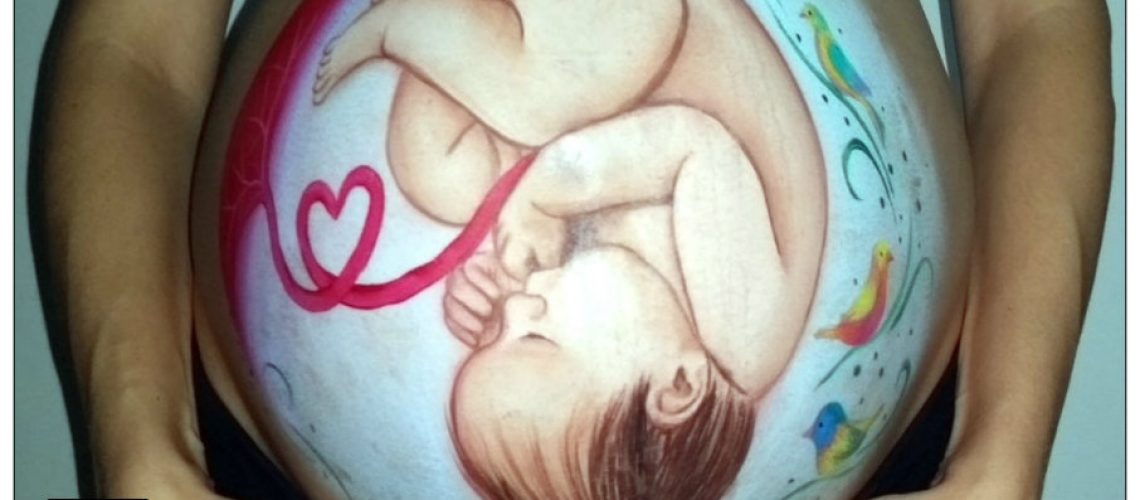
“It should soon be possible dramatically to increase the intelligence and life span of a few individuals. They and their offspring could become a master race. Evolution pays no regard to social justice. It was not fair on the Neanderthals they were replaced by modern humans.” Stephen Hawking, Brief Answers to the Big Questions.
ARE THERE ETHICAL CONSTRAINTS ON SCIENCE?
In the first article of this series I considered how the Catholic Church should deal with science. I argued that the Church should make no judgments on the scientific merit of theories, hypotheses or research. In this article, I’ll give an example of how the Church can set guidelines for the use of scientific research. Since there are no ethical constraints in the scientific enterprise, other than how one should do research, it is appropriate that the Church does set such guidelines.
A little background: When I was a graduate student some 70 years ago, my thesis director, E.B.Wilson, Jr, drilled our group on good ethical practices for doing research. Honesty, openness to criticism, and meticulous record-keeping were among the required qualities. But there was nothing said about the ethical consequences of a science project per se—whether one should consider how the results might be used.
It is true that granting agencies will impose restrictions on how human or animal subjects in a research program are treated, but again, these restrictions do not concern the ethical aspects of the research itself. Catholic teaching does impose constraints on particular kinds of research (I’ll speak to those below), but I don’t know of any general rules. And this is in accord with the notion that there are no values intrinsic to the scientific enterprise. There are general rules as to how research should be done (see, for example, “A Science Primer for the Faithful,” or How Science Works, Part III), but about consequences, how the results of science might be used? Nada!!!
Of course the Catholic Church has laid down general guidelines on how to avoid doing evil and for medical situations. The specific guide for genetic manipulation of humans is summarized below1.
CATHOLIC TEACHING ON GENETIC ENGINEERING
The Charter for Health Care Workers (Pontifical Council for Pastoral Assistance) gives the following general statement:
“In moral evaluation a distinction must be made between strictly <therapeutic> manipulation, which aims to cure illnesses caused by genetic or chromosome anomalies (genetic therapy), from manipulation <altering> the human genetic patrimony. A curative intervention, which is also called ‘genetic surgery,’ ‘will be considered desirable in principle. provided its purpose is the real promotion of the personal well-being of the individual, without damaging his integrity or worsening his condition of life.’…On the other hand, interventions which are not directly curative, the purpose of which is “the production of human beings selected according to sex or other predetermined qualities,” [emphasis added] which change the genotype of the individual and of the human species, “are contrary to the personal dignity of the human being, to his integrity and to his identity. Therefore they can be in no way justified on the pretext that they will produce some beneficial results for humanity in the future,’… ‘no social or scientific usefulness and no ideological purpose could ever justify an intervention on the human genome unless it be therapeutic, that is its finality must be the natural development of the human being.’ [emphasis added] ” Charter for Health Care Workers, Pontifical Council for Pastoral Assistance.
Note that the Charter carefully lays out the criterion for genetic treatment to remedy or cure a disease. For example, there are a number of diseases which are genetic in origin: Huntington’s chorea (Woody Guthrie’s disease), hemophilia, sickle cell anemia, susceptibility to breast cancer, to mention just a few. Can we conclude then, that God allows us to alter these defects, to enable us to live better lives? Suppose genetic therapy had been available to correct the childhood condition of Bl. Hermann Contractus, who was the author of the prayer Salve Regina (Hail Holy Queen) and who supposedly suffered from cleft palate and spinal defects. Would we then have had that prayer?
GENETIC TREATMENT OR ENHANCEMENT?
Let’s now consider borderline situations. What about diseases that may disable a person, or make him more liable to die, conditions which are secondary causes of disease: obesity (as a precondition for circulatory problems), depression (as a precondition for addiction or suicide)? How about babies with Down’s syndrome? Do the prescriptions laid out by the Charter tell us what to do in these cases? Would genetic manipulation to avoid such problems be treatment or enhancement?
The situation is clear for extreme examples: no genetic manipulation to get 180 IQ, 7 ft basketball players (if it be possible). Pope St. John Paul II made this abundantly clear in his address to the World Medical Association, as quoted in the encyclical Donum Vitae
“Each human person, in his absolutely unique singularity, is constituted not only by his spirit, but by his body as well. Thus, in the body and through the body, one touches the person himself in his concrete reality. To respect the dignity of man consequently amounts to safeguarding this identity of the man ‘copore et anima unus’ [body and soul one thing]…It is on the basis of this anthropological vision that one is to find the fundamental criteria for decision-making in the case of procedures which are not strictly therapeutic, as, for example, those aimed at the improvement of the human biological condition” Pope St. John Paul II, Address to the World Medical Association, as quoted in Donum Vitae
And this says it all. That which preserves the dignity and uniqueness of the human being as God has intended, is that which God allows. Enabling a designed class of superhumans will not bring happiness to the world, as fictional works have suggested (Brave New World and Beggars in Spain ). And the final question (to which I don’t know the answer), is there a slippery slope in genetic engineering such that we can’t control our descent? If we can replace the gene that causes Huntington’s chorea, will we then be content not to engineer the superman or superwoman?
Perhaps the answer is to find a gene that enhances our desire to be holy. As C.S. Lewis put it, the next evolutionary advance will not be in physical or mental improvement, but to be sons of God:
“…I should expect the next stage in Evolution not to be a stage in Evolution at all: I should expect that Evolution itself as a method of producing change will be superseded. And finally, I should not be surprised if, when the thing happened, very few people notice it ….it is a change that goes off in a totally different direction—a change from being creatures of God to being sons of God… [t]he first instance appeared in Palestine two thousand years ago.” C.S. Lewis, Mere Christianity.
NOTE
1 I’ve discussed these constraints in more detail in “Designer Babies via CRISPR/cas19.”




4 thoughts on “Catholic Guidelines for Science, <br>Part 2: Catholic Teaching on Designer Babies”
Pingback: TVESDAY EDITION – Big Pulpit
From what I understand of the cryptic lyrics of those times – I once lost $50 as editorial writer to a student 10 years junior who translated lyrics to a popular song that went right over my head -this is what it implies. At near the speed of light the folks in a starship will age slower; gravity comes with a price. We are already planning to drill into the ocean beneath Europa with a giant radiating Jupiter hovering close by (its a stretch). Hydroponic gardens are what might save us in the future as we augment our food production. Our progeny will leave Earth someday and not return as we are prone to wander. The physical characteristics of alien life as envisioned by Hollywood shows creatures that are iridescent and transparent following the logic that their bodies had changed over eons of evolution. Anyway, this is what you inspired.
Thank OP for your comment. This old guy was out of touch during the 60’s and 70’s, holed away in my lab, so I’m not familiar with what was going on then. I don’t understand the lyrics you quote, but it reminds me of the finale of Arthur C. Clarke’s “Childhood’s End.”
In 1970, the Jefferson Starship produced an anti-war, pro-science album titled, Blows Against the Empire. It was seditious to say the least but resonated well with the hippie, veteran and environmentally sensitive generation not yet in power. Retro back to Genesis and God’s command not to kill, eat green, then look at the 15% in the US and much higher in countries that practice the Hindu faith, that do not eat animal products. Getting “ …back to the garden” as the track ‘Starship’ entails says it all, far as humanity evolving into a different ..form or shape of our soul. So I’ll leave you with some prophetic lyrics to ponder while science tinkers with one aspect of itself. ” Spilling out of the steel glass, gravity gone from the cage, a million pounds gone from your heavy mass all the years gone from your age. hydroponic gardens and forests glistening with lakes in the Jupiter starlite. We come and go like comets we are wanderers. Are you any more ? At first I was iridescent, then I became transparent, finally I was essence.”