

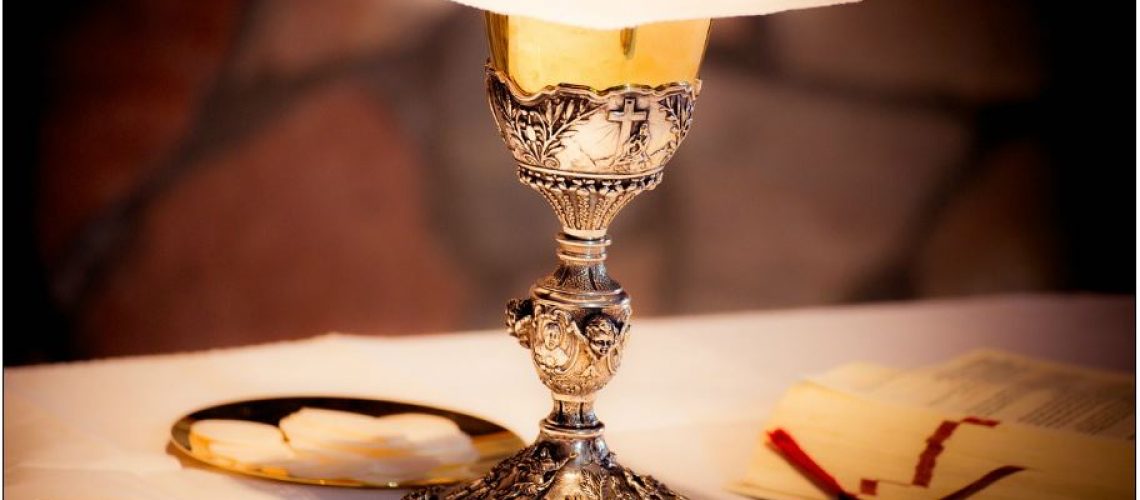
Pope Francis motu proprio Traditionis Custodes, is a game changer in the Catholic Church. Instead of defending “the unity of the Body of Christ,” it will only provoke more disunity.
The counsel to “offer it up” has always been good advice. Offering up our hurts, pain, disappointments, slights, and even unpleasant chores can help to unite us to the Passion of our Lord and Savior.
As a youngster I had my fair share of skinned knees, bruises, minor lacerations, and fractures. If I was in any pain associated with my wound de jour, my mother always told me to “offer it up” while tending the injury. The first couple times the suggestion was made it was accompanied by the words, “for the poor souls in purgatory.” From then on it was simply “Offer it up.”
The three words are actually a kind of proverb.
They are first and foremost a reminder that we are all going to have crosses to bear in the form of pain, hurts, or disappointments. Life is not easy, nor is life fair. That’s just the way it is thanks to Adam and Eve. But by joining our suffering to Christ’s and offering it up, good can come out of our suffering.
The three words are also a reminder of Christ’s sacrifice for us. I shudder every time I think about the horrible pain and agony He endured for our sake. As I’ve written before, Mel Gibson’s movie The Passion of the Christ really puts Jesus Christ’s sacrifice for us into perspective.
My mother’s instruction to offer it up stuck with me over the years. The phrase came to mind again earlier this year when my wife and I began attending the Sunday Novus Ordo Masses at our parish once again.
A TLM Revert
Even though we are dispensed from attending Mass because of our age, we never felt right about not going to Mass during the ‘pandemic.’ After attending a sparsely populated Midnight Mass on Christmas Eve (2020), we decided that a microscopic bug was no longer going to keep us from Mass or from receiving Holy Communion.
During the early stages of the ‘pandemic’ my wife and I watched live-streamed Masses from St. John Cantius in Chicago, IL. St. John Cantius’ Masses are in keeping with the Extraordinary Form. Mass is said in either Latin or English, accompanied by Gregorian chant.
And this is the reason ‘offer it up’ came to mind.
A couple weeks after we resumed attending the Sunday Novus Ordo Mass at our parish, my wife surprised me. “After watching the Masses at St. John Cantius,” she said, “I don’t know if I want to go to Mass here anymore.”
Coming from my wife this was quite a comment. While my wife prefers the TLM to the Novus Ordo, she readily accepted the Novus Ordo Mass after attending her first ‘guitar Mass’ in high school. But after once again regularly experiencing the beauty and reverence of the Traditional Latin Mass (TLM), my wife has become a died-in-the-wool TLM Revert. She now feels the ‘new Mass’ really does not hold a candle to the ‘old Mass.’
After re-experiencing the beauty of Gregorian Chant, my wife also now agrees with me that the contemporary praise and worship music today is really not suitable for Mass. In short, she now thinks that beauty, reverence, piousness, and solemnity is wholly lacking in the Novus Ordo Mass.
And, so, all I could think of to say to her was “Offer it up,” which is what I have been doing for many years.
Offering It Up
Even as I looked forward to going to Mass on Saturday evening or Sunday and receiving Holy Communion, part of me dreaded having to sit through what I considered a less than reverent and holy Mass. The contemporary music ‘performances,’ the various affectations during the sign of peace, the hand holding and raised arms during the Our Father, and Communion in the hand, instead of adding to the Mass were all detractions as far as I was concerned. So I would offer up my disappointment and discomfort for the poor souls in purgatory.
I’m not quite sure what affect such a sentiment has, if any. Is it even possible to offer up such a disappointment? I know the Novus Ordo is a legitimate Mass, so is disappointment at having to attend a Novus Ordo Mass even a right and proper sentiment?
At the same time, Mass at our parish has occasioned a number of liturgical abuses. A few of the more disturbing abuses have been:
- The music director delivering the homily one Sunday (a violation of Canon 767);
- Adlibs by priests at various points during Mass at almost every Mass;
- A woman in a red dress with a ‘bowl’ of incense leading the entrance procession on Pentecost Sunday, dancing and weaving up and down the aisles and even incensing the altar;
- And, most recently, the priest not showing up for Mass one Sunday, whereupon the music director asked a parishioner to stand in for the priest to offer a short, quasi-Mass (this is liturgical abuse of the highest order, a violation of Canon 907).
If such abuses are happening in our parish I have to think they are taking place at other parishes as well.
What’s the Big Deal?
As Pope St. John Paul II said in his in his Apostolic Letter “Vicesimus Quintus Annus” (Dec. 4, 1988):
“The Liturgy belongs to the whole body of the Church. It is for this reason that it is not permitted to anyone, even the priest, or any group, to subtract or change anything whatsoever on their own initiative. Fidelity to the rites and to the authentic texts of the Liturgy is a requirement of the Lex orandi, which must always be in conformity with the Lex credendi. A lack of fidelity on this point may even affect the very validity of the sacraments” [Part III, #10, paragraph 4].
Priests adlibbing during Mass, a layperson delivering a homily, someone other than the priest incensing the altar, and so on may not seem like a big deal to some Catholics. Some may even like such attempts at ‘diversification.’ But Pope St. John Paul addressed this as well:
“Liturgical diversity can be a source of enrichment, but it can also provoke tensions, mutual misunderstandings and even divisions. In this field it is clear that diversity must not damage unity” [Part V, #16].
In my humble opinion, diversity is a flaw in the Novus Ordo Mass. The rubrics are intentionally somewhat loose to allow for local customs. And since Mass is said in the local vernacular it is far too easy make changes to the Mass that result in tensions, misunderstandings, and even divisions.
An Unfair Criticism
CS Writer Christian Daru recently wrote an article that was critical of Fr. John Zuhlsdorf’s (Fr. Z’s) defense of the TLM and his advocating (along with others) for doing away with the Novus Ordo Mass. Daru contends that throughout the history of the Church the TLM has never really been a source of unity.
“Unity then comes through loving and teaching and these two things require study and practice. The Mass is a powerful tool for teaching, but it is only an hour to an hour and a half once a week” wrote Daru.
But with all due respect to Daru, Jesus Christ is the source of unity for the Catholic Church, and how we worship our Lord and Savior does matter. The Mass is much more than “a powerful tool for teaching.” That hour or hour and a half should be the high point of every Catholic’s week. As Pope St. John Paul II wrote in Ecclesia de Eucharistia,
“The Second Vatican Council rightly proclaimed that the Eucharistic sacrifice is “the source and summit of the Christian life.” “For the most holy Eucharist contains the Church’s entire spiritual wealth: Christ himself, our passover and living bread. Through his own flesh, now made living and life-giving by the Holy Spirit, he offers life to men.” Consequently the gaze of the Church is constantly turned to her Lord, present in the Sacrament of the Altar, in which she discovers the full manifestation of his boundless love.”
The Unity of the TLM
Daru also wrote, ”In the same post Fr. Z also likens the Novus Ordo Mass (I shall henceforth refer to as the Contemporary Mass) to being in “chains.” But this is not what Fr. Z was saying.
Fr. Z was simply drawing a comparison. He was saying that the opponents of Summorum Pontificum are like those who were behind the “Fugitive Slave Act of 1850” in that they do not want to allow Catholics the freedom of attending a TLM. In other words the opponents of the TLM want to keep Catholics chained to the Novus Ordo. There is a distinct difference in these two interpretations.
As Fr. Z, and many others, are so fond of saying, “lex orandi, lex credendi,” or ‘how we pray shapes how we believe.’ The rubrics for the TLM pretty much guarantee a solemn, holy Mass that is pious and reverent, that focuses on worshiping God.
This is the unity the TLM provides – the Mass is exactly the same wherever one happens to be throughout the world. (I called this out in an article I wrote for CS five years ago.) The Novus Ordo Mass does not provide this same kind of unity.
A Simple Solution
The Novus Ordo Mass can be celebrated in a manner that is reverent and pious, even when the priest says Mass versus populum. The problem is that in too many parishes, Novus Ordo Masses are rife with liturgical abuse – and diversity. Too often they are a laid back, ‘community meal’ as opposed to ‘the sacrifice of the Mass.’
Now Pope Francis has issued a motu proprio called Traditionis Custodes, overturning Pope Benedict VI’s motu proprio Summorum Pontificum that “acknowledged the right of all priests to say Mass using the Roman Missal of 1962.” Pope Francis’ decision is a colossal mistake in judgement, in my humble opinion. Ironically, Pope Francis says his decision to put restrictions on the TLM is “In defense of the unity of the Body of Christ.”
Of course there is a simple solution to the Novus Ordo / TLM issue – allow Mass in both forms in all parishes. I really do not understand why so many of our Cardinals and Bishops, and Pope Francis, seem to find this idea unacceptable. It appears some even seem to find it reprehensible.
And so the Liturgy Wars will continue.
(Note: The Latin Mass Directory website lists 654 venues for the Latin Mass in the U.S., 156 in Great Britain, and 43 in Canada. It also lists venues for Latin Masses in 60 additional countries.)


27 thoughts on “Can ‘Offer it Up’ Apply to the Novus Ordo Mass?”
Hi Peter,
Your dad and my dad (The Greatest Generation) had similar experiences. I mentioned my dad’s experience in my CS article “The Intrusion of the Secular” (2016).
“There is no disunity in offering both forms of the Mass in all parishes.”
Yes! You would think that those of us who attend the TLM are trying to obliterate the NO. That is certainly not on the minds of any of us, excepting a few Sedes and other fanatics. So why this rush to eradicate the Mass of the Ages? As for those who site that the NO is now 50 years old, how long has the TLM existed? You and I know the answer to that, don’t we?
What we have here is a competition in which TLM attendees want no part of. The pope and those who would deny us the TLM find no such demand from us. We advocate for allowing both, done reverently.
As for the line about not being able to comprehend what is going on in the TLM, I would propose that someone would be required to attend the mass of the ages before making such a statement. First of all, observing the priest and altar boys, makes all of the Mass parts obvious. Second, whether a simple booklet or a Latin missal, there are resources for reading along in English.
Some who come to worship in the TLM, do so by observing and becoming spiritually immersed in the Mystery. I use my Lasance missal to follow along. By the way, I do not “speak“ Latin. Either way, I personally find the TLM much less complicated than the constant busyness of the NO. Yet, I would not begrudge an NO attendee their preferred option. Why would they deny me mine?
Hi Birgit,
An excellent and confounding question. And yet they say we are the ones who are “rigid” and Pharisaical.
Thank-you for your response.
I agree with you. The problem occurred when the pastors did not read the documents and teach from the pulpit. I was not raised in the Church, however, a family friend took me to mass and it was so, so beautiful. I wanted to be Catholic. When I finally attended my 2nd mass – it was not the same! I was so disappointed. I was in confusion. When I finally had the opportunity (and Grace) to convert, I understood what was going on, but never had another opportunity to attend a TLM. Now, finally, I can attend both. So much confusion could have been avoided if pastors had been educated and then the laity – From The Pulpit.
Now, so many years later, now it seems to be up to a few, to finally rally and call out to our grandchildren to come! Learn! Be fed.🙏🏽
Again, thank-you for your essay. God bless you.
“There is one body and one Spirit, just as you were called to the one hope that belongs to your call, one Lord, one faith, one baptism, one God and Father of us all, who is above all and through all and in all.” ~ Ephesians 4
To say that it is necessary to accept the validity and liciety of the Second Vatican Council would certainly be true (that would be a consequence of “one faith”). But then, sedevacantists are about the only people who could be considered Catholic who reject either (besides those who do not really understand what “validity” and “liciety” are). The FSSP and the ICKSP certainly accept that – even the SSPX do.
Differences in style of worship are not signs of disunity. We have 24 Churches sui juris, 23 of them Eastern Catholic, with very different liturgical rites, extra-liturgical customs, calendars, and lectionaries. No one can claim they are not Catholic, or that their differences are somehow disunifying, or performed merely to be seen (for all the smells, bells, ornate vestments, and liturgical pomp and beauty to be found there). For all the differences in worship, each celebrates valid, licit liturgies according to approved rites. The Second Vatican Council is notable for being a turning point in the relations between Latin and Eastern Catholics, protecting the right of Easterns to hold fast to their customs, even in countries where there is a Latin majority which does not understand them, even if it means celebrating Easter on a different day – long a sign of unity. It was a long overdue act of respect for the spirituality and traditions of those who are undeniably quite different from the majority of the Council Fathers.
Catholics registered at FSSP and ICKSP parishes outnumber all but 2 of the Eastern Churches, and this does not count those who regularly worship at diocesan Tridentine Masses, or who would, if they lived close enough. The small proportion that are sedevacantist are easily matched by the Novus Ordo Latins that reject established Church doctrine on such things as abortion, contraception, gay marriage, etc. – some with more public attention paid to them than any rad trad blogger could dream of. And by Eastern Catholics who sometimes have trouble with allowing second marriages while the first is recognized as valid and both spouses are alive. If these acts of disunity by a few can be tolerated without shutting down the associated liturgical rites, why suppress the Tridentine rite?
This is not an issue of NO vs TLM or 99.9% who attend either. This is an issue of a very small but obviously influential group who is trying to divide and conquer. Yes, you can bet they are “rigid”. Yes, they seek dis-unity! Gene your “simple solution” plays right into their hand. Instead you should “stand fast” with the Pope who gives his reasons here (and addresses your concerns about “diversity”):
https://press.vatican.va/content/salastampa/it/bollettino/pubblico/2021/07/16/0469/01015.html#ingL
Victor, if you take the time to read my Liturgy Wars article (linked to at the end of my article) and the comments after it, you will see that my solution was rejected by the likes of Dr. Peter Kwasniewski. So, no, it does not play into the hands of those advocating for the TLM only.
Which Pope is being more unifying and pastoral, the one who says ‘both the NO and the TLM are licit forms, so let both be offered,’ or the one who says, ‘I don’t care if both forms are licit, the TLM needs to be quashed”?
I have read the reasons Pope Francis (who I have defended numerous times in articles here at CS) provides. They may sound good but read them carefully. They are not rationale or logical.
“Which Pope is”?! Now your true colors are shining through.
It’s a fair question. However, avoiding the question by trying to impugn the character of the person asking the question is a very weak response.
Your “fair question” is like asking to simplify 1/0. There is only one Pope, but you seem to suggest otherwise. Our Holy Father has decided to release documents of which only one official translation is available, English. And if you take the time to read them, they say the TLM movement basically messed with the wrong guy. The TLM movement, similar to BLM, has an agenda altogether different from their public facade. Pope Francis tells us this is so, “[our Olive branch] has often been seriously disregarded. An opportunity offered by St. John Paul II and, with even greater magnanimity, by Benedict XVI, intended to recover the unity of [what we now know as anti-Catholic agents], was exploited to widen the gaps, reinforce the divergences, and encourage disagreements that injure the Church, block her path, and expose her to the peril of division.”
So, in other words, you were duped, led astray, but now your good shepherd has rescued you. AND you still get to attend Latin Masses closely monitored by your Bishop!
Victor, I’m sorry, but you are wrong. It is a fair question. There are also two Popes, Pope Francis and Pope Emeritus Benedict VI. Even so the Catholic Church has had another 260+ men who are called Popes. So no more trying to split hairs.
Your opinion that “the TLM movement, similar to BLM, has an agenda altogether different from their public façade” is highly speculative and even conspiratorial. And if you are trying to imply that perhaps SSPX is “the TLM movement,” that you would compare SSPX to a Marxist organization like BLM is outrageous. There is no “TLM movement.” There are however, millions of Catholics who prefer the TLM to the NO. This is in no way a conspiracy. Just a simple matter of preference in how they worship God. Suggesting that these millions of Catholics have all been duped or led astray is ludicrous.
There was also no “olive branch” as you say in you paraphrased quote. The full sentence is “Regrettably, the PASTORAL OBJECTIVE OF MY PREDECESSORS [my emphasis], who had intended “to do everything possible to ensure that all those who truly possessed the desire for unity would find it possible to remain in this unity or to rediscover it anew” has often been seriously disregarded.”
So it sounds like Pope St. John Paul II and Pope Benedict VI were the ones who were trying to be pastoral. Imagine that!
Pope Francis also says the responses to a survey the Congregation for the Doctrine of the Faith conducted with “the Bishops” has resulted in his Moto Proprio. But missing in all this is how many Bishops were surveyed (all 5,600 of them, a portion of them, a select group or number?) what the responses were, and how many responses were received out of all 5,600 Bishops. Given what is generally known about Vatican politics it is very possible these details were kept from Pope Francis. Just WHO has disregarded the PASTORAL OBJECTIVE OF MY PREDECESSORS is a pretty important detail that is woefully lacking on all this.
Elisha sent a messenger to say to him, “Go, wash yourself seven times in the Jordan, and your flesh will be restored and you will be cleansed.”
Indeed, many are the conceits of human beings; evil imaginations lead them astray.
The “Liturgy War” in the Roman Catholic Church was won by our Eastern Orthodox members and the Anglican Ordinariate. My personal experience with those who prefer on over the other regarding the Ordinary and Extra-Ordinary Form is intentional disunity. As seen in the example of TLM members and their worship of His Highness Pope Trump this past year and the Novus tambourines with Sister Pelosi. Include with both the support of the one and the same QAnon-Antifa.
Matthias was chosen over Barsabbas. I don’t recall the “simple solution” being that both should just be ordained to please the small group in opposition to Peter.
Mathius, your personal experience is analogous at best. I prefer the TLM yet I am advocating for the availability of both forms for the sake of unity.
Pingback: SVNDAY EDITION – Big Pulpit
Do you feel that it’s possible to find order and understanding over the long run, canon breeches not withstanding, from this evolution of the order of the mass now 50 plus years old. I listened to a sermon once by a wonderful priest who mentioned a very large creche at Christmas in NYC. I understand that it contains thousands of figurines and tableaux of every
human activity. In the middle of it all is the holy family, quite nondescript and representing
Christ as part of humanity. It sounds like your experience is something like this, hence, the question of view the mass in context. For what it is worth.
As I stated in my article (reiterated in my response to Kyle), there is a kind of unity the TLM provides that the Novus Ordo does not. That being said, I have attended reverent Novus Ordo Masses that were wonderful worship experiences and very spiritually uplifting. But liberal priests (and liberal parish Worship Committees/Commissions) playing fast and loose with the rubrics of the Novus Ordo Mass is a problem that needs to be corrected. Offer reverent NO Masses and reverent TLM’s and let the pew sitters decide which one they want to attend. Time will tell.
We attend the novus ordo mass at a Benedictine Abber & Seminary. The mass is solemn and very holy. We often chant along the responses in both English or Latin. I have spoken up before and told “that’s nice.” I want it understood that the younger generations do not understand Latin and cannot comprehend that a person would attend a mass in a foreign language unless it was the only choice. (We have attended Spanish only masses in Mexico) When I asked one of the professors if there was an opportunity for the seminarians to learn the Latin mass, he said that they offered it but the Bishops said no.
At our parish I once belonged to a Latin schola and the one Sunday a month we led the Latin responses HALF the parish went someplace else for mass. That is the disunity the pope is referring to.
What is my point? The education of the laity needs to be repaired. The Church lost a few when the mass was said in the vernacular, but looses many when Latin is offered as the only choice. E.d.u.c.a.t.i.o.n. We must begin by educating the laity at every level.
Thank-you.
What type of education are you referring to? Are you implying that everyone should learn latin?
When the Mass was said only in Latin, the Church was still growing. Mass attendance was at its peak. When the N.O. was imposed, a great many, not just few, left for good. That’s what really happened. The N.O. is an experiment that has failed.
Katy, While there are some Catholics advocating for doing away with the Novus Ordo, I think it’s pretty clear from my article that I am not one of them.
The solution to the liturgy wars is allowing both forms of the Mass. Those who would attempt to “outlaw” the TLM are on par with those who want the Novus Ordo outlawed.
At the same time, the drop in Catholics attending Sunday Mass since 1965 is nothing less than alarming. The Church lost more than just a “few” since the implementation of the Novus Ordo. Sunday mass attendance has gone from 55% to 22% of Catholics. (But, in fairness, this drop is not only because of the Novus Ordo.) Also, despite your own observations, the TLM is actually attracting more young people than the Novus Ordo.
There is no connection there. The changes in the world and the free flow of information caused the changes in my opinion. The form of the mass had nothing to do with it.
You are certainly entitled to your opinion, Kyle, but your opinion places you in a very small minority. It’s generally agreed that were a number of causes for the drop off in Mass attendance, but the changes to the Mass was definitely a factor. How significant a factor is the only question that is still being debated.
As you quoted JPII – “diversity must not damage unity” – Pope Francis is working to eliminate the TLM which damages unity. Reciting the same technical words as part of a mass but not knowing what they mean is faux unity. True unity is sharing the same beliefs and ideas even though they are said in different languages.
Additionally, the TLM subscribers seem to me to once again be similar to the Pharisees that Jesus condemned. Jesus said of the Pharisees “All their works are performed to be seen. They widen their phylacteries and lengthen their tassels” as he condemned them for focusing on the things that don’t matter. Those subscribing to the TLM seem to have fallen into this same trap. They forget why we’re at mass. The pageantry and show are not the important aspects. The holiness is not in the details and form but rather the purpose. I think Pope Francis sees this the same way I do. There is a wing of the church that is mildly schismatic in what they believe and practice, and he is trying to rein them back in.
Kyle, allowing the TLM does not damage the unity of the Catholic Church. Both the Novus Ordo and the TLM are legitimate forms of the Mass. Jesus Christ and His teachings are our unity, whether Mass is said in Latin, English, German or French.
You liken those who prefer the TLM to Pharisees. Can you not see how trying to outlaw the TLM and force those who like the TLM to attend only Novus Ordo Masses is also Pharisaical?
My point in this article was only to clarify ‘a kind of unity’ that the TLM offers that the Novus Ordo does not – the exact same Mass, in the same language, no matter where in the world the Mass is offered. As an English only speaking individual I was quite ‘lost’ when I attended a Mass offered in Spanish. I would also be lost at a Mass said in German or French.
The other point I am making is one I think we agree on – that our worship of God, whether at a Novus Ordo Mass or a TLM, should be reverent and pious. But when loose rubrics and diversity results in liturgical abuse, worship becomes irreverent. Holiness (reverence) is, in fact, in the details. That’s why rubrics exist. I have been to too many Novus Ordo Masses (in my parish and others) that played fast and loose with the rubrics of the Mass which resulted in Masses that were neither pious not reverent. A REVERENT Novus Ordo Mass, however, is every bit a legitimate form of worship as a TLM.
I still prefer the TLM but that does not make me a Pharisee. If you prefer the Novus Ordo, good for you. As I have written before, some Catholics prefer the Novus Ordo and some prefer the TLM. That’s fine. There is no disunity in offering both forms of the Mass in all parishes.