

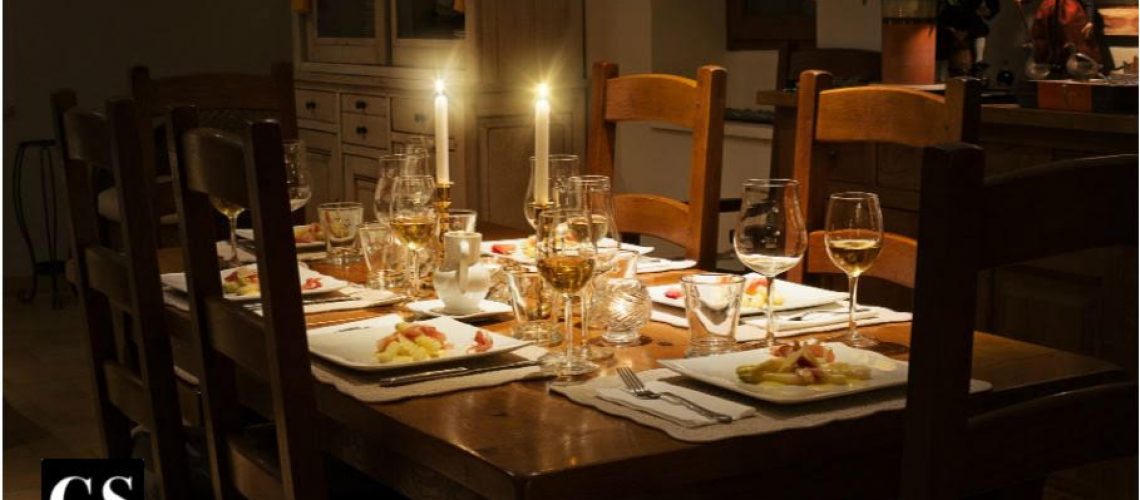
Thanksgiving is coming up quickly, with Advent and Christmas following close behind. With snow in the forecast and decorations in all the stores, it’s time for some of us to start worrying about how to host family gatherings again.
The Thanksgiving table is almost a caricature these days. We used to joke about arguing relatives and awkward dinner conversations, but recently it’s become less humorous and more painful. Thanksgiving is now that frustrating, post-election holiday where at least one relative brings an opinion (and a bit of bitterness) to the table. Whether we’re looking to avoid combative relatives, or just preserve the Catholic family culture we’ve worked so hard to create, the holiday season can feel like a minefield. Should we invite Cousin Rick and his boyfriend? Should Uncle Mike come at all? Should we tell Grandma to stay home unless she can keep her political views to herself?
A Recent Trend
When I was a child, we never would have considered rescinding an invitation to a relative. Family was sacred in a way that precluded keeping relatives out of the house at Christmastime. But these days, millennial parents and their families are a bit more discerning. I’m not sure it’s the best course, but being a millennial parent, I can sympathize as well. Raising children in the faith is hard enough, we don’t need to find out that Aunt Eudoxia got drunk again and told little Athanasius all about her ex-husband’s affair with the Zumba instructor.
Those holiday party conversations may have been standard parts of our childhood, but they didn’t really do us any good. We want better for our children. So millennial parents are laying down the law when it comes to inviting relatives home for the holidays: “My house, my rules. Be a good guest or stay home.”
Obviously, it ruffles some feathers. In practice, the trend toward winnowed down holiday gatherings is both good and bad. On the one hand, it gives us an opportunity to build new, stronger traditions with and for our children. It allows us to protect them from the less healthy holiday situations that inspired a plethora of ‘90s Christmas movies and skits. Everything from National Lampoon’s Christmas Vacation to The Christmas Story. But disinviting family has its drawbacks too. Our families are a huge part of who we are – and denying our children the opportunity to know them, in all their flaws, teaches our kids that only the perfect are welcome in our home. When they fall, they might not even expect grace from us – after all, they never saw us bear patiently with the failings of others.
Healthy boundaries support healthy family life, but sometimes – especially in the past few years, we mistake boundaries for bullying and isolate everyone who doesn’t conform to our ideals. If you’re working through the minefield of holiday hosting this year and trying to come up with a guest list that both honors your parents and nurtures your children, there are a few things to keep in mind.
Respect for the Person
Sometimes we just don’t want to invite a family member because they’re obnoxious. It’s not that a relative is destructive or dangerous, it’s just that he disagrees on every issue and won’t keep his opinions to himself.
If you’re hosting a private party, then of course, don’t invite him. But if you’re hosting a family gathering, don’t exclude a relative just because you don’t want to talk to him. The Catechism of the Catholic Church reminds us that “filial respect promotes harmony in all of family life; it also concerns relationships between brothers and sisters” and reminds us of Paul’s words in Ephesians 4:2, “With all humility and meekness, with patience, [support] one another in charity” (CCC 2219).
If you can show respect for a family member, then take the opportunity to do so in the Advent and Christmas seasons. This is the time when we particularly remember Mary’s graciousness to her cousin Elizabeth and Joseph’s return to Bethlehem, the place of his family’s roots. Allow your children to know their frustrating relatives as well as their comforting ones. Help them learn to navigate those challenging relations now so that they have the skills they’ll need later in life.
Gratitude
“Honor thy father and mother” might be one of the most frustrating of the 10 Commandments for thirtysomething Catholics in this decade. In fact, millennial’s dislike for their parents’ generation, and longstanding conflict with their own parents, is almost comically overblown at this point. But the Catechism reminds us that – whatever our conflicts with the older generation, “a special gratitude is due to those from whom [we] have received the gift of faith, the grace of Baptism, and life in the Church” (CCC 2220). Even if your formation in faith was problematic at best, if your parents had you baptized and passed on some aspects of the faith to you, be grateful.
Of course you can also mourn their failures too. Most millennial Catholics are recovering from some really awful formation. Remember that your parents are also recovering from poor formation. None of us are perfect. If there’s any way to healthily welcome your parents to share the season with you, do it.
Well-Being
Not everyone is willing to accept your hospitality. Hospitality doesn’t mean sacrificing your morals, values, or safety. If a family member insists on violating your hospitality – either by disrespecting your house rules, scandalizing your children, or endangering your guests – it’s time to set some boundaries. “It is the proper function of authority to arbitrate, in the name of the common good, between various particular interests” (CCC 1908). If you’re hosting, then you are the authority here. Your responsibility is to care for the common good of your family and your guests.
So if a relative is actively attempting to undermine your children’s faith, is aggressively argumentative, or simply unwilling to show respect to the rest of the family, you may have to disinvite that person. Don’t allow yourself to be bogged down by family pressure. You do have the right and the responsibility to decide who is welcomed into your home. If you approach this responsibility in love and respect and try to find ways to welcome each relative as Christ, you’ll find very few relatives have to be left out of the family gathering.
Hope for the Holidays
I often end up in long conversations with strangers at grocery stores and gas stations. Too many of these lonely strangers are my parents’ age. Recently, they’ve been talking about their holiday plans, and it’s sad to hear just how many of them are getting a rotisserie chicken to eat alone in front of the TV.
The last few years have been hard on everyone, and with the rising cost of food and fuel, I’m sure a lot of us are happy to cut back on hosting altogether. But divisive politics, differences in faith and morals, and even necessary frugality shouldn’t cause us to lose sight of the people connected to us throughout our family tree. If you can possibly welcome your family into your homes, do so. “Help your father in his old age and do not grieve him as long as he lives; even if he is lacking in understanding,” wrote Sirach wisely. It’s so easy to look back at our parents and reproach them for all their failings, but it’s better to reach out to them in their old age and gather them into a love that will raise both them and us up toward the unfailing love of Christ.





2 thoughts on “Boundaries and Christian Hospitality in the Holiday Season”
Pingback: TVESDAY EDITION – Big Pulpit
Well put Masha.
Thank you. Happy Thanksgiving