

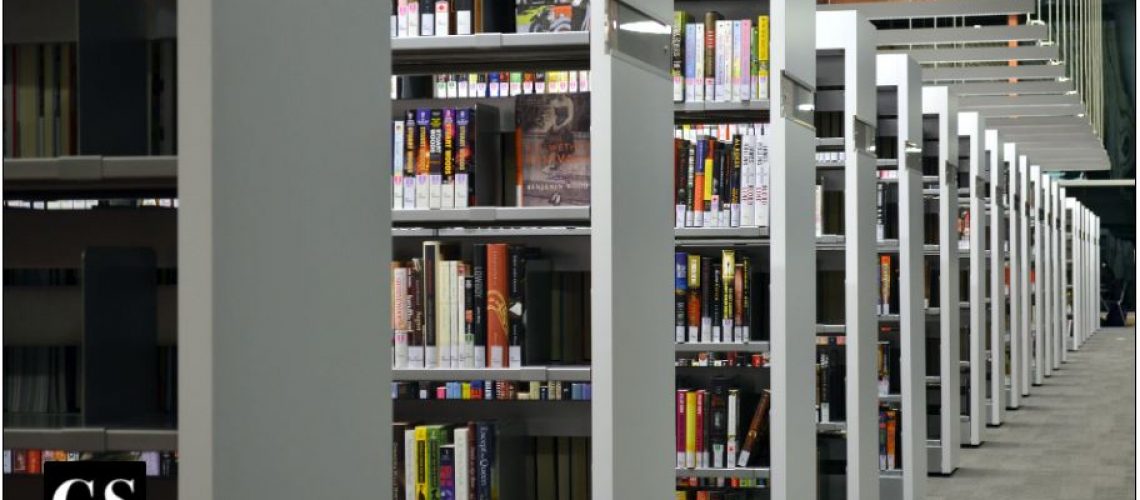
Last week I found another old bookstore to frequent. It’s a bright, yellow house on a country road. Like most good bookstores, there’s little in the way of décor. The shop was full of laden shelves. Except for narrow aisles, and the occasional, cramped, faded little chair every bit of available floor space was covered in books or records.
I left with three children’s books and an old favorite. But I’ll be back soon. Like so many homeschooling parents, my life is peppered with trips to dusty shops overfull of old books.
I’m not a native to New England though; I’m still adjusting to my adopted region’s dearth of Catholic reading. Though my new bookstore is rich in early 20th century children’s literature, nature guides, and even copies of my favorite biography of Peter the Great; its Catholic books were few and disappointing. I walked out with the vague longing for the huge halls of my childhood bookstore – the place where I found pre-1962 missals, the Catechism of the council of Trent, and piles of Catholic commentaries on everything from Kierkegaard’s philosophy to tarot cards.
No bookstore is perfect, however, and my new shop is a joy to visit. Walking out last week with three, beautiful old books to share with my children I started thinking about our family library.
Now, I would like to build a little, stone library in the woods. The sort of building that has a woodstove, thick rugs, and huge cushions on the floor. Floor to ceiling shelves and a ladder on rollers to help me navigate the space. But in reality, I’m an ‘old bookstore’ sort of person. My books are organized by color if they’re organized at all.
They live in scattered homes – piled beside the bed, tucked among the oats and rice on pantry shelves, and crowding one on top of the other in the outhouse.
I don’t have a room dedicated to books, let alone a building. Like my husband’s art and our family icons, books lived with us. Underfoot, in arm’s reach, and all too often falling to pieces. Despite that careless intimacy, we’re incredibly intentional about building our family library carefully.
You can find advice everywhere about how to build a Catholic library, of course. This is just a peek into how we do it, the genre’s and books that are essential to us, and the reasons our library is physically present rather than merely digital.
Dismissing the Digital Library
A library is a tangible place – whether it’s a room in your house, a building on your land, or just a few shelves beside your bed. A library is a physical space, like a church.
The trend toward e-books and audiobooks is a trend away from intentional reading. The truth is, we read differently from a screen than we do from paper. We skim more and retain less. We are more detached from our reading.
If the sole purpose of a library were just to have access to innumerable books, a digital library might be an acceptable option but our libraries are meant for more, so they require more. Fewer books, but real, tangible books are necessary.
Building a Catholic Library
The world is full of books. Some are worth owning, while others just take up space. A very few are essential. Some of my essential books will differ from yours. Only one Book is universally essential. Start your library with that Book and it starts out on the right foot.
The Bible
Every healthy library starts with a good Bible. The Catholic library, like the Church itself, is built on the Word of God. If you can only own one book, you should own a decent translation of the Catholic Bible.
In our house, we read aloud from the Ignatius translation every night as the kids fall asleep. Their minds are full of the tales God has chosen to tell us about Himself. Their imaginations are being shaped by His word.
Too many people seem to think that the Bible is dull reading. But that’s often because they’ve only heard it read by badly trained lectors. Hearing the Bible read by someone who knows the context and cares about the text – both as literature and as a revelation – is life-changing.
Step into Scripture reading as if you really do expect to be amazed by the Word of God. Read it to yourself as you read your favorite books. Read the stories in Scripture and fall in love with God.
A Catechism
Along with a good, Catholic Bible, every library needs a good catechism. In our house right now, St. Peter Canisius’s little catechism is a favorite. But the church is full of catechisms. Some, like Aquinas’s Summa Theologica, is over-arching works that touch on so many little issues. Others, like St Canisius’ catechism, are incredibly simple.
The most recent Catechism, put out in the 1980s and then revised in the late 1990s, while very comprehensive, is not the only option. If you have space, chose a variety of good, orthodox catechisms and use them as the formative tools they’re designed to be.
Lives of the Saints
There’s nothing more inspiring to adults and children alike than the triumphs and struggles of the saints. In our little library, tales of the saints feature heavily. From Tomie dePaola’s books about Sts. Francis, Patrick, Benedict, Scholastica, and the Mother of God to the collected sayings of the desert fathers the saints’ lives, and writings own more space in our bookshelves than any other genre.
I especially enjoy older hagiographies, full of the wonders of God. In advice about building a modern, Catholic library, the saints are often neglected in favor of theology or even apologetics books. But the saints are the riches of the Church, as we draw closer to them, we draw closer to Christ.
Beyond the Basics
At this point, your library can go off in a thousand different directions – each beautiful, each formative, each Catholic. The Catholic church is universal, with space within her for humble farmers, beggars, and kings. Your library has that same wide potential.
In some homes, the library is full of medieval theology, ancient philosophy, and every book G.K. Chesterton ever wrote. In other’s, it’s all Russian literature, fairy tales, and poems. Both are authentic Catholic libraries, both are full of beauty, truth, and goodness – all wrapped up in a sacramental imagination.
The point of a Catholic library is that it points toward Christ. A library full of church documents and encyclicals in a home of artists and dreamers will lie neglected. Let your library be your library. Let it inspire you; and let it raise you up.
All that said, I do have a few suggestions.
- Find a poet you love and have a volume or two on the shelves. Even if you don’t really like poetry, find a poet who speaks your language. Rainer Maria Rilke is my poet, he’s not Catholic but he has a Catholic imagination. Other fantastic options are Claude McKay, a Catholic convert who wrote during the Harlem Renaissance, and Gerard Manley Hopkins, an English Convert during the Oxford Revival. Good poetry is profoundly refreshing and deeply inspiring. Good poetry helps us find words to pray in challenging times.
- Don’t let your inevitable copy of The Complete Works of William Shakespeare sit unread on your shelves. Read him, read about him, then read him again. Try adding Shadowplay by Clare Asquith to your shelves and reading it alongside Shakespeare’s poems and plays. It’s a fascinating exploration of the political and religious climate that surrounded Shakespeare and his response to that climate.
- Embrace good fiction. Too much of the advice on how to build a Catholic library neglects fiction. You don’t need explicitly Catholic fiction either. Good literature directs your imagination toward goodness. Don’t be afraid to embrace writers who challenge you. As Oscar Wilde famously said “there is no such thing as a moral or immoral book. Books are well written or badly written.” Obviously, books like A Game of Thrones, The Da Vinci Code, and Hunger Games are badly written, keep them off your shelves. But challenging books like Wilde’s own Picture of Dorian Gray and Nabokov’s Lolita do have something to offer. Choose well-written fiction books that challenge both your worldview and your intellect but avoid the sludge at the bottom of the book world.
- Never stop building your library. Libraries are like marriages: when you stop tending them, they start to die. Prune the books that would fit better in another’s library, add to it when you can, and never stop reading. Sharing books has been a part of Catholic libraries since the Church began. If a book doesn’t speak to you, pass it along. If it speaks deeply to you, loan it to a friend. Let your library breathe in and out as books come and go. Let it live.
Catholicism has been a bookish faith since the Word became flesh and dwelt among us. We’re a Church of readers, writers, hearers, and thinkers. You don’t need a library to be a good Catholic, our illiterate saints can attest to that. But perhaps because we don’t need books to give shape to our living faith, we Catholics love reading, writing, and filling our shelves with the thoughts of others.
For two thousand years, Catholic libraries have been the literary heart of the world. My little library, built from dusty, old bookstore finds, is a part of this tradition, and so is yours. Let’s make them worthy of that lineage.





1 thought on “Books, Screens, and the Modern Catholic Library”
Thank you for this article. I love the imagery of the home libarary with treasures of books everywhere. It was good to point out that a Catholic library can and should include works of great “secular” literature.