

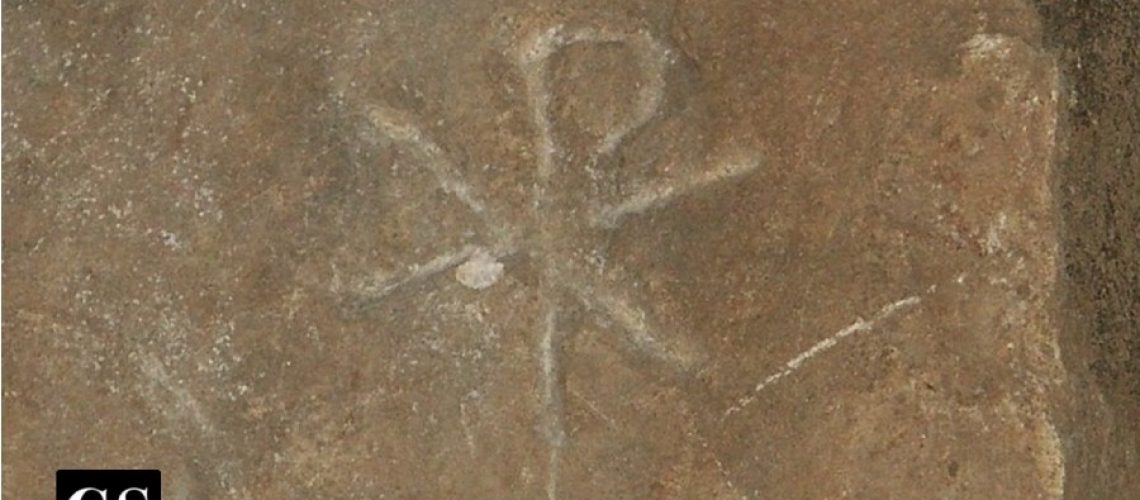
Dean Swift, the author of Gulliver’s Travels said that we have just enough religion to make us hate, but not enough to make us love one another. It is for this reason that we must return to the sources of our religion to discover and steep ourselves in the love that was the heart and soul of early Christian Spirituality. I am not primarily talking about human love but about the divine love that was to be found in the person of Jesus Christ who totally dominated the minds and hearts of everyone who chose to call themselves Christians. If everyone who was proud to call themselves Christians today made this journey back to their first beginnings then we would all find ourselves at one because we would all be transformed by the Love of Christ. This transformation would make us one with him and in him, so that our hearts and our minds would synchronize with his heart and mind making us one with Him and with one another.
The Meaning of Christian Meditation
Beginners who sought to be admitted to the new religion based on love were not firstly bombarded with a plethora of Catechetical teaching, nor did they have to learn creeds off by heart, or commit catechisms to memory, at least to begin with. Firstly and above all else they were directed to the heart and soul of God’s love that was to be found, as the Apostles had found it, embodied in the person of Jesus Christ during his life on earth. As the first Christians still rigorously observed the ten commandments, Jesus Christ could not be physically depicted in any shape or form. That is why from the very beginning those who joined the new religion were taught how to picture their new Lord in their mind’s eye, in their imaginations and from the memories of those who knew him, in the new preparation for prayer called meditation.
From Meditation to Contemplation
This word was not used at first because meditation at the time was primarily used to describe the rhythmic mantras used by Gurus from India and Gnostics and later Neoplatonists from Europe, to generate inner psychological states of wellbeing. However, once it was clear that Christian meditation was instead used to generate the human love of the most loveable and adorable human being who had ever walked on the face of this earth, then things changed. In subsequent centuries the word was used to designate the starting point for those who wished, not just to love the Christ who once lived, but the Christ who still lives amongst us by leading us into his own mystical contemplation.
The First Mystics Were Lay-Mystics
At this point, I can almost hear my readers sighing saying to themselves what a pity that is not for me. That this sort of prayer, which constitutes the journey to union with God, is not for the laity is outrageous and the consequence of a massive historical misconception that is responsible for the present state of spiritual stagnation that is starving the faithful. They seem to think that the profound mystical journey that enabled the first Christians to be drawn up through Christ into the love that unites him with his Father was only for monks in their monasteries or nuns in their nunneries or mendicants in their friaries or priories. Monks did not exist in Christendom for several hundred years after Christ rose from the dead and mendicants like Dominicans, Franciscans and Carmelites did not exist for almost a millennium after them. The early Christian spirituality that set the world on fire, in those early centuries, was embodied in those who practised the daily meditation that led to mystical contemplation.
The Very Essence of Lay-Spirituality
It was lay-people whose spirituality began, advanced, prospered and was brought to perfection in the family, as I have laboured to emphasize in the early part of this series. Although there were a few men and women who chose to embrace a celibate life, it was primarily laypeople who transmitted to the world the God-given spirituality that Christ had given them, transforming the pagan world in such a short period of time.
This was not primarily the work of men and women, but of Christ and his love that worked in and through them to do what could not possibly be achieved by human endeavour alone. The very essence of their spirituality consisted in firstly developing human love, by loving the person of Jesus Christ as the first Apostles came to know and love him before them. When it seemed that he was taken away from them, their love for him had to be purified in a way that had not been expected at the beginning of the journey.
Systematic Purification
Although they knew that at Pentecost the Holy Spirit had taken them up into their beloved Lord, his presence was not tangible as it was before. The reason for this was simple. Unlike their Lord they had not been immaculately conceived, as is painfully obvious to anyone who studies their behaviour before Pentecost. In order to enter, not just into Christ’s Sacred Heart and thence into his sacred loving of his father, their love had to be systematically purified like all the other mystics and saints who would come after them. This took time because there is no such thing as instant sanctity. What was true for the Apostles and their first disciples is true for us and it is best to realize this from the beginning of the journey.
Meditation Is Only the Beginning
Once a person is totally committed to daily meditation this preparation for contemplation rarely lasts for more than two to three years. Interestingly enough, at about the same time that the apostles experienced the physical presence of Christ amongst them. What happens next is what happened to the Apostles. The Holy Spirit takes the initiative by raising them up and into the mystical body of Christ. Here their desire to love God persists, although the presence of his physical body that they had come to see, love and experience in their minds by using their reason, their imaginations and their memory, disappears from their prayer life for a long time, perhaps permanently in this life. The time for meditation is over, time for contemplation has begun. In a lifetime given up to meditation and contemplation then, only a comparative fraction of the time is given up to meditation, the rest is given up to contemplation.
The Meaning of Contemplation
It is therefore essential that we know what contemplation means. It means to gaze with loving intent on something or someone. The Romantic poets describe what it means or rather feels like to contemplate the ‘numinous ‘or the transcendent in the beauty of creation. This is sometimes called natural contemplation. In Christian meditation, we eventually learn to gaze at the beauty of the masterwork of creation – Jesus Christ, in what has been called Acquired Contemplation. In what later came to be called mystical contemplation we come to gaze upon the beauty or the glory of the creator of all creation, in, with, through, and together with the masterwork of creation namely Jesus Christ.
The sort of purification that is necessary to be united with Christ so as to be one with him in his mystical contemplation of his Father is not required of those who come to experience natural or Acquired contemplation. It is for this reason that I stress what is in effect the purgatory on earth that can alone unite us with Christ in such a way that through him we can come to contemplate the glory of God. The more fully all Christians are united together in Christ in this sublime action, then the sooner their religion will unite them in the love that will extinguish the hatred that has in the past separated them from each other with terrible consequences.
David Torkington’s blogs, books, lectures and podcasts can be found at https://www.davidtorkington.com/





4 thoughts on “Beginning a Journey”
Thank you for this informative discussion of meditation and contemplation. There is much food for spiritual thought here.
Christians have hated each other at times, but it was not hatred that caused them to separate into different groupings; it was different ideas about the nature of the gospel and the nature of the church’s mission. So no, being more loving isn’t going to accomplish a whole lot until we can agree on what is true and what is not. Christian doctrine is not all-important, but it is primary.
The first of the Theological Virtues, according to St Paul is Love, from which all other virtues, truth, wisdom etc flow. But the first of these is Love. (1 Corinthians 13:1-13), ends “In short, there are three things that last: faith, hope and love; and the greatest of these is love.”
Pingback: THVRSDAY EDITION – Big Pulpit