
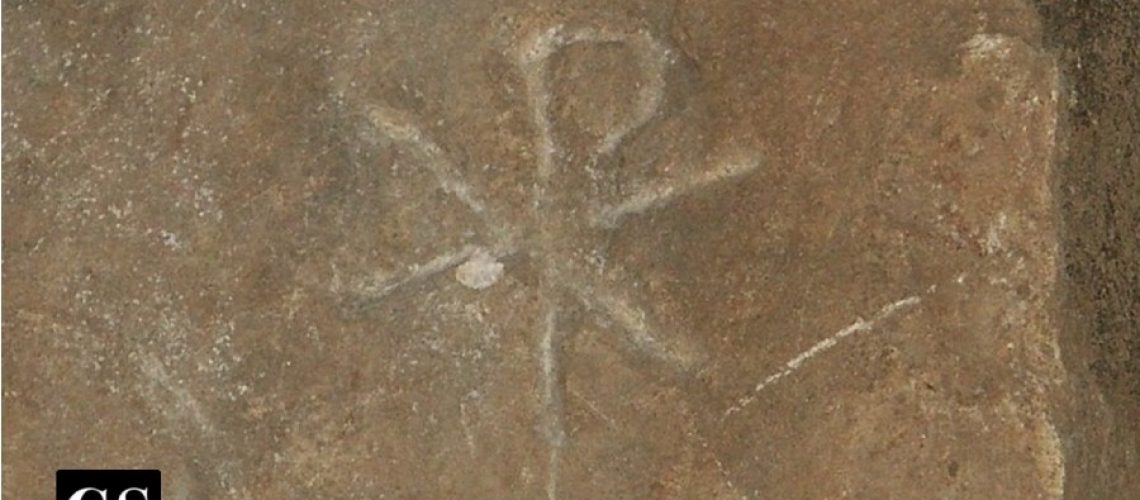
A Post-Christian Culture?
Fifteen years ago, a colleague of mine lamented that a few students in her literature classes did not understand biblical allusions in their texts. One of the short stories we taught mentioned the Resurrection, and some high school freshmen had no idea what that was. They were similarly bewildered at references in the novel Great Expectations to Noah’s ark and the tax collector in the temple who prays, “Lord be merciful to me, a sinner.” My fellow teacher, a devout Christian, was surprised and dismayed that students in America’s Judeo-Christian culture would be not even vaguely familiar with these references.
That was my first encounter with what I’ve since heard called the post-Christian era. Previous generations would naturally expect that their neighbors were Christian, or perhaps Jewish. Television programs had no qualms about showing their characters attending church or saying evening prayers. I remember Fred MacMurray as the father in the series, My Three Sons, telling young Ernie that he could always pray if he felt lonely. Florence Henderson, as the mom in an early episode of The Brady Bunch, sang at a church Christmas Eve service. The Waltons and the Ingalls family were regular church-goers, and the preacher was a standard character, though not a gun-toting one, in Westerns.
What has happened since then? One could offer dozens of explanations for the loss of faith as a standard in today’s society. After the effects of two brutal 20th century World Wars, disillusionment during the Viet Nam conflict, the sexual revolution, overindulgence of baby boomers as they became parents, scandal, obsession with technology – any or all of these could be blamed for lower church attendance and the growing tendency for young people to leave their faith if ever it were instilled in them during childhood.
More importantly, what do we do about it? What is the Christian response to our neighbors’ lack of faith? Recently, I had an experience that led me to these questions.
“The Big Good Thing”
A summer theatrical production that I am directing is based on the beloved children’s novel, The Secret Garden, by Frances Hodgson Burnett. Born in 19th-century England, Burnett had a strong faith, which melded with her appreciation of nature. The Secret Garden features two sickly children who become well and a grieving father who finds hope. All this happens in a garden. Assisting are two siblings from the English countryside and their wise and nurturing mother.
Woven into the story is faith in a Spirit that makes things grow and heals the broken. The main character, a ten-year-old girl who was raised in India, calls this spirit “Magic”. The wise woman from the moor, Mrs. Sowerby, encourages the children in their faith. When the children ask Mrs. Sowerby if she believes in magic, she replies, “That I do. I never knowed it by that name but what does the name matter?” She goes on to identify the children’s “Magic” as “The Big Good Thing,” who made the garden seeds swell and let the sunshine and made the children well. Her explanation is consistent with Christian doctrine regarding God our heavenly Father. In thanksgiving for the healing taking place in the garden, one character sings the Christian doxology, “Praise God from Whom All Blessings Flow”. The children discover the hand of God in nature, in a garden and in the healing of their own bodies. Readers, members of what was known as Christendom, understood the Spirit in the story as the Holy Spirit of God.
Removing Judeo-Christian References
Eighty years after Burnett wrote her children’s story, Broadway playwrights adapted it as a musical. By the 1990s, though, it was not in vogue to use a musical to promote faith in the Judeo-Christian God. Mrs. Sowerby’s explanation of the “Big Good Thing” is abbreviated, but still present. Although it is a musical, the script and score contain no reference to the only hymn mentioned in the novel, the Christian doxology. Most interestingly, though, the composers added a lengthy musical number including Hindu chants, high-pitched female Banshee vocals, and a whirling, dervish-like dance. Meanwhile, a fakir intones an Indian charm.
A work of literature, like all art, reveals the culture which produced it. Burnett’s novel reveals the Judeo-Christian concept of God, as discovered by two children and explained by a Christian woman from the Yorkshire moor. The 1990s musical adaptation reveals a culture which is moving away from Christianity. The Hindustani chant and dance and the Irish Banshee reflect the inclusive attitude of the late 20th and early 21st centuries, open to other cultures and belief systems.
As Christians, how do we respond to this inclusion? Our first reaction may be negative. First, one must note the irony of removing the Judeo-Christian hymn in the name of inclusivism. Then also, nostalgia tugs at our heartstrings. We miss the way things used to be, with Christian belief as the backdrop for everything, in manners, business, art, and education. Introducing something foreign feels uncomfortable, like a threat to our firmly-held faith. The word “pagan” looms over the unfamiliar, and we wonder if other faiths worship the one true God, or if they adore something evil.
A Positive Response
Searching for a positive response, we might begin with a spirit of evangelization, which begins with openness. My understanding of Indian culture may help me to value its people. What might the Hindustani chant teach me about my own faith? I might recall the value of repeating meaningful words, such as we do in a litany of saints or in recitation of the rosary. I might witness the discipline and passion that faith inspires. While an Irish Banshee vocal is more a scream than a song, we might look beyond it, into the appreciation of nature common to pre-Christian Ireland. We might also appreciate the fact that when the Christian faith did come to the Celtic Isle, it flourished due to the example of missionary monks, rather than by a military invasion.
A devout Catholic actress in our cast recently expressed her hesitation to participate in the numbers with the chant and wild dance. She found the spirituality questionable, and worried about whether it might actually invite evil into our midst. I appreciate the sensitivities of my friend. We need more Catholic Christians to stand for their faith as she does. Her questions made me analyze our response to the script material. This led me to repeat the question, how do we respond to a post-Christian society?
Our interpretation of the Indian lyric and dance was cultural rather than spiritual. We have no intent of spreading the Hindu religion, nor conjuring any spirit other than that of the one true God. Catholic schools and universities often teach a course entitled “World Religions”. Our show could have a similar theme. To achieve this, I added choreography which brought in even more cultures. We added the Hebrew table blessing gesture when the woman of the house waves her hands over taper candles. In two songs, we added praying hands, which we learned is almost the same as the Indian namaste gesture.
Finding Christian Messages and Meaning
More importantly, the modern play of The Secret Garden cannot escape the novel’s theme that God reveals himself in nature. A beautiful garden, physical recovery, and emotional healing are all attributed to a spirit greater than humans. This play illustrates Church teaching that one proof of God’s presence is the natural world. To find a message like this in what seems to be a post-Christian society is heartening.
We may need to look harder these days to see evidence of the faith. In fact, we must look harder. Recognizing the underlying faith of our neighbors will help us to reinforce it. Finding evidence of underlying Christianity in society as a whole will encourage us that all is not lost. Even a society which ignores God cannot help but seek him in one way or another.
During the discussion with my Catholic friend, another member of the troupe, also a Catholic, joined in. We commented on how difficult it can be to evangelize in a society that is moving away from Christianity. Standing on a street corner and preaching is probably not the best way right now. We have to live our faith, as shining examples as much as God gives us the grace to do it. The second Catholic friend in our party reminded us of St. Francis’ advice, “Preach the Gospel always; when necessary, use words.”


Your topic, the loss of the faith, is the most fundamental error of our day. Pope Benedict XVI, in his Regensberg address, identified its initiation in the late Middle Ages in the proposed subjection of the intellect of God to his will.
We have witnessed the error of identifying religious faith as purely subjective, as having no interconnection with other areas of human knowledge. This is largely due to our loss of the knowledge of Greek philosophy, which culminated in the work of Aristotle. The confluence of Greek philosophy and the Divine revelation to the Jews has been widely recognized as providential to the universalization of the revelation to the Jews in Jesus Christ.
I hope our current subjecting of the human intellect to the human will in its grotesque consequences relating to ‘gender’, is the rock bottom prelude to the restoration of western civilization to its philosophical and religious roots.
Bob,
Thanks for reading the article. I defer to your knowledgeable account of the influence of Greek philosophy in the development of the Christian faith, and the references of Pope Benedict XVI to perspectives in the Middle Ages that led to humans’ current lag in their faith lives.
My topic includes the Christian response to the loss of faith. The article gives an example of how one evangelizes in secular society. Perceiving society’s loss of faith, we can meet people where they are and live according to Christian principles as examples to them.
Regarding the idea of religion being subjective with no interconnection with other areas of knowledge, Frances Hodgson Burnett, 20th century author of The Secret Garden as referenced in the article, recognized the connection of God and nature, and saw no conflict between religion and natural science. Seeds of faith are present in her work, even in modern interpretations of it. In the climate in which we live, I found this to be encouraging.
God bless!
Mary Meo
Hi from Australia.
The same thing here . Unless you are a Moslem or Hindu , it’s very unfashionable to be a Christian,let alone a Catholic. Apart from public holidays like Easter and Christmas there are very few displays of our Judeo-Christian heritage.Indeed ,religion ,except for Islam and Hinduism,has been purged from our government schools. (Our left wing Federal government does’nt want to be accused of racism so it says very positive things about those faiths )
As an example ,I once asked my 15 year old step grandson if he had heard about Moses, Adam and Eve and Samson . He looked at me and said ” Who .” I did’nt bother to ask any further .
Ah, sorry to hear that the same is true where you are, Jock. I’m not surprised, though. Cultural trends in modern times are often global rather than local or national. The bottom line is, what do we do about it? How do Christians respond to a society that is losing its connection to faith? I’m not sure we can explicitly teach Bible stories to the children of parents who have chosen not to pass on the faith. But we can live the Gospel in all of our dealings with others. And perhaps one day the step-grandchild or the neighbor’s young adult son or daughter will ask, why is that fellow so kind? And the seeds of the Word will be sown.
God bless!
Mary
[…] Sweden Gains Shrine to Mary, Mother of Persecuted Christians – Luke Coppen at The Pillar An Artist’s Response to Post-Christian Culture – Mary Ennis Meo at Catholic Stand Spain: Coup Rumours against PP Leader Alberto Feijóo […]
Yes!!!!!!
Thanks so much! God bless you always!
I loved every word. Thank you! And it scares me, as someone who will write about her faith but does not have the courage to speak up when confronted. I cowardly tell myself that I’m at the end of my lifespan and will leave the “fighting” to the younger generation. One of my friends jokingly said that it’s a good thing we die when we do, as we can not adapt to all the changes around us.
Growing up I don’t believe I knew a single child not raised with faith. How the world has changed.
Thanks so much, Ida. Maybe it isn’t that you lack courage. Maybe it’s sensitivity to the needs of others, and discerning when it would be most efficacious to speak. There are circumstances when words will do more harm than good to a person who is hurting. In our brokenness, we are not always able to handle truths when delivered too harshly or bluntly. Remember that prayer is powerful, and from your writing I know that you do pray as you walk with God. “Preach the Gospel always; when necessary, use words.” God bless!
Actually, it’s a post religious world – and for good reason: all failed to become one.
Hi Papist,
I agree — It’s more like a post-religious world. However, people need some sort of religion. When we turn away from God, we seek goodness somewhere else. Without the Lord, it is never truly a satisfying search.
Oneness will happen when Jesus brings the Church, without spot or wrinkle, to the heavenly Father at the end of time. May we be part of that great return to the Father! God bless.