

Each year in September, at the start of Faith Formation classes, I begin the very first class by asking the students, “Why do we exist? What is our purpose in life?” Even though my wife and I teach an eighth grade class, I am always amazed at the blank stares we get back in response to these questions.
Philosophers have been asking ‘why we are here’ since the beginning of rationale thought. Many people still struggle with this question today. Christians, however, should have the answer to this question at the ready.
The answer to the question is in the old Baltimore Catechism. It was pretty much the standard for Catholic religious education in the U.S. for 80 years, but it‘s not in use anymore. It fell out of favor in the late 1960s, following Vatican II.
The question “Why did God make you?” is one of the first questions to which 6- or 7-year-olds had to memorize the answer. Today 12- to 14-year-olds struggle answering this question.
The answer to ‘why are we here’ is “God made me to know Him, to love Him, and to serve Him in this world, and to be happy with Him forever in heaven.” I write this on the board and tell the class to memorize it because I am going to ask them this question, or a variant of it, at the start of every class.
It’s Really Simple
Life and living really is that simple. God made us to know, love, and serve Him and be happy with Him in Heaven when we die. Everything we do should be centered on this.
Eternity is forever but our lives on earth are short. We are not here to become famous or to accumulate “stuff.” We are here to prepare for what comes next. As we are told in Mark 8:36, “What profit is there for one to gain the whole world and forfeit his life?”
The first three commandments of the Decalogue set the stage for us. Keep God first in everything and don’t make a god of anyone or anything else. Don’t take the Lord’s name in vain and keep His day holy.
The remaining seven commandments complete the play. They tell us how to live with one another. Obeying the Commandments and living the beatitudes gets us on the path to eternal life.
He is Coming
Once again we are in the Liturgical Season of Advent. Advent, the “Little Lent,” is a time of preparation, prayer, alms giving and sacrifice. We prepare for our Lord’s birth and also for His Second Coming.
As the “Catechism of the Catholic Church” says (CCC 524) “When the Church celebrates the liturgy of Advent each year, she makes present this ancient expectancy of the Messiah, for by sharing in the long preparation for the Saviour’s first coming, the faithful renew their ardent desire for his second coming.”
(EWTN offers a succinct recap of Advent, so rather than reinvent the wheel I offer this link. Note the quotes as you scroll down the page. And Fr. Mike Schmitz provides a very interesting perspective on Advent here. His message is one worth thinking about.)
Of course, the world doesn’t really prepare for His Coming anymore. Society seems confused about why we are here. Today the world prepares for the “the holiday season.” Retail clerks say “Happy Holidays” instead of “Merry Christmas.”
The real meaning of Advent is lost amid the lights, Santa Claus decorations, black Friday, Cyber Monday, and spending money on presents. For some years now, Advent and Christmas have been more about maintaining a robust economy than commemorating the birth of Our Lord and Savior.
Imagine
I never thought much of John Lennon’s 1971 song “Imagine.” Of course the socialists and atheists among us thought the song was terrific. But the message in the song is, in a word, wrong.
Instead of imagining that there’s no heaven or hell, people would be better served realizing that heaven and hell do exist. And instead of imagining there’s no religion, people would also be better served reading and listening to the Word of God.
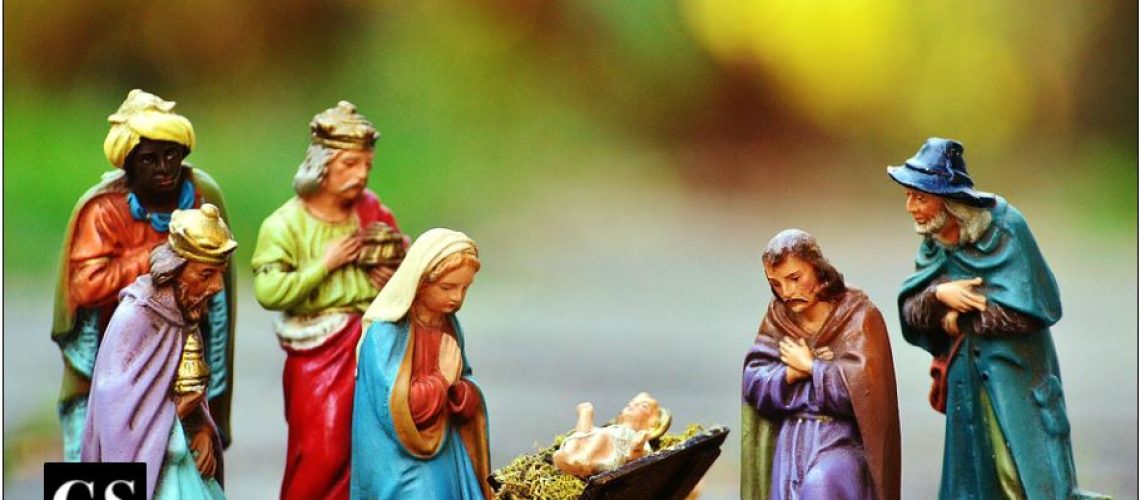
Some 2,000 years ago God’s only Son was born of the Virgin Mary – The Word was Made Flesh. We celebrate His birth every year on December 25.
Jesus’ death and Resurrection opened the gates of heaven for all of us. But that doesn’t mean we’ll all end up there. While many are invited, few are chosen (Matthew 22:14). We must each work out our “salvation with fear and trembling” (Philippians 2:12).
But what if everyone kept the answer to the question ‘why are we here’ foremost in their minds 365 days per year? Our souls would certainly benefit. And the world might also become a much better place. Many of the world’s problems might suddenly disappear.
Imagine what a wonderful world we would live in if everyone loved God above all else. Advent is a time of preparation. Maybe remembering why we are here is a good way to prepare.




8 thoughts on “Advent, Christmas, and Solving the World’s Problems”
Gene, thanks; thanks for keeping it simple.
For me (NOT in eighth grade but well north of 70), I need simple. But your lesson is much needed and appreciated by at least one old geezer.
Thanks and Merry Christmas!
Pingback: MONDAY EDITION – Big Pulpit
If we all believed we were fellow-passengers on the same train — that we were all going to the same place — we would treat each other better and it would be a better world. That’s what Lennon was getting at. He (and Yoko) grew up scarred by war in a way that you and I were not.
You can’t deny the long and sordid history of people killing each other in the name of “religion” (particularly Christians killing other Christians).
Some understanding of what other people are coming from would be helpful here.
You are walking on really thin ice here CC. The old canard of “people killing each other in the name of “religion” (particularly Christians killing other Christians)” has been thoroughly debunked many, many times. And as to your thinly veiled accusation that I lack understanding – criticizing a song that sings the praises of atheism and socialism does not mean that I am not familiar with the song writers’ life stories, or that I do not understand them or the message the song was “trying” to convey. But since socialism and atheism are anathema to me, my personal opinion is that the song misses its mark. Understand? (Understand, too, that this is a rhetorical question. End of discussion.)
@GeneVanSon Great reply. Communism killed more people in the last century alone than any other murderous regime or religion in history. Now, if you accept that Communism is an idolatrous religion, then maybe CC is right (smiley face).
God and religion do not reside in our imagination. The song is correct even without its bad lyrics. God resides in our hearts by His Spirit if we let Him in. In Proverbs 3:5, we are told to “Trust in the LORD with all your heart, and lean not unto your own understanding.”
“God and religion do not reside in our imagination”..
That is correct. Our imagination ‘potentially’ takes us out of reality, Who is God – which is why we need good spiritual direction (beginning with our parents). The ‘enemy’ can access (and feed) our imagination if we are not on guard and do not have guidance. The lyrics in the song that the writer speaks about ‘can’ (through suggestion) allow entry of such thoughts that could call into question and ultimately steal one’s faith. I think that was the point he was making.
John: If faith is viewed as primarily intellectual, it is more vulnerable to verbal suggestions. If it is a heart relationship of unconditional trust in God that brings us inner peace and strength, then it is less likely to be unsettled by outside influences.