
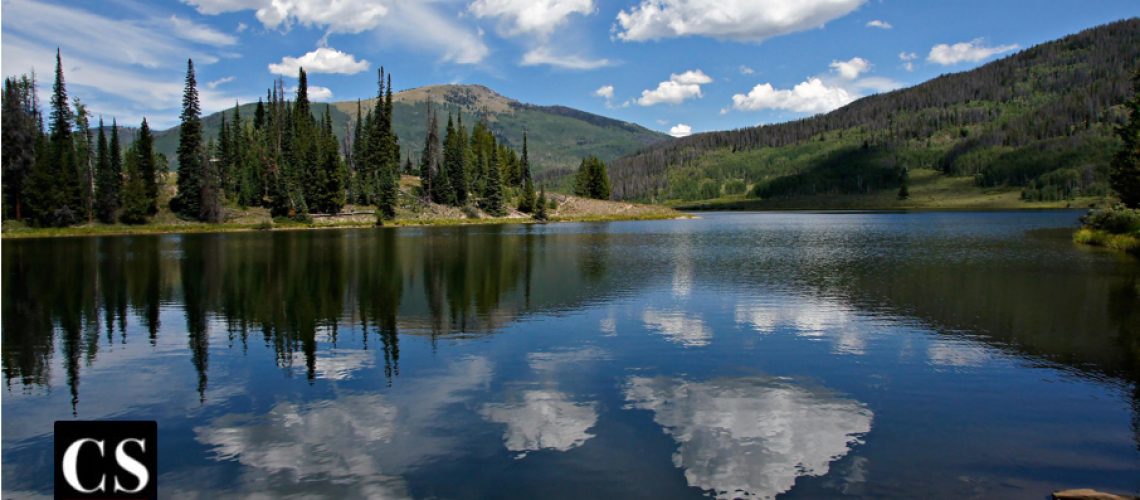
Many people taking vacations leave hearth and home for other locales. But my recent vacation took me home.
I recently returned to the parish I serve in Italy after vacationing at home in the United States. It was a great opportunity to see family and friends again. There was a very American family reunion consisting of lunches and dinners, and gatherings of all sorts. (I also discovered that we had a witch in our family tree back some three hundred years ago. That was a bit of a shocker!)
Italian vs. American Vacations
However, July is not the typical month for vacations in Italy. Traditionally, August has been the time for long breaks and extensive rest. This is a tradition that stretches all the way back to the Emperor Augustus, who named both the month and a day, Ferragosto (August 15th, coinciding with the Assumption), after himself.[1] The day was particularly noteworthy as even the slaves would have the day off. They would be allowed to travel with their families to relax and enjoy themselves.
Consequently, it is not uncommon in Italy even today for businesses to close for the entire month of August. I once made the mistake of purchasing an item at the end of July, only to receive an order confirmation at the beginning of September. The customer service representative simply said, “Apologies for the delay; we were on vacation for the month.” I cannot imagine such an occurrence taking place in an American business.
Indeed, I think perhaps the opposite might be true of the United States. While visiting friends and relatives, many of them spoke of how they even save up their vacation time. Some even save vacation days for years at a time. They gather their days off into their barns and await the future. They patiently wait until they will be able to celebrate their harvest with rest and relaxation.
What’s the Point of Vacations?
There is something to be said for saving up vacation time. But the thought occurred to me: what is the point of taking vacations?
If everything in this life is supposed to help us know, love, and serve God, is there such a thing as a “theology of vacations?” Is there a way in which time off, a break from the ordinary, reveals God to us? Is there a “right” way for Catholics to take vacation?
The “Catechism of the Catholic Church” is silent on the topic. And a Google search for “Catholic vacations” suggests going to Rome or on pilgrimage to some nice shrine close by. These seem like excellent practical vacations. But the theology behind a vacation like this was difficult to find.
Fortunately, however, we have Popes who also like going on vacation (in August, of course, but sometimes in July as well). In the Angelus addresses of some popes on vacation, we can find enough thoughts to put together a “theology of vacations.”
On July 15, 2007, from the very scenic Lorenzago di Cadore (in Belluno, Italy), Pope Benedict XVI gave a very concise summary of what vacations are for. After thanking those who received him, and commenting on the area’s natural beauty, the Pope noted:
“Before this view of meadows, woods and peaks soaring to the sky, the desire to praise God for the marvels of his works spontaneously wells up in one’s heart and our admiration for these beauties of nature is easily transformed into prayer.
“Every good Christian knows that vacations are an appropriate time for relaxation and also the nourishment of the spirit through more extended periods of prayer and meditation, in order to grow in one’s personal relationship with Christ and to conform increasingly to his teachings.”
Nourishing the Spirit
Vacations are an appropriate time for relaxation and the “nourishment of the spirit.” After all, we are humans, and not machines. We need to take time to relax the body, but also to get the soul and spirit back in order and back to Christ.
It’s clear that a pilgrimage to the Eternal City or even a local shrine could help with the spirit. But recall the pope’s first remark – that natural beauty can lead us to pray. So a trip to the mountains, the rolling fields, the evergreen forests, or the seashore can also be suitable for vacations.
Unsurprisingly, Pope Saint John Paul II was of a similar opinion regarding the importance of natural beauty. On August 23, 1992, in Lorenzago in Belluno, the pope was also captivated by the natural beauty of the location. And he, too, said that such beauty leads to the contemplation of God.
“Today I recite the Angelus from this evocative place, rich, very rich in natural beauty, where creation incessantly proclaims God’s greatness. And while the body is refreshed, the spirit rises to give thanks to the Almighty, who has done everything with wisdom and love.”
However, immediately after the Pope adds something more:
“To those who are still on vacation, I wish you could take advantage of these moments of relaxation and tranquility. In contact with nature, away from daily occupations, the soul can open up more easily to reflection on supernatural realities, which give meaning and value to earthly commitments and projects. Furthermore, holidays are a favorable opportunity to get together and strengthen those bonds of communion and dialogue which make human relationships, and especially family life, more serene and cordial.”
A Break from the Daily Grind
It is true that contact with nature can lead to contact with God. However, the Pope also insists that vacations are meant to be a break from the daily grind.
However, this break isn’t to show that these daily activities are useless. Rather, by reflecting on God and supernatural realities, these earthly projects receive their proper meaning and value.
For instance, say the father of a family decides he will take no business calls when he is in the mountains with his wife and children. He is not saying that his business is useless or unnecessary. Instead, he is recognizing that his business is both useful and necessary but it is not his vocation.
The father’s business affords him the necessary means to provide for his family. This enables him to live his true vocation well – to help his wife and children get to heaven with him.
And there’s more: vacations are also a time to strengthen human relationships. But the Pope does not mean that people must necessarily vacation all together or in groups. And neither does he mean that a person alone on vacation would be an aberration.
Rather, Pope John Paly II means that vacations provide an excellent chance for people to get together, away from daily work and worries. Vacations simply allow people to be with one another and restore those interpersonal relationships that can often be damaged by the stresses of school, work, or just time apart.
Renewal
The Pontiff reiterated these human and relational aspects of vacations in the August 1, 1999, Angelus address:
“During this vacation period my thoughts turn especially to families. How often do they endure the hardships of the grinding pace of work, especially in big cities! How often it is hard for them to find a serene and relaxed atmosphere to enjoy intimacy, to talk to one another and to share plans. This is when holidays become above all a favourable time to fill these gaps, so to speak, with “humanity”, peace and festivity. Hence the need for holidays is effectively a time of human renewal, in which, far from the rhythm of daily life, one can rediscover oneself and others in a more balanced and serene dimension.”
Vacations are a time for a human renewal, to put our lives in order, not only with respect to God, but also with our families and friends. It is this balance with respect to God, others, and ourselves that the Pope finds as particularly important. Indeed, this is something that should not be limited just to vacations, but to the whole of our lives:
“It would be good if this beneficial tendency were not restricted to the holiday period alone but that satisfactory ways could be found for it to accompany daily activity at other times of year. The real challenge, in fact, lies in safeguarding our inner harmony, so that the pace of daily life will always have that supernatural dimension which each of us needs.”
Restoring the Balance
Yes, it would be so helpful for our souls and our whole lives if we could keep this order throughout the year. However, since so often we fail to do so, vacations provide us with a perfect opportunity to restore that balance.
When we set our lives in order, we recognize the true purpose of vacations. They enable us to return to the world of daily living with our priorities properly aligned. This includes placing God back at the center of our hearts.
When we are God-centered, we love our families and friends and serve others. And this is precisely the conclusion that Pope John Paul II reached in 2004 at Castel Gandolfo, during his last vacations on earth:
“When, through the action of the Holy Spirit, God takes up his dwelling in the heart of the believer, it becomes easier for that person to serve the brethren. This is what happened in a unique and perfect way in Mary Most Holy. To her we entrust this vacation period, to make the most of it as a favourable time to rediscover the primacy of the interior life.”
Along with the late pontiff, let us entrust our vacations to Our Lady, so that they might truly be a time of re-focus, renewal, and restoration.
[1] See Charles L. Killinger, Culture and Customs of Italy (Greenwood: Westport, CT, 2005), 104.


Personally, ever since I’ve started to do more day-to-day activities(running in the morning, hiking on weekends), I’ve noticed that I’ve started to want to go on vacation a lot less. I feel like it’s a break from the routine that you need rather than actual “rest”. I do take days off sometimes for running events with local community(there are a running shoes store https://rununited.com/ that often does charity events).
[…] A Theology of Vacations – Father Nathaniel Dreyer at Catholic Stand […]
[…] A Theology of Vacations – Father Nathaniel Dreyer at Catholic Stand […]
[…] A Pilgrimage in England Traces GK Chesterton’s Path in Hope of His Beatification – The CWR A Theology of Vacations – Fr. Nathaniel Dreyer at Catholic Stand This Saint Will Help Your Life Shine Brightly in […]
In the industrial world of factories I worked in in my youth the vacation was called
‘shut down’ weeks and for two of them you got whatever weather, mistiming and
obligatory activities that needed to be crammed in. For those situated in certain
fields a ‘sabbatical’ could be taken. Now, many are blessed with the ultimate
respite: retirement, where conversely you get to work for yourself until that final
bell signals an end of play and slide into mortal transition. Nice essay Fr. Nate
Hi Ordinary Papist,
Thanks for the comment! Yes, there’s definitely been times in the past where vacations were very different from what they should have been as a result of external forces and powers. Today, there is certainly still some of that, but, in the measure that we can control it, it’s good to remind ourselves of the point of vacations and try to live them well according to their purpose.
God bless!
Fr. Nate