
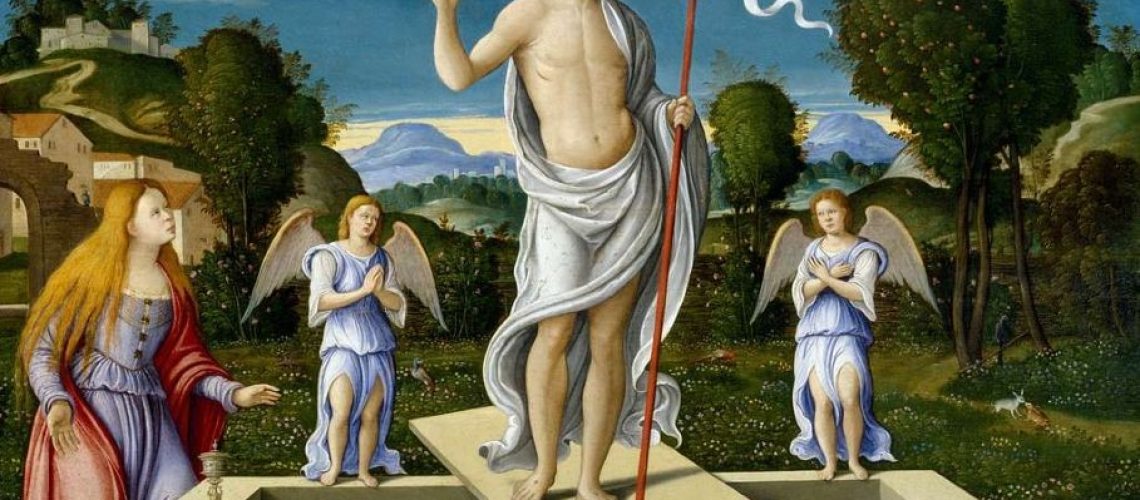
Here is a hard truth to live with well: God’s love for us means He wants us for his own. Not only that, his love for us is such that his desire for us exists in a totality that is hard for us to comprehend.
Thinking about this recently I found my thoughts drawn back to my earliest experiences with longing and desire. It was in early adolescence, in that brutal arena called Jr. High in my day. Today it is mostly known as Middle School.
Of course some young people first start struggling with the practical difficulties of relationships before then. And the struggle continues for years afterwards (into senescence for some). Those early adolescent experiences are, however, for most of us, the first and the most fraught with a multitude of emotions. Uncertainty, error, embarrassment, humiliation and, occasionally, bits of triumph and joy are quite common.
The Opposites
The polar opposites in this psycho-dramatic dance made up of adolescent angst, coming-of-age-agony, and high drama are open to a wide range of archetypes. But for me the prevailing archetype will always be the cheerleader and the nerd. It may come as no surprise to most readers that I was a nerd if not, in fact, the εἶδος (eîdos) – the Platonic Ideal – of Nerd.
I gave up on cheerleaders before I left Jr. High. If any of the cheerleaders ever developed any special affection for nerds, I never heard of it.
This sort of thing is a part of being a kid. Human immaturity is (in general) our time of maximum irresponsibility and awkward discomfort. The social stratification of adolescence is, in its own way, one of the most rigidly hierarchical of human social structures. It is a nightmarish memory for most of us, even those who were nominally at the top of that heap.
It is a cold, hard fact of humanity that we live within social hierarchies. As we mature, most of us find ways to dwell in comfortable mobility between a number of hierarchies. Very few of us though easily transit smoothly through any and all of them.
A different yet similar hierarchy exists for us spiritually.
God the Father is so high above us as to be nearly invisible. But God the Son came down from Heaven to live among us, and bring us to know the Father as our own Father; to put us into a relationship that is intimate enough to refer to God as “abba” – father.
In this respect we are in a familial relationship with God, and it is open to the richest kind of intimacy.
But There Is More
“A parent as a friend” is a perennial sitcom plot. While sitcoms are not a reliable source for creating and maintaining stable relationships, they nevertheless can offer insight. This is because comedy requires a sharp discernment of human dynamics and foibles.
But parents and children, especially before the children reach adulthood, are in an asymmetrical relationship. It is one that is unbalanced by necessity, nature, and definition.
Jesus became human to reduce this asymmetry. In John 15:14-15 Jesus says “You are my friends if you do what I command you. I no longer call you slaves, because a slave does not know what his master is doing. I have called you friends, because I have told you everything I have heard from my Father.” (The word rendered as “slave” is doulos – δοῦλος – often translated as “servant.”)
We are familiar with the comedic potential for reframing the parent/child relationship into one of friendship. Reframing the master/servant relationship is a bit more tricky, and consequently less often mined for comedy.
But Jesus did not take on human form for comedic purposes. He did so to reframe the ancient relationship between God and humanity. He transforms it from the abject servility so often shot through with fear that marked the Old Testament. It is now a relationship of friendship and parity (not equality). We are now made friends.
Power Dynamics
But what does parity mean in a relationship with God, for clearly there can be no real intrinsic parity. The parity that now exists is one in which God does not overwhelm us.
This is not to say that God cannot overwhelm us. But He is unlikely to do so without our inviting him to be overwhelming.
I already mentioned the adolescent social inequality between the cheerleader and the nerd. A similar inequality can exist between the captain of the football or basketball team and a female nerd.
But that disparity is a product of culture and local custom. And strong and dissident personalities can disrupt this disparity. This happens often enough that people are aware of its essentially artificial nature.
Not so of the disparity between God and humanity. Jesus came to bridge the gulf, but He did so with his compassion and sacrificial love. The bridge comes from God and we have to work to accept it and live within it.
At the heart of the bridge is God’s love for us. Given the strength, the depth, the power of this love I find that my earlier formulations are sadly inadequate.
God wants us for his own because of his love. I started by thinking about disparity between lovers by picturing a situation from my history – the cheerleader and the nerd.
So . . . are we the cheerleader or the nerd? As a formulation it verges on travesty.
And yet, God’s love for us is as perfect as everything else about Him. And we have centuries of Biblical verses and human poetry describing to us the depth, intensity, and totality of that love. So we can suddenly see that we are like a nerd in an unprecedented dream position – we are yearned for and desired as though we were the cheerleader.
I am NOT suggesting that God is like the nerd in my imagination, but that His love is beyond our simple formulations.
This Should Not Really Be A Surprise
From the moment of the Annunciation we can easily imagine the world went upside down, transforming into something that even now is hard to comprehend. God announced to Mary that He was going to enter the physical human world through her.
Many of us have recited the creed since we were old enough to learn it. Most of us have been exposed to this incarnational theology for as long as we can remember. Yet many of us have lost the sense of how extraordinarily, mind-blowingly strange and unprecedented the idea of God made flesh actually is.
God became flesh, dwelling among us. Not just God, but the very Word – the Logos – through which all things were made. The actual underlying substrate of order and comprehensibility that makes Creation possible and sustains the very existence of the universe around us became human.
Done out of love
As an example of social distance, the cheerleader and the nerd is reasonably apt. But as an example of the chasm God’s love for us bridges it pales into insignificance.
God loves us and desires us for His own. How can we understand this? What metaphor or simile, what example of imagination or insight is equal to the task? The cheerleader or the star athlete pining for the nerd? The king on his throne yearning hopelessly for the ragged slattern begging for coins in the lowest, most filthy alley in the worst quarter of the city?
The imagination fails. Not only did God take on our human form, to live under all the limitations and frustrations, to live with the pain and fear built into the flesh, but He absorbed the worst of our abuse and hatred in His passion. He died for us and then He came back.
But He did not come back as the terrifying avenger of the revenge fantasies that dominate our movies and popular literature. He came back as the same loving, forgiving, compassionate Lord the Apostles loved – the same Lord that transformed them.
This is beyond our capacity to capture in mere human terms. No metaphor or simile will do. This is that “wondrous love” of the great Easter hymn. The best we can hope to do is surrender to it, and hope that God will bless us with the Grace, over time, to be transformed ourselves into beings who can see darkly what our hope promises that we will someday see face to face.


[…] a Catholic ‘Revival’ May Be Leaving the Working Class Behind – National Catholic RegisterThe Cheerleader Or The Nerd? – Mark Belanger at Catholic Stand MagazineMembers of Antifa Ultras Have Desecrated the Santos […]
Wow !!