
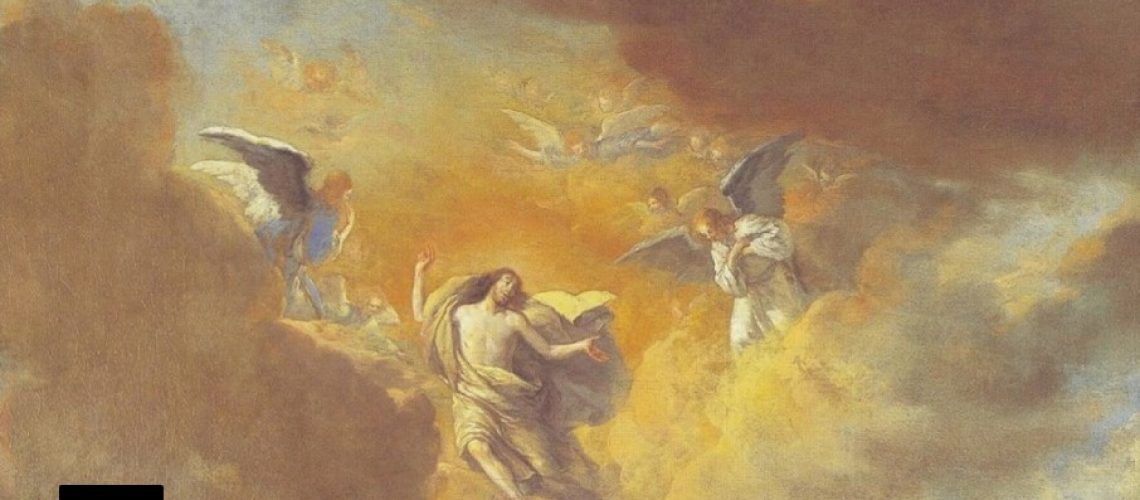
A priest once told me that our revealed sins are so significant that one mortal sin will cause the soul to turn away from God. The soul, in mortal sin, rejects God and never sees him face to face because in approaching the light of God’s perfection this soul cannot bear the corruption of its own sin. Therefore, it will turn away from God, judging itself, and enter Hell where mortal sin can pretend to hide forever. Archbishop Fulton Sheen tells us that “The soul in mortal sin, dead to divine life, casts itself into hell just as naturally as a stone released from my hand falls to the ground.” (1)
We forget or fail to acknowledge that God is perfect in all things. His will is without compromise, his promise is final, and he is perfect, without sin. When we pass from this life to the next, all of our sins will be disclosed, and those sins will bring us pain in the light of God’s perfection.
Venial sin, on the other hand, will only temporarily prevent us from seeing God face to face. Even unrepented venial sins in the presence of God are painful to see, that is why a soul in venial sin cannot enter heaven, if it did, heaven would be without Joy, filled with regret, remorse, and eternal penance. In God=s presence these sins would not only be painful for God but also for the infected soul. Heaven would become a place where sorrow and pain are shared in an unavoidable exchange. This exchange of suffering would not be limited to God and the diseased souls only, but also would extend to the pure and justified souls residing in God’s presence, and heaven would no longer be heaven.
Many of us underestimate the consequences of venial sins and some of us find or create rationalizations for keeping them. Unconfessed and repeatedly reinforced these sins will increase our “time” in purgatory. There is no penance in heaven. It is a place of eternal joy and happiness sharing life in God, in our relationships with others, and within ourselves. Purgatory is the place where penance must be completed for those “not-so-bad sins.” May we pray for those souls in purgatory who need prayer the most.
Saint Faustina, in her Diary, assures us that the holy, suffering souls in purgatory need our prayers. She wrote the following from one of her visions::
I saw my Guardian Angel, who ordered me to follow him. In a moment I was in a misty place full of fire in which there was a great crowd of suffering souls. They were praying fervently, but to no avail, for themselves; only we can come to their aid. The Flames which were burning them did not touch me at all. My Guardian Angel did not leave me for an instant. I asked these souls what their greatest suffering was. They answered me in one voice that their greatest torment was longing for God. I saw Our Lady visiting the souls in Purgatory. The souls call her “the Star of the Sea.” She brings them refreshment. I wanted to talk them some more, but my Guardian Angel beckoned me to leave. We went out of that prison of suffering (Diary of Saint Maria Faustina Kowalska #20).
Our prayers help them, and if we pray for someone already released from purgatory, then those prayers benefit another suffering soul. By the grace of God the suffering souls know who is praying for them, and they in turn with intercessory prayer can pray for us.
Our prayer for them is capable not only of helping them, but also of making their intercession for us effective (CCC 958).
On our way to heaven is it possible to bypass purgatory, or at least mitigate our visit? The answer is yes if we accept God’s invitation to become holy as he is holy (1 Peter 1:15, NAB). Pursuing holiness will bring us closer to God, and the closer we get to Him in this life, the less time we’ll have in purgatory in the next life.
Our Catholic Faith reminds us of our call to holiness through Vatican 11, sacred scripture, and the Catechism of the Catholic Church. In Lumen Gentium we are told:
Thus it is evident to everyone that all the faithful of Christ of whatever rank or status, are called to the fullness of the Christian life and to the perfection of charity (Lumen Gentium ch.5, 40-3).
In the Old Testament God, the Father, commands us to share in his Divinity:
For I, the Lord, am your God; and you shall make and keep yourselves holy, because I am holy” (Leviticus 11:44, NAB).
And in the new testament, St. Peter mandates our holiness:
…but as he who called you is holy, be holy yourselves in every aspect of your conduct (1Peter 1:15, NAB).
Lastly, the Catechism of the Catholic Church reiterates the commands of Lumen Gentium and sacred scripture:
All Christians…are called to the fullness of Christian life and to the perfection of charity. All are called to holiness; ‘Be perfect as your heavenly Father is perfect (CCC 2013).
As Catholic Christians, we have an obligation to seriously consider accepting this invitation to holiness. But do we see “holiness” as an attractive goal to pursue? Are we who profess Christianity becoming saints in the eyes of our Lord? Do we see the invitation to holiness as an obligation or as a privilege?
Many of us, it seems, misinterpret the meaning of holiness and equate it with piety and assign the goal of holiness to those who reside in monasteries or convents. We live in a busy society and many of us in the world of the laity find ourselves immersed in the demands and commands of our secular society. There is great danger in this because like the seed landing on thorns in the parable of the sower (Matthew 1:13-9, NAB), the result will be that: “worldly anxiety and the lure of riches choke the word and it bears no fruit” (Matthew 13:22, NAB). We need to realize that the call to holiness is a privilege more than an obligation. We also need to realize and trust in God that he would not call us to do something that we could not achieve. And achieve it we can, with his help, through his grace, and especially through frequent use of the sacraments he has given to us to help us in doing his will and becoming holy as he is holy.
Our holiness is our need of God; it is the delight of God, and it is the source of our happiness (Matthew Kelly, Rediscover Catholicism p.69). We must believe that lasting happiness in this life and in the next is contingent upon our pursuit of holiness. “ Holiness is the goal of the Christian life (ibid p.62), and as Catholic Christians, we can best glorify God by allowing him to bring us to perfection and to holiness because “the glory of God is the perfection of the creature” (ibid. p.68).
End Notes:


[…] American Catholic Championing a True Presentation of Womanhood – Noelle Mering at NC Register Who Goes To Heaven? – Richard Auciello at Catholic Stand Medieval Monasticism’s Timeless Lessons on […]
[…] Of course, only God knows what is in our hearts, and His judgement on us when we die (our particular judgement) will be perfect. And it’s possible that we actually judge ourselves, as Bishop Fulton Sheen suggests (as Richard Auciello notes in the opening paragraph of his recent CS article “Who Goes To Heaven?”). […]
Reply to William Bannon’s April 8 comment:
The Father and Jesus love those who hate them. It would never enter their minds to torture their enemies for all eternity in a place called hell:
“‘But I say to you, ‘Love your enemies and pray for those who persecute you so that you may be sons of your Father who is in heaven…. You therefore must be perfect as your heavenly Father is perfect'” (Matt. 5:45a, 48).
I may be a heretic but I know that having one’s enemies tortured for all eternity is not a demonstration of love for one’s enemies.
Paul writes this about universal salvation: “For as in Adam ALL die, so in Christ shall ALL be made alive” (1 Corinth. 15:22). Death is the enemy that God wishes to destroy and not human beings: “The last enemy to be destroyed is death” (1 Corinth. 15:26). To be in hell is a form of death. All things which includes all people will be subjected to the Father so that “God may be ALL in ALL [human beings]” (1 Corinth. 15:28c). And, “God…is the Savior of ALL people, especially of those who believe” (1 Tim. 4:10b). Isaiah quotes God who declares that all people will believe in him and declare him to be their God: “‘To me every knee shall bow; every tongue shall swear allegiance'” (Isa. 45:23b).
Salvation is a creation work of God. God creates all of us, sinner and righteous alike, in the perfect image of himself. So no one who has not been sanctified by God through Jesus will be allowed in heaven. But God will make holy every human being. “Therefore, if anyone is in Christ, he is a new creation. The old has passed away; behold the new has come” (2 Corinth. 5:17). All sinners will become a new creation in Christ: “…We have concluded this: that one has died for all, therefore all have died; and he died for all that those who live might no longer live for themselves, but for him who for their sake died and was raised” (2 Corinth. 5:14b-15).
God is a God of mercy and would never send anyone to hell:
“‘Those who are well have no need of a physician, but those who are sick. I desire mercy, and not sacrifice [animal or human sacrifice]. For I came not to call the righteous, but sinners'” (Matt. 9:13). Jesus did not go to the cross to placate the Father’s wrath. The Father is a God of mercy. Jesus was not punished on our behalf but was perfected in love through his suffering (Hebrews 2:10; 5:8-10 so that he could bring that perfect love into our hearts. This is what the New Covenant is all about:
“‘But this is the covenant that I will make with the house of Israel after those days, declares Yahweh: I will put my law [the law commanding us to love] within them, and I will write it on their hearts…'” (Jer. 31:33a). “‘I will sprinkle clean water on you, and you shall be clean from all your uncleannesses, and from all your idols I will cleanse you. And I will give you a new heart, and a new spirit I will put within you. And I will remove the heart of stone from your flesh and give you a heart of flesh. And I will put my Spirit within you, and cause you to walk in my statues and be careful to obey my rules [rules regarding loving God and neighbor]'” (Eze. 25-27).
Jesus went to the cross to give us human beings the power to love God and other human beings. He did not go to the cross to pay our so-called sin debt. In fact a debt paid is by definition a debt not forgiven. All that the Father needed to forgive our sins is mercy, and he has plenty of that. Jesus went to the cross to become the New Adam be which we all are created into new human beings. “I desire mercy and not sacrifice.”
Rowland
Reply to William Bannon’s April 7 comment:
Bill, It is not easy to understand Mark 9:42-50. To begin with it appears that Jesus is here speaking to his disciples and not those who oppose him, not to those whom we would expect to be cast into hell. This conversation was sparked by a sinful display of ambition on the part of Jesus’ disciples who were arguing “with one another about who was the greatest” (Mark 9:34).
Secondly, the word “Gehenna” should not have been translated with the English word “hell” as the newer translations admit. My English Standard Version admits that the word “hell” is a translation of Gehenna. And Gehenna is not what we think of as hell in the afterlife. Gehenna is the dump for the city of Jerusalem. And all dumps are continually burning and are filled with worms. Of course Jesus is using symbolic language and hyperbole. So let us agree for the sake of this debate that Gehenna is symbolic for punishment in the mysterious place we Christians call hell.
I may have seen one Christian with her right eye torn out in a car accident, but I don’t know of any Christian who has cut off his leg or foot or torn out his eye in order to resist the temptation to sin. So, Christians, by and large, do not take these words of Jesus literally, thankfully.
Jesus is speaking to his disciples who are told that it is better to enter the kingdom of God with one eye after having resisted lusting after money or another’s spouse by tearing our his eye than to have his body thrown into the garbage dump or punished in some way for his failure to resist temptation. The worm may not die nor the fire quenched, but that does not mean that the sinner such as Judas will stay in that dump for all eternity. Judas’ punishment is in fact a work of Divine salvation per 1 Corinthians 3:15. Judas’s work as a supposed follower of Jesus was worthless as he was doing it for the wrong motives. He probably thought that by being a follower of a soon to be king of the Jews, he would be among those who would become wealthy and powerful due to their close association with the king. So he built with straw on the foundation of his false faith in Jesus. Paul writes this about such a “Christian”: “If anyone’s work is burned up, he will suffer loss, though he himself will be saved, but only as through fire.”
This fire of 1 Corinth. 3:15 and the fire of Mark 9:42-49 is the fire that burns away the old self, the old man. Christians, when they come to believe in Jesus for their salvation, have to die to the old self before they are born from above, before they are born again. This is what baptism is symbolic of. Going down into the water is symbolic for burying the old man or cleansing the person of his sinfulness. Coming out of the water symbolizes the first resurrection of the person into the new life of the Christian. His resurrection after his physical death is his second resurrection. And this second resurrection comes before the resurrection of the lost so it is also a first resurrection.
Jesus ends his discussion of Christians facing temptation by commanding his disciples, who are arguing over who is the greatest, to: “‘Have salt in yourselves [for everyone will be salted with fire], and be at peace with one another'” (Mark 9:49, 50b).
Those who die in unbelief and unrepentance will also go through two deaths and two resurrections but in reverse order. Their physical death and resurrection will come first. Then they will be judged and then baptized in the Lake of Fire by which the old self is burned away, by which it dies. Then the divine spark that was always a part of their being will come up from the Lake of Fire a new person who will then be led by the Lamb to Springs of Living Water, to receive the Spirit of Christ per Apocalypse. 7:17. Judas will be among this multitude that cannot be numbered.
The 144,000 in Apoc. 7:4-8 is a symbolic number for those who were saved during their earthly lives. See also Apoc. 14:1-5 for those “who had been redeemed from the earth.” They are men and women who are the firstfruits to be redeemed and are deemed to have the perfection of their redeemer, Yeshua. The lost such as Judas are among the second harvest of the redeemed.
I can only help you by ignoring your lenghty verbose escapes from simple directives from Christ. You are in heresy. You are not a follower of all of Christ’s assertions. You follow only what you like.
May God deliver you.
To Bill Bannon’s April 5, 2023 comment.
I agree with your comment in regard to Judas Iscariot’s fate being that of perdition. I have no argument with this. My objection is in regard to the words “perished” and “perdition.” I simply do not agree with your assumption that saying that Judas perished means he was cast into hell where he will stay for all eternity. There is almost nothing in the Bible about punishment in the afterlife. There are verses about the unforgivable sin. But an unforgivable sin is simply a sin that must be punished. Nothing in those verses say that the unforgivable sin must be punished with being thrown into hell to suffer for all eternity. Judas will suffer perdition. And perhaps it is his suicide that is meant. Who knows. Jesus does talk about sinners perishing because of their refusal to repent, and this talk is found in Luke 13:1-5:
“There were some present at that very time who told him [Jesus] about the Galileans whose blood Pilate had mingled with their sacrifices. And he answered them, ‘Do you think that these Galileans were worse sinners than all other Galileans, because they SUFFERED IN THIS WAY? No, I tell you; but unless your repent, you will all LIKEWISE PERISH…'” (Luke 13:1-3).
Your brother in Christ, Rowland
Jesus said… “ where the worm dies not nor is the fire quenched “….Mark 9:44….clear as a bell. You are involved in heresy.
As I see it, as well as eastern deistic theology, getting pout of the maze created and sustained by well meaning trads and the ever shifted reasoning being brought to bear on this thorny issue, not everyone will be saved, Some souls will go around and round on the wheel of life because they do not advance spiritually, though not for lack of opportunity that is granted by God seventy times seven. The imperfect notion of original sin is the culprit here, even though the CC has endorsed the reason to believe in evolution which precludes a literal ‘’garden and ‘fall’. In this case Jesus did not die for our sins which is the foundation currently holding up . . . these kind of debates,, but as He himself insisted, He came to show us the WAY – to end the life-sin-death cycle that some will never grasp.
Gene, I am grateful for your and other’s patience with me. You all have been most kind to me. I searched the internet for the source of the quote about hell being empty. It appears that a pope did not make such a statement. But I found this in the April 10, 2014 edition of The Boston Globe under the heading, “What the Canonization of Popes John XXIII and John Paul II Tells Us.” This is not the full article regarding Is Hell Empty?:
“It’s customary that the homily for the Vatican’s Good Friday service is delivered by the Preacher of the Papal Household, who is by Church law the only person allowed to preach to the pope. Since 1753 the role has been restricted to a member of the Capuchin Franciscan religious order, and it’s been held since 1980 by Italian Capuchin Fr. Raniero Cantalamessa. (His last name, by the way, means “sing the Mass.”)
From a doctrinal point of view, Cantalamessa’s most interesting comment came in a brief meditation on Judas’s eternal destiny. He said it’s legitimate to hope that in his final moments Judas repented and was saved. More broadly, Cantalamessa hinted that it’s legitimate to have the same hope for everybody, meaning to hope that while Hell is real, it’s also basically empty.
“The Church assures us that a man or a woman proclaimed a saint is experiencing eternal blessedness,” Cantalamessa said. “But it does not itself know for certain that any particular person is in Hell.”
The comment is noteworthy given that the idea of an “empty Hell” has been a matter of controversy in Catholic theological circles.
In general, conservative theologians insist that although the Church has never pronounced definitively that any specific person is damned, both the Bible and the Fathers of the Church took it for granted that there are plenty of unrepentant sinners in Hell.
Rowland Francis Stenrud
Bishop Barron on youtube: “it is rational to hope for an empty hell”….Jesus Luke 13:24 “ many will seek to enter and will not be able”…..Karl Rahner talked like which one of the above? The Bishop.
Three Popes in a row saying we can’t be sure Judas is in hell is the same forgetfulness of the words of Jesus to His Father, “those whom thou gave me I guarded and not one of them perished but the son of perdition.” That passage in John is past tense prophecy by Christ since Judas had not completed the betrayal and his suicide was further in the future. Past tense prophecy is certain and unconditional per Justin Martyr. It is why the predictions of Christ in Isaiah 53 are in the past tense…because He was certain to come. Likewise Jesus was certain Judas perished and was a son of perdition.
To Rowland:
1) Christ on the cross opened the gates heaven, that is God’s love, but I must choose to believe it.
2) Salvation begins with faith, and faith is a gift from God, who grants this gift out of His love for us, but in order to have this gift we must say “yes” to God and accept His invitation.
3) God offers His love to all, but we (at the age of reason) must choose to accept or to reject His love.
To Richard:
When I was in my 50’s I went the “Calvinist” route in my understanding of salvation. I put the word “Calvinist” in quotes because the Bible teaches that it is God who chooses who will believe and leaves the rest in unbelief. I think that the Dominicans were “Calvinist” long before Calvin was born. The Jesuits taught the freewill alternative to Calvinism. Calvinism or as it is called, Reformed theology, is repugnant because it doesn’t provide a rational reason for sending the unelected to hell. They are being punished for something that they were powerless to avoid.
But the Calvinists have biblical support: “Many are called, but few are chosen” (Matt. 22:14). Those who believe in his name and have been given the right to become children of God “were born, not of blood nor of the will of the flesh nor of the will of man, but of God” (John 1:12-13). One must be born again of the Spirit before he or she can believe (John 3:3-8). And this being born again is the result of God’s choice, and not that of the individual. Jesus told his Apostles this: “You did not choose me, but I choose you that you should go and and bear fruit… (John 15:16a). Much of the Epistles to the Romans and to the Ephesians support the Reformed theology of Devine election.
There are two alternatives to the Reformed theology that was taught by most of the Protestant Reformers and by their churches such as the Puritans, Presbyterians, and Reformed Churches. You have chosen the freewill alternative in which God offers his love and salvation to all, but the individual must choose to accept or reject his offer (except, of course, those who die in the womb or in childhood or as mentally handicapped). The other alternative is one that accepts the election theology for EXPERIENCING the saved life of holiness and love through Christ only during one’s earthly life. But that in regard to the afterlife, the work of the Father in Jesus is applied to everyone not elected to salvation in this life. God, in the end, saves all.
This issue of “Who Goes To Heaven” is still very much alive and debated in the Catholic Church. The Catholic scholar Hans Urs Von Balthasar wrote the book, “Dare We Hope ‘That All Men Be Saved’? With a Short Discourse on Hell”. I don’t believe that the Catholic Church has ever taught that it is a certainty that some people will end up suffering for all eternity in a place called hell. One pope, whose name I cannot remember, made the remark that hell may be empty.
Your brother in Christ, Rowland
Rowland, this is a Catholic online publication, so you can expect to see articles and essays that support Catholic teaching here. Feel free to comment on them but you will get pushback when you espouse something contrary to Catholic doctrine.
– You say the Bible teaches that it is God who chooses who will believe and leaves the rest in unbelief, but you are unclear if you are stating Calvin’s belief or your own. Reformed Theology teaching on predestination and divine election diverges significantly from Catholic teaching. You can read my article for a basic explanation — https://catholicstand.com/predestination-and-how-sanctifying-grace-justifies-us/. Another article on how Calvin’s concept of election differs from Catholic teaching can be found here — https://www.catholic.com/magazine/print-edition/is-gods-election-of-the-faithful-unconditional
– Reformed theology on Devine election is only supported in Romans when it is read out of context with the whole of God’s Word.
– God in the end does NOT save all. This is the heresy of Universalism.
– Von Balthasar insists in “Dare We Hope” that damnation is a real possibility for anyone. He does, however, “speculate” in the book that in their final moments of life, even the greatest sinners may repent of their terrible sins and be saved, which, if true could result in hell being empty or nearly empty. The Catholic Church has always taught that hell is real and some who die will end up there. Pope St. John Paul II affirmed in Crossing the Threshold of Hope that some will in fact “go to eternal punishment.”
– I doubt any Pope ever said hell may be empty. If you can’t supply attribution to a comment, don’t repeat it.
Thanks Richard for your response. I must reject the theology of God requiring us to choose to accept or to reject his love. Did you choose to come into existence in your mother’s womb? No, of course not. So, what makes you think that God is any more interested in your will when it comes to giving you a new life in Christ, of making you born again in the Spirit of God? Do you think that Jesus asked Lazarus, Mary and Martha’s brother, whether or not he wanted to be resurrected from his condition of being dead and buried? No he did not. And neither does he ask us if we want to be saved from our sinfulness, from our spiritual death.
Before you or I came to faith, we were spiritually dead. Spiritually dead people cannot choose to accept or to reject God’s love. You are conceived in God by the will of God and not by your own will. Then when you are born of the Spirit you cannot choose to reject God’s love as you are now a different person than what you were before becoming spiritually alive. You will still fail to love (all sin is a failure to love) at times but you are on your way to being created in the perfect image of God. Your resurrection will complete God’s re-creation work in which your will is perfectly aligned with what God wills for you.
Rowland
I believe that salvation is a creation work of God and not a program designed to help us escape deserved punishment for our sins. Jesus went about healing people not only because of his compassion for them, but mainly to teach us what salvation is. Healing and resurrecting the dead is a form of creation. Jesus came as a physician and not as a lawyer. Too many churchmen have been lawyers so that they have interpreted salvation as a legal work by which God’s justice is satisfied.
Now, to get to my point. Everyone, including those murdered in the womb, those dying as children and those who die with severe mental impairment, all need to be saved from their lack of the power to love and obey their Creator and to love their fellow man. This truth is spoken of in Genesis 8:21b:
“…The intention of man’s heart is evil from his youth.”
And, there is Psalm 58:3:
“The wicked are estranged from the womb; they go astray from birth, speaking lies.”
This need for salvation of those who die in the womb and in youth can only be met by God re-creating them to be in the perfect image of the New Adam whose power to love has been magnificently strengthened through his suffering out of love for the Father. The resurrection itself is a creation event and therefore a salvation event, and it occurs after death. Even those who die in unrepentant sin are resurrected. And their resurrection is a salvation event. Now, if those who die in the womb or in childhood do not need to be saved, to be re-created in the perfect image of God, then that makes their death a salvation event because their death prevents them from losing their guarantee of salvation in the so called age of accountability when they do begin sinning.
A Mrs. Yates in Texas wanted to guarantee the salvation of her five young children, including her newborn, so she murdered all five of them. She won’t have to worry about any of them being sent to hell for their sins as they never sinned. They weren’t given the opportunity to sin. She saw to that. But they were descendants of Adam and Eve and therefore needed to be made anew in Christ per 2 Corinth. 5:17. If infants who die in the womb do not need God’s work of saving them, then we can thank the American abortionists who have saved 60 million human beings who, if allowed to be born and live to adulthood, could have damned themselves by refusing to be baptized, repent of their sins, and believe in Jesus. I condemn what Mrs. Yates did because God will not condemn any human being to an eternity in hell. God will make the people killed in the womb new creatures in Christ who will love their Creator for all eternity. And will do the same for those who were not killed in the womb, but died in unbelief. Being killed in the womb would not have given them an advantage over their adult selves in regard to God’s love for them or his work to save them.
We could also talk about the millions of people from every nation and tongue who were never given the opportunity to hear the gospel during their lifetime. Were they better off than those who have heard the gospel but rejected it?
I’m sorry, but my Creator is responsible for saving me, not I. If he fails to save me then that is his failure, not mine.
Having so called free will means nothing. I can will all sorts of things but cannot accomplish them. My free will cannot make me younger, cannot cure my medical problems, cannot deliver me from my slavery to sin, cannot save me, cannot make me just in the eyes of my Creator. He is responsible for my salvation, and he has guaranteed to do that for me even if it means making me a new person in the afterlife. So, I have a choice: Do I believe in God’s love for me and in his power to save me or do I believe in Catholic doctrine that makes my free will responsible for saving me from myself?
Dear Mary Meo, I hope you get this reply; there was no reply button near your comment. Anyway, I am surprised that so few Christians have read the Letter to the Hebrews. Hebrews 5:10-11 has this:
For it was fitting that he [the Father], for whom and by whom all things
exist, in bringing many sons [includes daughters] to glory, should MAKE
the founder of their salvation [Jesus] PERFECT through suffering. For he
who sanctifies [Jesus] and those who are sanctified all have one origin.
That is why he [Jesus] is not ashamed to call them brothers….
(The word “brothers” includes women. It is not about one’s sex or gender. It is about a relationship.)
And Hebrews 5:8-9 has much the same idea:
Although he [Jesus] was a son, he learned obedience through what he
suffered. And BEING MADE PERFECT, he became the source of eternal
salvation to all who obey him…. (Both quotes are from the English
Standard Bible.)
My Catholic, The Jerusalem Bible, has pretty much the same translation. I conclude with this: Jesus was perfected on our behalf and was not punished on our behalf. We, who have received the Spirit of Jesus into our hearts, are in turn perfected by this Spirit in a process that is completed by our resurrection. Those not saved during their earthly lives receive this Spirit of Christ [via springs of living water per Apoc. 7:17) after going through the Judgment and baptism in the Lake of Fire.
I wish you the Father’s blessings, Rowland
Dear Rowland,
Thank you for the opportunity for me to revisit the letter to the Hebrews.
Some thoughts on the quote we are pondering:
The New Oxford Annotated Bible has a note on Hebrews 2:10 which explains the translation of “to make perfect” as “to make complete or to bring to maturity”.
Regarding the text, “It was fitting that God . . . should make the pioneer of their salvation perfect through sufferings”: By sending us his Son, God ensured that the pioneer of our salvation was perfect; Jesus remained perfect throughout his suffering and death.
Peace,
MM
Gene, death does not end God’s work of saving us. The great multitude that cannot be numbered as described in the Apocalypse 7:9-17 are all those who died in an unsaved condition. One of the elders tells John that “The Lamb in the midst of the throne WILL BE THEIR SHEPHERD. The Lamb was not their shepherd during their earthly lives. Who but the damned are described as weeping (Matt. 8:12)? These who have experienced damnation during their earthly lives have been promised that “God will wipe away every tear from their eyes” (Apoc. 7:17c).
Even though our eternal life in the afterlife is the most important part of our salvation, the Bible, including Jesus himself, mostly speaks of about the EXPERIENCE of both salvation and damnation in this life. Matthew 7:13-14 is about our earthly lives as Jesus indicates in verse 12: “‘So whatever you wish that others would do to you, do also to them, for this is the Law and the Prophets.'” The Law and the prophets are concerned with our behavior in this life, about our struggle to enter the narrow gate of a life of holiness and love of God and neighbor. It is not easy even for us who have the Spirit to walk according to this Spirit (Gal. 5:16-25).
In the 20th Century we saw what damnation looks like. WWI and WWII and the Bolshevik Revolution are examples of damnation in this life. Even the good suffered in these tragedies just as Daniel suffered when the Babylonians conquered Judea in the sixth century BC. Jesus warned the Jews of their future damnation by these words in Luke 12:4-5. The word “Gehenna” should not have been translated with the English word “hell” as Bible scholars now admit. Gehenna was the city of Jerusalem’s dump. God gave the Roman General Titus the authority to cast the bodies of the many Jews who died in the destruction of Jerusalem in 70 AD into this city dump. The Jews of that day were terrified of not having a proper burial. Jesus had warned his disciples of that time of damnation when he said, “‘Truly, I say to you, ‘there will not be left here one stone upon another that will not be thrown down'” (Matt. 24:2). In Luke 13:1-5 there is Jesus’ description of what kind of damnation those who fail to repent will experience. They will perish by a violent death.
When the woman who was caught in adultery is brought before Jesus to see if he would obey the Law and command her accuser’s to stone her to death, there is absolutely no mention of any punishment in the afterlife. The Law itself has nothing about punishment in the afterlife. Read Leviticus 26:3-13 and Deuteronomy 28:1-14 for examples of salvation in this earthly life and Leviticus 26:14-39 and Deuteronomy 28:15-68 for a description of damnation for disobedience. The Bible gives no description of any punishment in the afterlife except mentioning the Lake of Fire, which I believe is a description of the place of baptism for the resurrected unsaved who will die to their old self in this baptism just as we believers had to experience in our becoming people of faith in Christ.
May the Father give you his peace, Rowland
To Rowland,
It is clear that you’ve spent much time studying the Bible and pondering the meaning and the means of salvation. I think you must be aware that some of your interpretations are not in accord with teachings of the Catholic Church. I mean that simply as a statement of fact, and not necessarily a criticism.
The most surprising thing that I read in your comments is that Jesus “was made perfect through suffering.” This is the only point I want to address, although there are other points you make which an astute Catholic apologist could take up. The implied statement that Jesus was ever imperfect is one to which I must respond. Jesus is from all eternity the Son of God, perfect as God is perfect. God is perfect love, truth, and beauty. There is no imperfection in God, which includes the Father, the Son, and the Holy Spirit. It would be illogical, then, to say that Jesus was ever “made perfect”.
Wishing you peace in this search for truth which we all share.
Mary
Rowland,
“[T]he task of authentically interpreting the word of God, whether written or handed on, has been entrusted exclusively to the living teaching office of the Church, whose authority is exercised in the name of Jesus Christ. This teaching office is not above the word of God, but serves it, teaching only what has been handed on, listening to it devoutly, guarding it scrupulously and explaining it faithfully in accord with a divine commission and with the help of the Holy Spirit, it draws from this one deposit of faith everything which it presents for belief as divinely revealed” (Dei Verbum, paragraph 10).
Death DOES end God’s work of saving us. Your interpretation of Scripture does not match what the Catholic Church teaches. So, either you are wrong, or the Catholic Church is wrong. From the “Catechism of the Catholic Church” – 1022 Each man receives his eternal retribution in his immortal soul at the very moment of his death, in a particular judgment that refers his life to Christ: either entrance into the blessedness of heaven – through a purification or immediately, – or immediate and everlasting damnation.
To: Rowland Stenrud:
We must “repent of our sins,” and turn towards Christ. We must choose to follow Christ; thus it is our responsibility to use our free will in making the right choices. Of course, God will help us to make the right choices, if we choose to ask Him.
We are all spiritually dead before the Spirit of God comes into our hearts to bring us life. We must be born of the Spirit BEFORE we are able to repent of our sins or choose to follow Christ. Our so-called free will cannot do this. Dead people cannot will to be alive. “‘The Wind [or Spirit of God] blows where IT WISHES, and you hear its sound, but you do not know where it comes from or where it goes. So it is with everyone who is born of the Spirit'” (John 3:8). Those whom God has not elected to be saved during their earthly sojourn are saved by God through his work in Jesus in the afterlife. All are saved through Jesus’s suffering and resurrection, but not all are saved through coming to faith in this earthly life.
And our physical death does not end God’s ability to save us. Who decided to give DEATH more power than GOD has? God’s resurrection and judgment and baptism in the Lake of Fire of those who die in sin and unbelief are all saving works of God. God is in the business of saving people from their evil selves and not damning them for all eternity.
Your brother in Christ, Rowland
To Mary Ennis Meo,
Thank you for reading my article, and for your favorable comment.
God Bless,
Richard
Richard,
Thank you for the reminder that the call to holiness is a privilege. As a teacher, I tried not to ask students to do what I knew was beyond their capabilities. Since God calls us to holiness, we must be capable of achieving that. After all, “I can do all things through Christ, who strengthens me.” What a privilege to be considered capable of holiness.
Everyone will eventually be joyous in heaven due to God’s work in Jesus. Salvation is a creation work of God by which everyone becomes a new creation in Christ (see 1 Corinth. 15:42-55); Jesus is the New Adam by which all are born again in the Spirit. Jesus’ crucifixion and resurrection were creation events by which Jesus was made perfect through suffering (see Hebrews 2:10) and by his resurrection. Jesus was perfected on our behalf and not punished on our behalf through his suffering. The resurrection is more than just being brought back to life. It is a creation event rivaling the creation of man in Genesis. Salvation is a creation work of God and not a crime and punishment story. Jesus came as a physician to heal the man or woman immersed in the disease of mortal sin. He did not come as a lawyer to free us from some afterlife hell. God’s mercy is all that is needed for him to forgive us, but forgiveness of our sins would not be of any benefit to us sinners unless we become a new creation capable of loving God and other human beings. People are thieves not because they steal other people’s stuff. They steal other people’s stuff because they ARE thieves. Their very identity must be changed by God. People do not sin because of a freewill decision to sin. They sin because they are enslaved by sin (see John 8:34). Only God can free them from this slavery through an act of re-creation in the perfect “image of the man of heaven” 1 Cor. 15:49). All human beings are saved from their sinful selves through God’s work in Jesus, and this timing is dependent on the will of God and not by any human freewill decision to believe. We human beings are totally dependent on our Creator for our salvation. God would never put that responsibility on our shoulders. We are “‘born, not of blood nor of the will of the flesh, nor of the will of man, but of God'” (John 1:13). And see Ephesians 2:5 and 8. “…God our Savior…desires all people to be saved and to come to the knowledge of the truth” (1 Tim. 2:4). God is God and he will always accomplish what he desires to accomplish no matter what his broken and enslaved to sin human creatures may think they want.
Your brother in Christ, Rowland F. Stenrud
Rowland, your statement “Everyone will eventually be joyous in heaven” is concerning. If you mean literally “everyone who dies” will eventually be in heaven, you are stating a heresy called Universalism. Recall Matthew 7:13-14.