

It’s a disaster
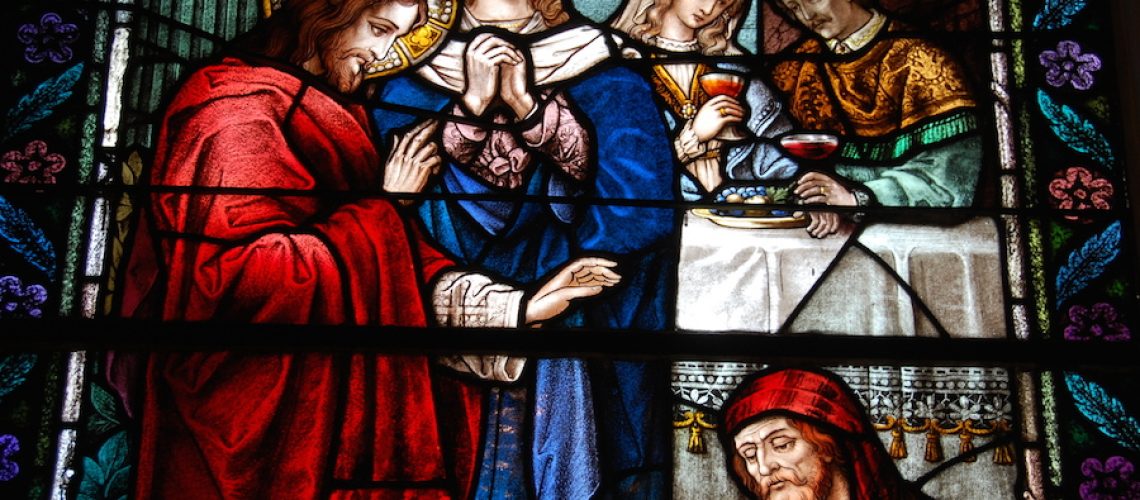
The night was young, and the guests were having fun. The bride’s parents were wealthy relatives of Mary, and no expense had been spared for this wedding of their only daughter.
When Mary’s message came, we were quite a ways from Cana, in the Galilee area. No one knew exactly where Jesus was, so the invitation to Jesus and his disciples had come to her.
It had been a hot and fast walk to Cana. I was determined not to let Jesus out of my sight. He had not picked me as an apostle, but I knew I had to be near him. I tried to catch every word he said, and as his apostles knew me, they allowed me to walk with them.
One of them, my friend James the Lesser, had become more than a fellow traveler. Despite his lame leg, a crutch, and one good leg, he could move faster than I could with two good legs. He was a true inspiration.
This James, my friend, was the son of Alpheus. Not to be confused with the other James, the son of Zebedee and brother of John.
But now we were at the wedding feast. We had missed the bride’s arrival in a litter with her bridesmaids. People were singing and dancing, and the atmosphere was filled with love and joy. She sat in a canopy for all of us to admire.
Ah, the noise, the music, the food. The music was loud and fast, and they also had a singer. I could not sit still, so I joined a group of men nearby to dance with. I whirled and swirled in true Jewish fashion.
I recognized the bows, harps, lutes, lyres, and zithers and marveled at the players’ abilities. A few young men had found some cymbals and were clanging away.
We stopped to listen to stories about the bridegroom and the bride. They had been friends since early childhood.
And the clothes! It was a feast for the eyes, and the room popped with color.
The young couple had been betrothed for quite a while. The beautiful addition to the bridegroom’s parents’ house, where they would live, had been completed, and the young man had come to fetch his bride. She was young, shy, and blushing, wearing a white high-necked dress with ruffles on the sleeves — a modest dress.
They looked so much in love, and for a moment, I envied them. Then again, I want to continue my single lifestyle and how I could follow Jesus. I would rarely be home.
There’s a brief lull in the festivities as the band stops playing, and the dancers rush to their tables for more wine. To the side, I hear murmuring, and then a loud and panic-stricken voice exclaims –
“What do you mean there’s no more wine?”
I turned, interested to see what catastrophe the poor Chief Steward had to deal with.
The night was young, and the gaiety was reaching a fever pitch. This would be a disaster of the highest order. No wine at a Jewish wedding would cause a revolt in line with the Maccabean Revolt. There was more whispering, and the Chief Steward nodded and, dragging his feet, approached Mary.
She listened, smiled, nodded, and walked over to Jesus.
He stood a short distance away, talking and laughing with his disciples. Softly, so as not to create a pandemic, Jesus’ mother said to him, “They have no more wine.”
Jesus looked at her, and something I couldn’t explain passed between them.
And then Jesus said something I could not understand either. He said,
“Woman, why do you involve me? My hour has not yet come.”
Now I ask you! What is one to make of that answer? But Mary smiled, reached out, and briefly touched his cheek.
She returned to the servants, smiled at the Chief Servant, and said — “Do whatever he tells you.”
This was where the fun started! I could not believe my eyes and held on to James for support.
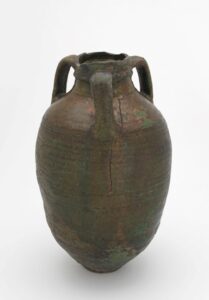
There were six huge stone water jars nearby. The ones we use for ceremonial washing. Each one held about two to three firkins of water.
Jesus, too, walked over to the servants and said — “Fill the jars with water.”
Mary was watching closely to make sure they filled them to the brim.
Then he told them, “Now draw some out and take it to the banquet master.”
You should have seen the banquet master’s face! He had no idea where the wine came from and called the bridegroom aside. He was quite upset, red in the face, and wringing his hands he said –
“Why did you leave the leave good wine for last? Normally, one brings out the good wine first, and when the guests have drunk their fill, bring out the lesser-quality wine?”
What a sight that was. The banquet master was embarrassed. The bridegroom was confounded. The guests? Well, they were having a wonderful time and getting louder and louder.
And Jesus? He left quietly, and no one noticed.
I could not let go.
“James,” I whispered. “James, did you see that?”
James grunted, which could mean anything. “That’s our teacher. There’s nothing he can’t do.”
I shook my head and waited until the servants crowding around the huge stone jars thinned out. I sauntered over. “Psst, “ I whispered behind my hand. “Psst, can you pour me some wine from that jar?” I pointed randomly at a stone jar. He took a tin cup, dipped it, and passed it to me.
It was heavenly! The best wine I ever drunk. Golden and smooth. I swear I tasted the sun in every drop and heard those angelic choirs poets always rave about.
James told me it was the First Public Miracle Jesus had performed. “What about the blind man?” I asked. To my mind, healing of that nature is also a miracle.
“It wasn’t public,” James said.
After that, I was determined not to miss out on anything. I apprenticed myself to Jesus, and where he went, so did I.
A self-appointed apostle. It was glorious.
You should try it.





12 thoughts on “What Do You Mean There’s No More Wine?”
Pingback: The Good News: Coup Upon Coup Upon Coup, and More Dispatches. . . - Catholics For Catholics
Thankfully, Jesus never said to Mary what the majority of translations have him saying. JOHN 2:4…..is a rare case in that Jesus’ words MUST BE in the literal or He will seem harsh, self involved and non communicative. He in Young’s Literal and in the Latin Vulgate….says, “ What to me and to you, woman, my hour has not yet come.” “ What to me and to you “….is an ancient idiom in the Bible AND WAS USED BY ELISEUS RIGHT BEFORE he miraculously provided tons of water for three armies. And Jesus would have discussed Eliseus with Mary as being a figure who did miracles that Jesus would do…Eliseus produced tons of liquid for 3 armies in 2Kings3…Eliseus multiplied loaves of bread for a crowd in 2Kings4…Eliseus raised a dead child to life in 2Kings4 just as Jesus raised the daughter of Jairus….Eliseus cured leprosy in Namaan in 2Kings5 just as Jesus cured the ten lepers.
AND YES…WOMAN here in John2:4 actually means “dearest woman”. Mary Magdalene is weeping near the empty tomb of Jesus. How does Jesus address her? Gynai…woman…DEAREST ….later when she recovers He uses her name. When TWO ANGELS see her crying, they also call her gynai….dearest woman. When a female is in a weakened state, two angels and Jesus address her with….woman/gynai….meaning our modern “dearest”. Which hour does Jesus mean? In John it almost always means….his hour to be arrested and crucified. So. WHY does Mary know he just said yes to doing a miracle? One more puzzle piece and you’ll know. Mary was worried that if Jesus did a miracle….he would soon be arrested and crucified. So….Mary says there is a wine shortage but Jesus sees that she is fearful by her facial expression or a shaking in her voice. So Jesus is really saying….” What to me and to you, dearest, my hour (to suffer arrest and death) has not yet come.”
Bingo…Mary hears a big fat yes….but every paraphrasing translation Catholic and Protestant has him saying no….
Good morning, Bill
First, thank you for reading and responding. I admit to not knowing any of the miracles in the Old Testament, but I will definitely make a point of researching them.
Take care and have a blessed day.
What is one to make of that answer? Certainly not disrespect. Maybe a relationship He had gently discoursed, amid prayers with her and Joseph, many times after supper: “What’s for us, Eve, until that day comes when, hearts both pierced, you become the New Eve: a spotless Bride and Mother beholding her son; and I, who had turned the wine into my Precious Blood that now flows from my side, a Sacrifice consummated (saved for last!), to redeem so many of your children — sons of God who receive me through you in Faith — in all ages until Bridegroom returns for his Bride the Church, invited to reign eternally with his Father at the true Wedding Feast — the Marriage Supper of the Lamb.”
Thanks for your reflections on my story. I do appreciate you taking the trouble to read and comment.
Dear Ida, TY,TY. You made me hear Jesus saying: “Aw, Mom!
Really? Well. …..OK”. They say God the Father spoke The Word and then writers with their words retell His story. You done soooooo good with this retelling. Guy,Texas
Darn it all! If I had thought of that “Aw, Mom!” comment, I would’ve used it.
Thanks for reading and making me feel good on this beautiful Thursday morning. I’m holding on to that mood and ignoring the world.
Dear Ida ,
Thank you for that charming account of that famous wedding . As a Jewish man ,it brought back memories of my own wedding many years ago !
Wine is important at all Jewish festivities . A special blessing is recited before imbibing ….
Blessed art thou our Lord our God king of the universe who has created the fruit of the vine . The response is Le’chayim …. to life !
The festive wedding meal is an opportunity to rejoice .It dates back to the time of Jacob’s marriage to Leah when Laban sponsored such a feast . ( Genesis 29 : 22 )
At weddings today there is a lot of singing and dancing , and the bride and groom are often put on chairs which are lifted aloft by the dancers .
Another custom is the singing of the shevah brachot , or seven special blessings for the happy couple , by honoured guests . The last blessing is for wine ,and the honoured guest
mixes two glasses of wine from which the bride and groom drink.
I would add two more points of interest .A Jewish wedding is not allowed to take place on Shabat and holy days because marriage is a legal transaction and cannot take place on the Day of Rest.
Finally ,a special marriage contract or Ketubbah is signed by the couple after the ceremony .It is written in Aramaic , specifying the duties of husband and wife . And when the Rabbi reads it aloud , all present feel a powerful connection with our ancient heritage.
Oh, Jock, this is wonderful. I’m so glad my simple story brought back many happy memories. I thoroughly enjoyed your Jewish wedding account, so I must share something with you. When I wrote, “What do you mean there’s no more wine,” I did a lot of research. It was fascinating. I started writing, completely immersed in the details; I forgot about the miracle! When I edited, more than half my story got chopped as I’d forgotten what I was writing about.
Thanks again for reading, responding, and sharing!
Pingback: SATVRDAY EVENING EDITION | BIG PULPIT
I don’t know if we have info these were wealthy relatives of Mary, Elizabeth was kin with Mary for example. But it’s the author’s disgression I gather.
Betrothals were probably up to a year.
Good morning from a lovely sunny morning in Upstate New York.
From my research, I gathered that betrothals lasted up to two years, giving the bridegroom time to prepare a room or addition to the parental home. Mostly, I place myself at the scene; all ruminations and digressions are mine; I’m creating a story.
Thanks for reading and responding!