

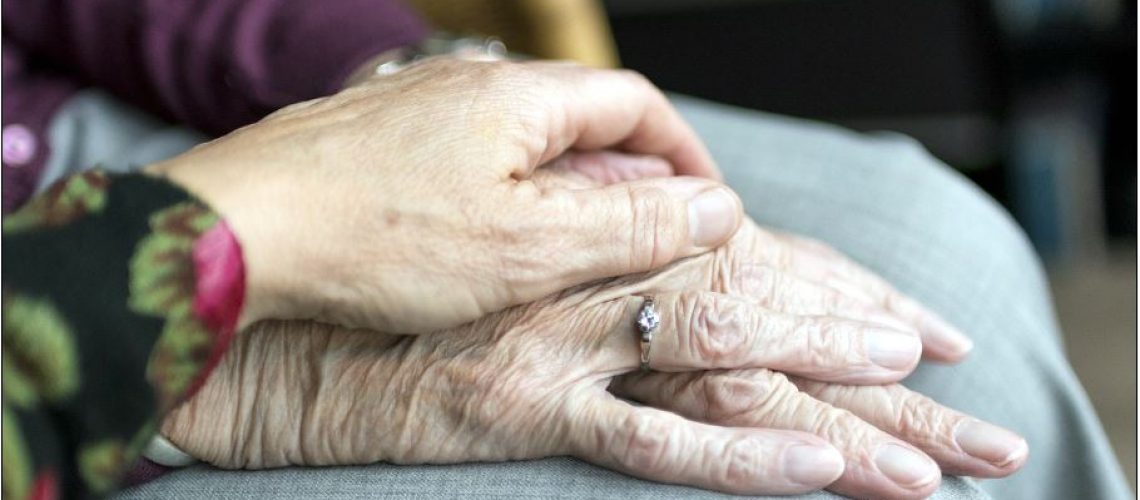
Despite what a popular yard sign asserts, kindness is not everything. But kindness is one important form of love in action.
From the point of view of spiritual development, one of the best features of kindness is how easy it is to separate it from how we feel. As C.S. Lewis once remarked, when we are called on to love our neighbor, it refers to what we do, not how we feel. And when we are not feeling very loving, we can always think about how to be kind.
Random Acts of Kindness?
The “random acts of kindness” movement reportedly began in 1982 when the late Anne Herbert, an assistant editor of CoEvolution Quarterly at the time, wrote “practice random acts of kindness and senseless acts of beauty” on a place mat.
From that beginning the idea spread. Now there is a Random Acts Of Kindness Foundation, a Random Acts of Kindness Day (February 17), and 734,000 results in a simple Google query.
Being an instinctual contrarian, I never liked the phrase.
To begin with, I was not convinced that there is such a thing as “senseless acts of beauty.” However, that conviction involves a philosophical discussion that is outside the scope of this column. Let it suffice to say that my perception is that if it makes no sense it cannot be beautiful. But even then I recognized that I was taking a rigorous approach to an expression of sentiment, so I generally held my tongue when the subject came up.
I am also skeptical that genuine kindness can be random, though acts can be. Also, looking though the myriad lists of kindnesses a web search reveals that the line between being kind and being nice is both thin and ill-defined.
I would suggest that kindnesses require combining thoughtfulness and awareness with good will. Being nice, on the other hand, requires good will and a little imagination – or a handy list.
Why distinguish kindness from niceness?
It is, in some respects, an arbitrary decision to make a distinction that may not generally be necessary.
But I think it necessary in this context to distinguish between the two because niceness can be essentially impersonal. For instance, one suggestion, from one of the lists I searched, was leaving an item’s worth of change in or on a vending machine. That’s a nice thing to do, but is it kind?
Kindness, on the other hand, is targeted and thoughtful. I once worked in an office where people would occasionally bring in a large carton or two of morning coffee with cups and additives, perhaps including a selection of pastries. That’s nice.
But if the day after you got some unhappy news someone comes in to work bringing you your favorite non-fat caramel macchiato latte and your favorite shortbread cookies, that is “kind.” It shows they knew you well enough to consider your morale in a difficult time, and to think about your enjoyment in specific terms. They made a serious effort to match your preferences and maximize your enjoyment of the experience and its consoling effect.
To be sure, impersonal niceness can become kindness when it meets a need.
Helping someone with their groceries is nice. But helping an elderly lady struggling to move bags from her cart to her car has the awareness of need and the thoughtfulness of response to be kind. Asking her if it’s okay to get some extra bags and helping her reduce the weight of each bag to make it easier to handle her bags adds even more kindness.
What distinguishes the two actions is the need of the recipient and the awareness of the actor.
Niceness Is Wonderful; Kindness Helps Us Grow
I think another difference is that – in part – niceness stems from our desire to act well and be a good person. Kindness, on the other hand, requires us to focus on another, which means we must move beyond our selves and out to the exterior world of the needs and conditions of others. It has been easy for me, at times, to convince myself that I am being kind when in fact I am only being nice – a good thing to be, but somewhat easier than being kind.
And I want to emphasize that being nice is a good thing! I don’t know most people well enough to be really kind to them, but I can be nice to anyone with little or no preparation.
Here’s another way to think of it. Take something nice, add difficulty and inconvenience to its execution and the effort to customize the act to meet specific needs of the recipient. You have transformed being nice into being kind. It is a spectrum, not a discontinuity. But the difference can be significant.
Sympathizing with someone who has to put down an old and ailing pet is the nice thing to do. Going with them to the vet, weeping with them and driving them home to make sure their distraction does not endanger them is kind.
A congratulations card to a young person going off to college is nice. Showing up at the house to help them pack and sending a care package with their special favorite home-cooked treats toward the end of their first month is kind.
Working to transform niceness into kindness makes us more aware of the needs and wants of others, always a good opportunity for growth.
Kindness and God’s Truth
I would not want to suggest that a person has to know God’s will to be kind. But we do have to be aware of God’s truth to be authentically kind. This is another area where we must separate Christian kindness from secular niceness. There is no kindness in soothing a person’s immediate turmoil by telling them things that decrease their chance for salvation and reconciliation.
We do not always need to tell every hard truth at once. But we cannot allow ourselves to drift into falsehood in an attempt to be kind either. We can tell someone that God is merciful to sinners; we cannot say he ignores transgressions without the sacrament of reconciliation.
This can be a difficult area, especially in our world where secular values increasingly have more weight in families than our Christian and Catholic vales. For a sensitive discussion of one such area, see Gene Van Son’s recent article on parental love for gay children.
Intentional Kindness
One of the most beloved priests I know is fond of assigning kindness as a penance, especially to people whose confessions are tinged with internal concerns and self-doubt. Sometimes he recommends kindness to a particular person or kindness of a particular type. But other times he just asks the penitent to practice kindness consciously for the next week.
The deeper effect of this penance is to help people see that kindness is something we can work at and can grow, even if we are not feeling particularly kind or affectionate or connected to others. By working to be kind, we are bringing to life, in a practical way, C. S. Lewis’s observation that love is not always what we feel, but what we do.
Being kind no matter how we feel will grow love in us where it counts.
Prayer:
Lord of all mercies, thank you for the many examples of kindness you offered in your life and that we have been given in the lives of the saints. Open our eyes to opportunities for kindness. Give us the awareness, the strength, and the courage to be kind and to learn to love more fully and completely through kindness. We give you thanks fort the blessings we have received through the kindness of others, and we ask you to make our own efforts to be kind a blessing to others as well.
Amen.




3 thoughts on “True Kindness is Love in Action”
Pingback: THVRSDAY EDITION – Big Pulpit
I get the distinction, but don’t care if the good deed occurs from kindness or niceness.
Neither do I, nor should we. Sorry if I wasn’t clear.
Mark