
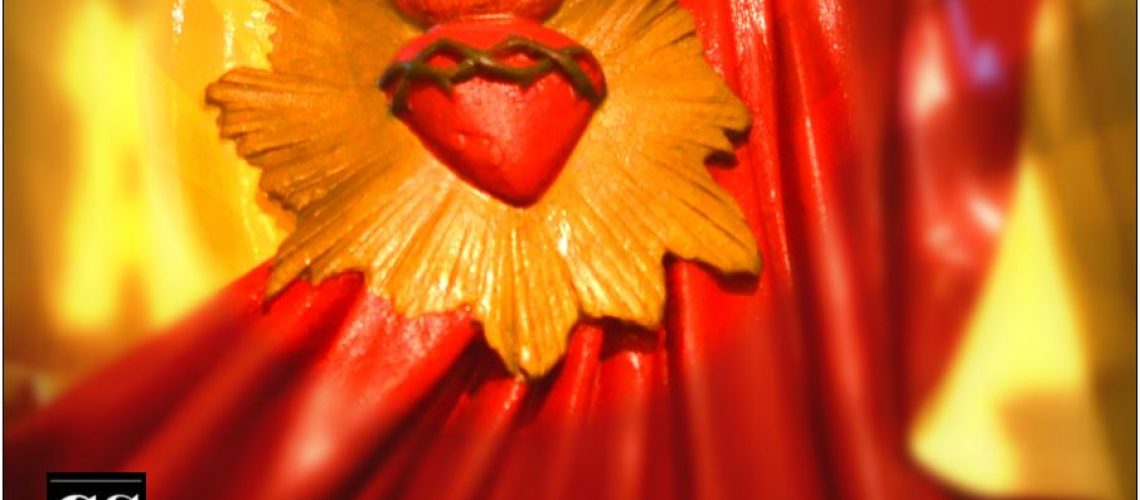
One of the laments of the Lord and the prophets throughout Scripture is hardness of heart on the part of God’s chosen people. This is a human problem from the very beginning, and it will continue until Jesus’ second coming.
To hear the voice of God, to be able to cooperate with His grace, we have to have a certain softness of heart.
Spiritual masters through the ages wrote about the temptations of the world, the flesh, and the devil. All three can harden out hearts and distract us from holiness. Even in an intermediate stage, the pursuit of the world, the flesh, and the devil builds walls of stone around our hearts.
Examples of hardened hearts abound in Scripture. Three of these examples can provide some insight into how to tear down these walls.
The World in the Story of the Rich Young Man
In Mark 10:17-22 the rich young man approached Jesus asking, “Good teacher, what must I do to inherit eternal life?” Jesus responds, “You know the commandments.” The young man assuredly responds, “Teacher, all of these I have observed from my youth.” Our Lord instructs him to sell everything and give to the poor, then to follow Him. The rich man’s “face fell, and he went away sad.”
Walking the line between having possessions and detachment is tough, but a hardened heart cannot reach God while tied to things of the world. Many of us can relate to the rich young man and probably feel the same recoil at Jesus’ instruction.
The 1977 mini-series “Jesus of Nazareth” portrays the story in an interesting way. The young man responds, “Sell everything? Everything I own? Everything my father slaved for?” The exchange adds a nuance to the conversation. Wealth was considered a blessing from God, more so in that time and place than now.
The mini-series connects the dots between that story and a line from a different gospel story: “No servant can serve two masters. He will either hate one and love the other, or be devoted to one and despise the other. You cannot serve God and mammon” (Luke 16:13).
Hope Against the World
Attachment to money, retirement plans, luxury, and the many other things of the world will start to build walls around our hearts. It can also lead quickly to other sins like covetousness, envy, and jealousy.
One of the antidotes to inordinate worldly pursuits is the voluntary embrace of poverty. Jesus usually does not ask us to divest ourselves of all our possessions. But we can still avoid excess. Take one area of excess in material possessions to either sell and donate to the poor, or give to those in need. Extra clothes are a good example: how many sweaters, jackets, or hats does one person need, especially when the winter months are so hard on the homeless population?
And we need to be careful of our motivation. Scorn for ourselves or our possessions misses the mark in softening our hearts. The detail that distinguishes Mark’s account of the rich young man story differs from both Matthew (19:16-30) and Luke (18:18-30) in a single phrase. “Jesus, looking at him, loved him” (Mark 10:21). That is, Jesus did not want the rich young man to be poor out of spite: He wanted to remove the obstacle between the man’s heart and the divine love of God.
Msgr. Charles Pope examines one of St. Cyprian’s writings on detaching ourselves from the world and offers some helpful meditations.
The Flesh in Exodus
We often think of the story of the Exodus as the ten plagues, the pillar of fire that protected the Israelites, and the great crossing of the Red Sea. The wandering in the desert that followed the Exodus had the recurring theme of hardening of heart.
About a month and a half after the Israelites crossed the Red Sea, hunger (understandably) set in. Rather than entreat the same God who had delivered them, the Israelites complained to Moses and Aaron (Exodus 16:3). “If only we had died at the Lord’s hand in the land of Egypt, as we sat by our kettles of meat and ate our fill of bread! But you have led us into this wilderness to make this whole assembly die of famine!” God then provided them with manna in the morning and quail in the evening.
Lacking water, the train of Israelites made a similar complaint. Moses entreated the Lord (Exodus 17:4), “What shall I do with this people? A little more and they will stone me!” God instructed Moses to strike a rock, from which water flowed.
The Flesh in Numbers
Later into their desert sojourn, the Israelites grew tired of those foods every day. They grumbled, “if only we had meat for food! We remember the fish we used to eat without cost in Egypt, and the cucumbers, the melons, the leeks, the onions, and the garlic. But now we are famished; we have nothing to look forward to but this manna” (Numbers 11:4-6).
Let’s step back a moment to remember where the story started: slavery in Egypt and being denied a break from labor to worship God (see Exodus 5:1-4). Ten plagues later Pharaoh asked Israel to leave, only to change his mind and send his army after them. God delivered Israel from the army in dramatic fashion at the Red Sea. After the miraculous deliverance of Israel, they wished for death or for the days of slavery. Wanting food and water is one thing, but wishing that God had never delivered them?
Hope Against the Flesh
Sin works in the same way as the grumbling Israelites. Those that have recovered from addiction, fought against patterns of sin, or pursued virtue will recognize the words of the Israelites. Nagging questions poke at every effort: wouldn’t it be easier to give up? Was living in sin really that bad? How about I start trying tomorrow? We have a tendency to focus on satisfying our appetites as the way to become happy.
I have found that appetites talk a good game but they can be trained. Small ways of saying ‘no’ can build up resistance.
I never made any headway by making ‘never again’ commitments. The most I could muster was small efforts; a little bit of fasting led to the ability to fast more. Turning off my phone, avoiding watching videos (whether shows or short videos), and reading physical books also helped.
Perseverance is the key! Whether we progress an inch or a mile, the continual effort keeps the walls of our hearts down.
The Devil and Pride in Eden
Out of the world, the flesh, and the devil, the last one is the chief among the capital sins: pride. It is associated with the devil for, acting in pride, Lucifer rebelled against God. Adam and Eve’s first mistake was not tasting a piece of fruit. It was believing the serpent’s lies about God.
In the story, the serpent starts with truth – “did God really say, ‘you shall not eat from any of the trees in the garden’?” (Genesis 3:1). After engaging Eve, he leads her to question God’s prohibition against eating the fruit from the Tree of Knowledge of Good and Evil. “You certainly will not die!” asserts the serpent. Even further, the serpent twists the intent behind the rule. He tells them God forbade them to eat of that fruit to keep good things away from them.
Here we have the ultimate hardness of heart, layer upon layer. God was not telling the truth. Why? He wanted to keep good things from us. If both of those things are true, God becomes an enemy. But it is all lie built upon lie in order to twist our mind and harden our heart!
Hope Against Pride
Humility is the cornerstone virtue of the spiritual life. I recommend a three-pronged approach to cultivating this difficult virtue. First, we have a wealth of good reading at our disposal. The longest chapter in St. Benedict’s Rule is on humility. St. Teresa of Calcutta had it down (at least as far as we could tell) and offered her advice on cultivating the virtue. The Imitation of Christ has many gems on the topic as well.
Second, pray for humility. It has been a joke among certain of my friends that to pray for this virtue was to court disaster. But without grace, the disaster stays a disaster and we miss out on the grace. Try praying the Litany of humility especially.
Third, act on it. Hold onto boastful words and do not say them. Actively think of others before your own needs. When tempted to criticize another, remember your faults and treat them with the utmost charity.
With a softened heart, God draws us closer to Himself. When a heart turns hardened, faith recedes and God becomes distant. When God disappears from the horizon of the human heart, the soul tragically gets what it wants: only itself.


So nice that The Loop from Catholic Vote linked this article.
Thank you for this inspiring (inspired) article. I tend to look at “big” hardness of heart, like Pharaoh’s, but as you pointed out, it can sneak up on me in many subtle ways. And slowly, like concrete, my heart can harden if I’m not on guard. I appreciate your practical tips, too.
Your reflections are spot on! I especially was heartened by your encouraging words that whether we progress an inch or a mile, perseverance is the key. Thank you for reminding me how easy it is to harden my heart.
[…] Latin & God’s Holy People – Anthony M. Esolen, Ph.D., at The Catholic Thing Softening the Hardness of Our Hearts – John Kubasak at Catholic Stand 3 Fundraising Skills Every Catholic Apostolate Should Have […]
Thanks for this post Sir John!
People like me needs messages like this to be reminded of our own hardened hearts. “Today if ye will hear his voice, harden not your hearts, as in the provocation.” Hebrews 3:15
Thanks Cesar, I’m right there with you!