

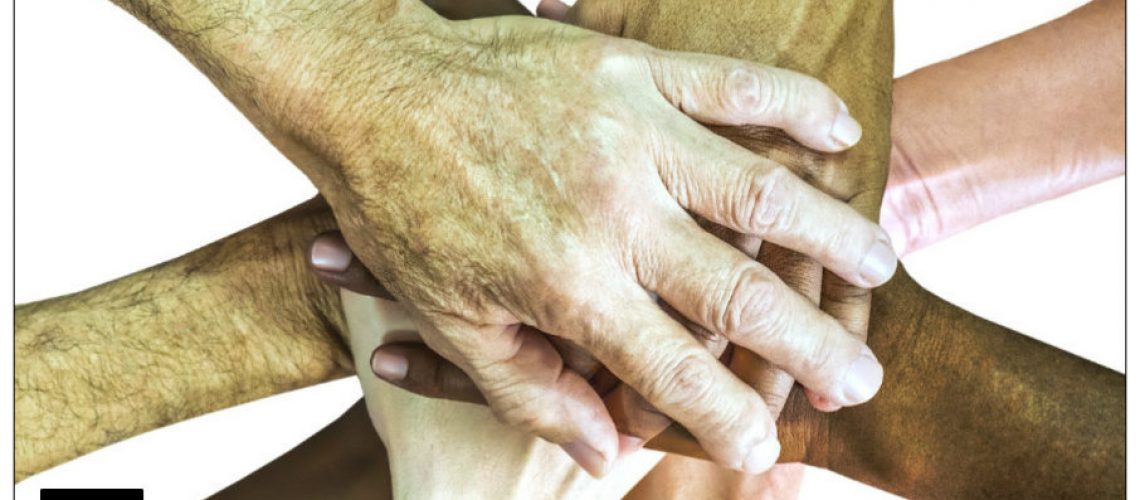
Does radical individualism benefit society, does it serve the greater common good? Or, does it foster a fruitless self-centeredness?
Any thorough examination of these questions, should begin with a definition in terms. Merriam Webster defines the adjective radical as: “very different from the usual or traditional: extreme”[1] , and the noun individualism, as: “the conception that all values, rights, and duties originate in individuals.”[2]
Radical individualism then, is an extreme notion that all values, rights, and duties have their origin in the individual. Thus, by its very nature, this concept mirrors the famous dictum of Protagoras the philosopher: “Man is the measure of all things.”[3]
This view would suggest, that the individual can form his own perspective, what he believes the truth to be; the values, rights, and duties, he believes are ideal; what he believes he is entitled to, the tasks he chooses to accept and be held accountable.
One should immediately notice a pattern in what has been stated, the individual has assumed ultimate authority in determining what truth is – what has value and what does not; what rights he is entitled to; and what duties he will accept and be expected to accomplish. Personal autonomy, rights, and self-expression, are paramount over and above reality, what is true, in and of itself.
This is precisely where Radical Individualism and Relativism are interrelated:
In philosophy courses I often encounter people who say things like this: “What anyone believes is true for that person. What you believe is true for you, what I believe is true for me.” The view expressed in such statements is usually called “relativism.” This view denies that there is any such thing as absolute truth and claims that all truth is relative to the person who believes it.[4]
If each individual is autonomous, entitled to his own unique personal rights and self-expression, one must recognize the foreseeable conflict that will arise between individuals. What one person believes he has a right to, or is entitled to, others may not. And, what one person accepts as true, can differ significantly with what others believe to be true, leading to the inevitable infringement of so-called rights based upon each individual’s unique perspective.
As this relates to the moral realm, modern psychology has recognized this in what Jonathan Haidt, has called the great narrowing of moral frameworks:
However, something not so funny seems to have happened on the way to claiming our rights. It concerns what Jonathan Haidt has called “the great narrowing” of moral frameworks. Over our history, the range of issues that we would call “moral” has narrowed considerably. Where moral principles of liberty, rights were traditionally accompanied by the values of public virtue, character, duty, community, and care, contemporary moral discourse tends to privilege individual rights as our primary moral principle.
This great narrowing has come at a cost. As rights have been extended to increasingly diverse social groups, we have come to appreciate the diversity of ways of being that are possible in the world. As a result, it becomes increasingly difficult to identify any single system of shared values and beliefs. Under conditions of moral conflict, whose values and virtues should prevail?[5]
Whose values and virtues should prevail, indeed! Individual rights have morphed into the primary moral principle? This fosters an undeniable self-centeredness; everything is determined by and revolves around the self, to the detriment of each individual and those they encounter. The individual has become so focused upon himself, that there is little concern shown for others, or the common good. And this – because it is more comforting for those who espouse this view, than it is to accept reality and absolute truth:
This is because it often caters to what people want to believe or what they find comforting. Absolute truth is not always warm and fuzzy, and often forces individuals to re-evaluate their personal beliefs and circumstances, and this makes many people uncomfortable. Because relative truth can exist without absolute truth, as long as an individual or group of individuals believe in something as true, it is true for them. This makes relative truth very powerful as it can shape what an individual or society believes and in turn shape their actions and the course of events.[6]
If this were true – the last sentence of this quote should be quite unsettling, as it asserts that an individual or group of individuals, can operate autonomously, without due care for the common good or the needs of others, demanding rights they are not entitled to, regardless of God’s law, or established law within society. The individual or individuals can refuse to acknowledge the truth, or deny that absolute truth exists in and of itself, counting it false, as relative to himself or themselves. Thus, Radical Individualism and Relativism, are nothing more than deceptions, man’s feeble attempt to construct his own reality, and they are antithetical to reality itself.
The Catechism of the Catholic Church speaks of the Truth in paragraph 2466: “In Jesus Christ, the whole of God’s truth has been made manifest. ‘Full of grace and truth,’ he came as the ‘light of the world,’ he is the Truth”[7] (cf. Joh 1:14; 8:12; cf. 14:6). And, Christ proclaimed this Himself: “Jesus said to him, I am the way and the truth and the life. No one comes to the Father except through me.”[8]
Truth is much more than an abstract concept; it is a Divine Person:
The Hebrew for truth is Emeth. It is composed of three letters: Aleph=Alpha, Mem=My, and Thaw=Theta. The Aleph and the Thaw are the first and last letters of the Hebrew alphabet as the Alpha and Omega are of the Greek. Thus, the term Emeth (truth) begins with the first letter of the alphabet and ends with the last…. This led the Jewish sages to find in this word a mystical meaning. The Aleph or the first letter of Emeth (truth) denotes that God is the first of all things. There was no one before Him of whom He could have received the fullness of truth. The Thaw, or last letter, in like manner signifies that God is the last of all things. There will be no one after Him to whom He could bequeath it. Thus, Emeth is a sacred word expressing that in God truth dwells absolutely and in all plenitude.[9]
Here one can comprehend a reality of which there is no greater reality – and this veracity is expressed in Scripture: I am the way and the truth and the life. As this relates to language – with Aleph the first letter of the Hebrew alphabet, and Thaw the last letter of the Hebrew alphabet. Corresponding to the fact, that Christ is the Alpha (beginning of all things) and the Omega (end of all things) attested to in the Greek language. And further, through the fact that the first letter, or Aleph, of the Hebrew word Emeth (Truth), in God truth dwells absolutely and in all plentitude – denotes that God is the first of all things – and the Thaw, or last letter signifies, that God is – the last of all things. The Greek word for (Truth) ἀλήθεια, alḗtheia has been translated (true to fact), properly Truth, and lastly, Reality.
Thus, if one desires to know the truth (reality) as it exists in nature and science, one must begin with observation:
The scientific method begins in observation. Whether a cloud overhead or a broken car, science begins with questions. A scientist notices a pattern, proposes a hypothesis, tests it through experiment, and analyzes the results. This is not far from the way a wise man investigates life, as Solomon writes: “The heart of the wise seeks knowledge” (Proverbs 18:15).
Scientific methods should always emphasize testability and evidence. However, not everything worth knowing can be tested. As the Catechism teaches, some truths “lie beyond the grasp of human reason alone” (CCC 50). The methods of science are tools—useful, powerful, but limited. They serve knowledge of the physical world, not the fullness of truth found in Christ.[10]
Mankind can engage the God given faculty of reason to observe nature, identify a specific instance for inquiry, and make a hypothesis based upon what he has observed. He may then experiment to reproduce what he has seen, and finally analyze the results. This is known as the empirical method.
However:
Science, in fact, cannot “supply the reason” for the laws of nature, or for the principle of lawfulness inherent to all natural entities. The lawful behavior of nature has a character of “givenness,” of something received. Although the ultimate “why” embodied by the laws of nature escapes the scrutiny of science, it is precisely in virtue of them that science is possible.[11]
Just as, the lawful behavior of nature has the character of something received, and the laws of nature escape the scrutiny of science, the empirical method cannot be employed to prove that God exists.
Nonetheless:
Created in God’s image and called to know and love him, the person who seeks God discovers certain ways of coming to know him. These are also called proofs for the existence of God, not in the sense of proofs in the natural sciences, but rather in the sense of “converging and convincing arguments”, which allow us to attain certainty about the truth. These “ways” of approaching God from creation have a twofold point of departure: the physical world, and the human person.[12]
The gift of creation and the gift of the human person have the character of giveness, that is, they have been received. The fact that they have been received, suggests the greatness of the giver. Thus, one must come to know Him, first, through converging and convincing arguments, and then, to come to a greater knowledge of God, one must undertake a leap of faith.
Individualism and Relativism do not further this pursuit, as they are inherently self-centered. God is a relation of persons, Father, Son, and Holy Spirit, in like manner, all men are interrelated with each other and have their ultimate end in the One True God Who created them:
…so that they may all be one, as you, Father, are in me and I in you, that they also may be in us, that the world may believe that you sent me. And I have given them the glory you gave me, so that they may be one, as we are one, I in them and you in me, that they may be brought to perfection as one, that the world may know that you sent me, and that you loved them even as you loved me.[13]
[1] Merriam-Webster.com Dictionary, s.v. “radical”, accessed June 17, 2025, https://www.merriam-webster.com/dictionary/radical
[2] Merriam-Webster.com Dictionary, s.v. “individualism”, accessed June 17, 2025, https://www.merriam-webster.com/dictionary/individualism
[3] Plato. 1976. Protagoras. Translated by C. C. W. Taylor. Oxford: Clarendon Press., pg. 214.
[4] Cornell University, Allen Wood, “Relativism”, accessed June 17, 2025, https://blogs.cornell.edu/envirobaer/religion-ethics-and-the-environment/course-syllabus/relativism/
[5] Psychology Today, “Is Radical Individualism Destroying Our Moral Compass?”, accessed June 17, 2025, https://www.psychologytoday.com/us/blog/values-matter/201612/is-radical-individualism-destroying-our-moral-compass?
[6] Aithor.com, “Truth: Absolute or Relative?”, para. 3.3, accessed June 17, 2025, https://aithor.com/essay-examples/truth-absolute-or-relative#31-characteristics-of-relative-truth
[7] Catholic Church. Catechism of the Catholic Church : Revised in Accordance with the Official Latin Text Promulgated by Pope John Paul II. 2nd ed. Vatican City
Washington, DC: Libreria Editrice Vaticana ;
United States Catholic Conference, 1997., para. 2466., (Hereafter cited as CCC).
[8] Confraternity of Christian Doctrine, Catholic Church, Saint Joseph Edition of the New American Bible (Washington, D.C. United States Conference of Catholic Bishops, and Totowa, NJ: Catholic Book Publishing Co. 2011)., Joh 14:6., (Hereafter cited as NAB).
[9]New Advent, “Alpha and Omega”, para. 1, accessed June 17, 2025, https://www.newadvent.org/cathen/01332b.htm
[10] Classical Liberal Arts Academy, “Science, Models, and the Light of Faith: A Catholic Reflection on Scientific Methods and Theories”, para. 2, accessed June 17, 2025, https://classicalliberalarts.com/blog/science-models-and-the-light-of-faith-a-catholic-reflection-on-scientific-methods-and-theories/
[11] Inters.org, “Laws of Nature”, para. V, accessed June 17, 2025, https://inters.org/laws-of-nature
[12] CCC, para. 31.
[13] NAB, Joh 17:21-23.




4 thoughts on “Radical Individualism: Foreign to the Common Good?”
Pingback: Cistercian Abbey of Salem in Southern Germany, Mothers Should Encourage Your Sons to Be Open to the Priesthood, and More Great Links!| National Catholic Register – Catholic Mass Online Search
Pingback: Cistercian Abbey of Salem in Southern Germany, Mothers Should Encourage Your Sons to Be Open to the Priesthood, and More Great Links!| National Catholic Register – Todd K Marsha
Pingback: SVNDAY MID-AFTERNOON EDITION - BIG PULPIT
Pingback: MONDAY EARLY-MORNING EDITION - BIG PULPIT