

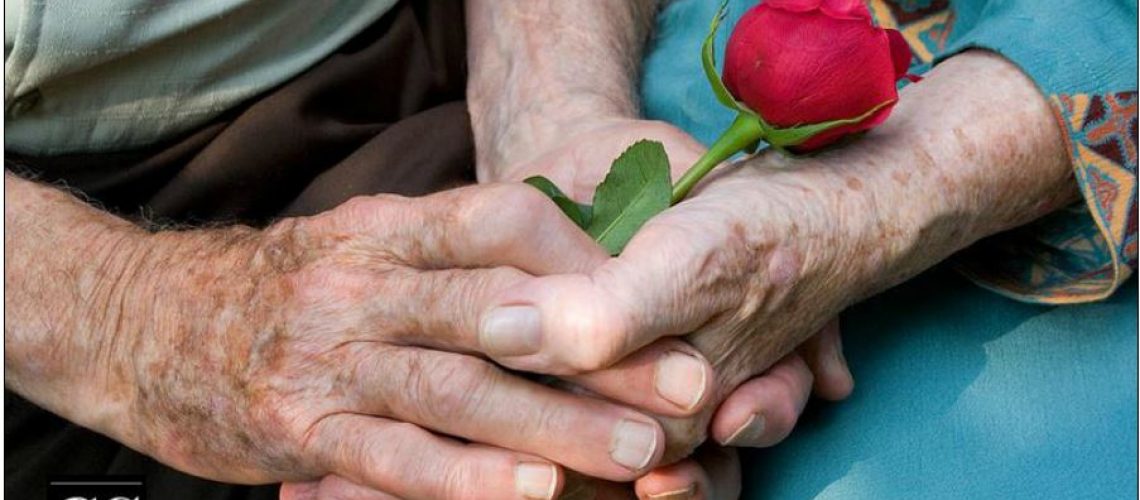
“What’s in a name? That which we call a rose, by any other word would smell as sweet.” While I dislike starting off an article or an essay with a quote (it’s considered lazy writing), it seems fitting.
If you don’t recall, this quote is from Shakespeare’s “Romeo and Juliet.” Specifically it is Juliet’s lament that her beloved is a Montague. Had they married, they would have been Mr. and Mrs. Romeo Montague.
As has been pointed out, however, “The fact is, today there are numerous varieties of ornamental rose that produce little or no fragrance.” So although the Bard of Avon was right in his day, today he is wrong.
But something other than horticultural advances happened between roughly 1595 and now. Feminism reared its head and names took on new importance, especially for the ‘modern’ woman. Today the vast majority of married couples still share the same last name, but there are also couples with hyphenated last names and different last names – two of the fruits of feminism.
Tradition has been getting a bad rap, even in the Church, but there is a lot to be said for tradition. The old adage, “tried and true” comes immediately to mind.
Coverture
Feminists argue that the tradition of a wife taking the husband’s last name, comes from the legal concept of coverture. An article at womenshistory.org states:
“Coverture is a long-standing legal practice that is part of our colonial heritage. Though Spanish and French versions of coverture existed in the new world, United States coverture is based in English law. Coverture held that no female person had a legal identity. At birth, a female baby was covered by her father’s identity, and then, when she married, by her husband’s. The husband and wife became one–and that one was the husband. As a symbol of this subsuming of identity, women took the last names of their husbands.”
This legal practice “has been eroded bit by bit” writes the author of the article, but “it has never been fully abolished.”
Today, of course, according to feminists, women are rebelling against the concept of coverture. They insist on a hyphenated last name or they are keeping their last name after getting married.
But we live in a patriarchal society, and there is no getting around this. Such rebelliousness is actually a bit foolish and pointless.
Hyphenated Names
The hyphenated last name idea is not really catching on, and for good reason – it’s just silly. I feel sorry for all the kids walking around today with hyphenated last names.
An NPR article, “When Hyphen Boy Meets Hyphen Girl, Names Pile Up” explains why the idea is not a good one. The article spells out the dilemma of Brendan Greene-Walsh and Leila Rathert-Knowles – two young people want to get married but can’t figure out what their last name should be. Mr. and Mrs. Greene-Walsh-Rathert-Knowles is, after all, a bit unwieldly.
And what would happen if they had a son who also wanted to marry a woman with a hyphenated last name, say Sarah Cornelius-Robertson? Would the couple have to become Mr. and Mrs. Greene-Walsh-Rathert-Knowles-Cornelius-Robertson? Aside from the tediousness of having to sign that as a name all the time, it wouldn’t fit on a driver’s license.
When all is said and done, the hyphenated last name idea is dumb. It might be better for all concerned if the wife just added her husband’s name to her name. Mary Alice Rizzo marrying Sam Houston, for example, would then be Mary Alice Rizzo Houston (no hyphen). This way both husband and wife share the same last name and the wife retains her maiden name.
Different Last Names
A recent Pew Research Study says some women are now opting to keep their own last name when they marry. This might be called a progressive approach to marriage, since “Democratic and Democratic-leaning women are twice as likely as Republican and Republican-leaning women to say they kept their last name.”
The study says:
“Most women in opposite-sex marriages (79%) say they took their spouse’s last name when they got married. Another 14% kept their last name, and 5% hyphenated both their name and their spouse’s name.
“Among men in opposite-sex marriages, the vast majority (92%) say they kept their last name. Just 5% took their spouse’s last name, and less than 1% hyphenated both names.”
(Is Pew showing its wokeness by referring to these marriages as “opposite-sex marriages” or is it trying to say, ‘we don’t consider same-sex ‘marriages’ to be legitimate marriages?’ I hope it’s the latter, but I bet it’s the former.)
So, the result of this new approach is that some 14% of married men and women have different last names. Isn’t that special!
It’s About Pride!
Jessica Crooke wrote an article for The Christian Post that explored the whys behind this new naming convention. She wrote that she was 10 months into her marriage, and she had not yet changed her name.
She wrote, “Do I plan to change my name? Yes. However, I can’t say that the idea of just removing my maiden name and tossing it aside like an old sweater is a concept that comes easily to me. I love my maiden name and have spent 27 years making it my own. It’s the name I share with my family who I love dearly, and I’m proud of it. This makes the change emotional and sparks a little pain of identity crisis in my heart and gut.
“As a millennial, feminist, Christian woman, I had a lot of thoughts swirling around my brain when it came time to put my decision in writing on my marriage certificate,” she wrote.
I was glad to read that she did plan on changing her name because that is the rational decision. I was, however, not thrilled with her referring to herself as a “feminist, Christian woman.” (See “Feminism is Just Another Half-Baked Ideology” for an explanation.)
Now before I am accused of being a male chauvinist pig, here are some additional words of explanation.
The Name Game
Just like the hyphenated last name problem, a married couple with different last names is an oddity in society. It’s also an oddity that poses problems for the children of such a marriage.
At some point little Johnny or Joannie is going to ask, “Mommy why is your last name different than mine and daddy’s?” And no matter what answer mommy provides it really is not going to satisfy Johnny or Joannie because most (if not all) of Johnny’s and/or Joannie’s friends and their parents have the same last names.
The unspoken question in Johnny or Joannie’s mind is going to be “Why does my mom have to be different?” And in a kid’s world, ‘different’ is not good.
Cooke provides more reasons for taking her spouse’s name in her article.
“My husband and I know marriage to be a covenant union sanctioned by God for His glory, our joy and the benefit of our future children and those around us,” Cooke writes.
She goes on say, “As stated in Genesis 2:24, through marriage, we go from being separate units to one flesh: “Therefore shall a man leave his father and his mother, and shall cleave unto his wife: and they shall be one flesh.” Sharing one name is just another way that we can further become “one flesh” in the eyes of God.
“Further, the relationship between husband and wife is a paradigm of the relationship between Christ and church; We—the church Bride—identify ourselves with Him and are called by His name when we become one with Him. As my husband’s bride, changing my name is a way for me to symbolize that same unique bond.”
The Big Reason
Feminists might respond to these reasons saying, “Okay so why not have both spouses take the woman’s maiden name?” And that question brings up the main reason for the traditional approach. Most feminists will vehemently object to this reason, but it still remains – ours is a patriarchal society, and there is no getting around this. But many feminists want to change this.
Consider, however, that society and the entirety of creation starts with God – “Our Father.” Throughout scripture God is referred to as Our Father. Jesus, too, became a man, the Son of God (not the daughter of God), sent by the Father to redeem the human race.
Catholic teaching says, “2780 We can invoke God as “Father” because he is revealed to us by his Son become man and because his Spirit makes him known to us.”
Jesus gave us the Lord’s Prayer that begins with “Our Father, who art in heaven.” That is a kind of clincher – God is our Father, and He created everything, including us. And Jesus was both God and man, sent to redeem us.
Now God is, of course, pure spirit, so Catholic teaching says God is neither male nor female. But he has enjoined us to know him as Father. This says something.
God, being God, could have done things differently. He could have revealed Himself to us as our mother, and He could have sent His daughter to redeem mankind. In all likelihood, this would have made us a matriarchal society. But He chose patriarchal over matriarchal. And He probably had good reasons for doing so.
So here we are in the 21st century with radical feminists still out to overturn society and destroy the family. And gullible young women are buying into the feminist claptrap and rebelling against tradition without really thinking through the ramifications of their rebelliousness.
It’s Just Silly!
When all is said and done, the two different last names approach to marriage is just as silly as the hyphenated last name approach.
Look, I get it. As Jessica Crooke points out some women who want to keep their own name are proud of who they are (oops, there’s the devil’s favorite sin). They really like their own name. It’s who they are!
Or, perhaps their own last names are more pleasant sounding than their intended spouse’s last names. Or maybe ethnicity is an issue.
A woman with a Spanish last name like Garcia, for instance, marrying a Chinese man with the last name of Wang, might not be all that thrilled to suddenly have a Chinese last name. She is, after all, not Chinese, so why would she want to have a Chinese last name?
Of course, if a Chinese last name really bothers her, she could just look around for a different man to wed! And if she is so proud (oops, there’s that word again) of her Spanish heritage she might want to find a spouse who is also Spanish! No one is forcing her to marry a Chinese man.
“Oh but I love him with all my heart! I can’t bear the thought of not being his wife!” the fictitious Ms. Garcia might say. A response to this is “If you love him so much, why are you so opposed to taking his name for your own? Or don’t you really want to be fully one with him?”
And is it really that much of problem to simply say to people “My married name is Wang, but I’m obviously not Chinese. I’m Spanish.”
It’s Just The Way It Is
In the final analysis, it is just pride, silly rebelliousness, and the Marxist feminist ideology, that has women insisting on keeping their own name when they marry. And down the road it just may make their children wonder, “What the heck was mom thinking?!”
Coverture, pride, and ethnicity aside, the simple fact is that two individuals become one in marriage. Different last names denote separation, not oneness.
Convention dictates that married couples have the same last name. And the convention is that the woman takes the last name of the husband. Sorry feminists, but that’s just the way it is.
Don’t like that idea? Then don’t get married. Or put away your pride (the devil’s favorite sin), become “poor in spirit,” and wrap yourself in a cloak of humility just as our Lord and Savior did.





20 thoughts on “Names, Feminism, Tradition, and Marriage”
Gene, do you always base your major life decisions on what might briefly confuse a child? Do you make sure you maintain the number of dogs and cats consistent with the average of little Johnny’s friends? Will you skip Mass if he asks why he has to sit still at a church when his friends get to play video games on a Sunday morning? I shudder to imagine what you think we should do when Johnny realizes that he might not have the same number of grandparents as his classmates…
Apparently a Catholic family structure and strong parental guidance means restructuring our adult lives around what might puzzle Johnny or Joannie at recess. Who could have guessed.
Amber, Your comment is an ad hominem attack based on some outrageous straw man arguments. My statement about parents having different last names posing problems for the children is only an ancillary point in the article, but it is a valid one. The Catholic Church teaches, “The Christian family is a communion of persons, a sign and image of the communion of the Father and the Son in the Holy Spirit.” Parents trying to teach their children about the covenant that is the Sacrament of Holy Matrimony, the oneness of marriage, and the unity of the family, are going to have to navigate around a big hurdle if mom has a different last name from dad and the kids – especially when social convention dictates otherwise.
As I wrote in my second reply to Frannie (below) “Elizabeth Cady Stanton had the right idea 125 years ago – keep your own name and take your husband’s name as well, without the goofy hyphen! Marriage is about oneness, not separateness.”
How do you explain the fact that many cultures who are also predominantly Catholic do not have this tradition of changing last names?
Your fact is not a fact. Google the question “Did married women keep their maiden names in most countries before 1950?” and the AI Overview offers this answer: “No, married women generally did not keep their maiden names before 1950 in most countries. The tradition of a woman taking her husband’s last name upon marriage was widespread, particularly in Western cultures.”
The entire article breaks down when you change the person who’s taking the spouse’s last name: if you love HER so much, why are you so opposed to taking HER name for your own? Then it comes the good and old “tradition”: yes, it’s because of tradition, not love–so it has nothing to do with “loving him/her so much”. Love and names are totally different and separate stuff, and I don’t care about human-made tradition, even because in my home country women do not have this tradition for some decades, and replacing one’s birth name is forbidden by law. Traditionalists and sexists over there are desperate to change the law and require women to change their names–it seems to me the patriarchy is not that “natural” after all. Me now: hired by American company, became American citizen and marrying an American man next year, and I refuse to have my birth name changed. It’s my right, both here and in my home country. Thank God my soon-to-be husband is not an immature entitled kid, and he understands that the only person who can make such choice is the owner of the name.
Yours is a minority viewpoint since 79% of women in the U.S. take their husband’s last name when the marry. But you are certainly entitled to your opinion. Still, even the Renowned feminist Elizabeth Cady (1815-1902) took her husband’s last name when she married, while still keeping her own name. She is better known as Elizabeth Cady Stanton.
Thanks for reaching out. Yes, according to Pew Research, 79% of married women (women from all generations) have done that, but only 33% of unmarried women plan to do so when they do marry (probably, majority of this group are younger, millenial and Gen Z, women) (https://www.pewresearch.org/short-reads/2023/09/07/about-eight-in-ten-women-in-opposite-sex-marriages-say-they-took-their-husbands-last-name/). As a Gen Z and foreigner myself, I don’t have a single reason to decide for any change in my own name. Also, the fact that a feminist has done that is irrelevant, given that she got married over a hundred (!) years ago, and I don’t even consider myself a real feminist (I am totally against abortion, for example). I would never look down on someone (man or woman) for choosing to take their partner’s last name. It’s not ideological—it’s just an individual free choice like any other, such as deciding what profession to follow or whether you live in a house or apartment.
Frannie, I mentioned Elizabeth Cady Stanton because many see her as one of the founders of feminism – an ideology that went wacko in the 1960s. While, admittedly, some good came out of it, a lot of confused thinking and a host of problems has resulted from feminism as well. You may not consider yourself a feminist, but the entire world has been impacted by feminist thinking.
You linked to the Pew survey I mention in the article, so consider, too, that 24% of women aren’t sure what they will do. This confusion is one of the fruits of feminism. Prior to the 1960s it was extremely rare for women to keep their own name after marriage in most countries and cultures. But Elizabeth Cady Stanton had the right idea 125 years ago – keep your own name and take your husband’s name as well, without the goofy hyphen! Marriage is about oneness, not separateness.
We love to accuse the Protestants of not understanding literal meanings of Scripture.
But perhaps in this case, we are the ones with excessive literalism. Jesus related God to Man by metaphorizing God as Father, but we have somehow taken it as literal. While there are rhetorical chops to this, there is a certain problem with this attitude.
No, God did not create Patriarchy. Patriarchy (and Matriarchy) are a consequence of Original Sin. We are Brothers and Sisters in Christ because Adam Eve were created to be Brothers and Sisters in God the “Father”.
The first consquence of Original Sin was “He shall rule over you” (i.e. Patriarchy). Was that a prophecy or a curse?
The “first consequence of Original Sin” (Genesis 3:16) was actually the pain of childbearing. “He shall rule over you” was the second consequence. But we could also invoke Genesis 2:7, where God created man first, and then Genesis 2:18, where God created woman as “a helper” for man. So it could be argued that the pattern (patriarchy) was already set. Also within this context, it logically follows that the consequence of the woman’s betrayal would be a shift in the dynamics of the relationship between the man and the woman.
If it was only Jesus “metaphorizing God as Father” I would concede that your point is worth considering. However, God is referred to as our Father in the Old Testament (in Deuteronomy 32:4,6, and Isaiah 63:15-16, for example). Throughout the Old Testament God is also referred to as He and Him. And as the article states, Catholic teaching says, “2780 We can invoke God as “Father” because he is revealed to us by his Son become man and because his Spirit makes him known to us.”
In the end, whether God established a patriarchal society or humankind (society) simply accepted the physical dominance of males over females, we’ve ended up with a patriarchal society. And it’s been this way since Adam and Eve.
Just say that the Catholic church teaches than women are in every function and characteristic inferior to males.
Karen, your understanding of Catholic teaching on women and men is incorrect. The word “complementarity” best sums up Catholic teaching – equal but different. For a very compacted version of Church teaching on men and women read this: What Is the Catholic View of Women? https://www.catholic.com/qa/what-is-the-catholic-view-of-women
For a fuller explanation you might want to read the Letter of Pope St. John Paul II To Women, https://www.vatican.va/content/john-paul-ii/en/letters/1995/documents/hf_jp-ii_let_29061995_women.html.
Pope St. John Paul II’s letter Mulieris Dignitatem – On the Dignity and Vocation of Women, https://www.vatican.va/content/john-paul-ii/en/apost_letters/1988/documents/hf_jp-ii_apl_19880815_mulieris-dignitatem.html is another document worth reading.
I kept my own last name. I didn’t want to give up myself when no one asked my husband to give anything up. Changing my name would be accepting that I am inherently and permanently defective while my husband is perfect just because he’s male. The ‘Christ and his church’ model means that makes are equal to God while women are not.
The article stands on it’s own. It’s 2,000 words long, which is already quite lengthy. It does convey, mainly through the Crooke’s quotes, the gist of justifications for the practices. You don’t agree with what I wrote. Fine. Just say so. In the future, however, avoid the innuendos and thinly veiled (and sometimes not so thinly veiled) personal attacks and we’ll all get along just fine. End of discussion.
Thank you for being an example to all as to why religion should (and is) failing worldwide. Here in Australia, Christianity – including Catholicism – has DECLINED by over 50% (source: Australian Bureau of Statistics 1970 vs 2020). In another 50 years Catholicism may well be resigned to the history books as a lesson to learn better from.
We are very incredibly proud of this statistic.
That is what education, separation of church and state, feminism and turning our backs on toxic cults and their water carriers will achieve. Oh – and a “she’ll be right mate” philosophy. You’re welcome.
Pingback: THVRSDAY AFTERNOON EDITION | BIG PULPIT
My reply to Susanne LEE applies here as well. “This article seems under-researched” is a not so thinly veiled attack on my research skills. However, this “article” is not an article/essay intended to offer the divergent viewpoints on the plusses and minuses of women choosing to keep their last names when they wed or opting for hyphenated last names. It is not an argumentative essay, it is a persuasive essay. I am simply stating that in my opinion such women are being silly and keeping the poor fruits of feminism alive by such choices. If you want to disagree with my opinions in the future (or the opinions of other CS writers), please figure out a way to do so without attacking the author in some way.
But to answer your questions, yes, I do know women who kept their own last name, and yes, I’ve asked them why, and yes, I’ve inquired as to how their husbands feel about it. And in my opinion their answers supported my contention that they are being silly and keeping the poor fruits of feminism alive by such choices. The answers I got are why I wrote this article.
“It’s just silly” is an extremely poor rhetorical device that most writers would be ashamed to employ and no one would take seriously. Do better.
Mirriam-Webster lists 31 rhetorical devices, and I have used many of them. But, “It’s just silly” is not a rhetorical device. It’s an opinion.
CS has deleted a number of your comments in the past because rather than simply offering an opposing viewpoint to what is presented in an article or essay you attack the author in some way. This comment could have been deleted for being a not so thinly veiled attack on my writing ability. So please consider the following before posting any future comments. If you wish to disagree with the opinions of CS writers, simply say so and explain why you disagree.
It is interesting that on virtually all headstones of married people the wife’s maiden name is engraved, adding a twist to the injunction that death did them part.