
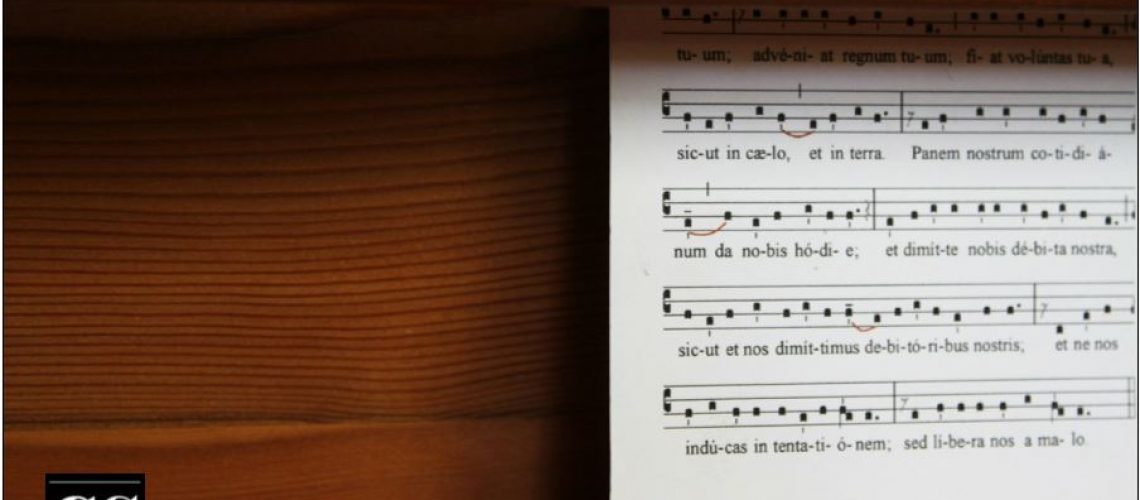
A lot of Catholic parish music directors today don’t seem to get it. While much of today’s “Christian Music” is uplifting and even inspirational, it is really not suitable for use at Mass.
But, these music directors will argue, people like the contemporary music we play at Mass. And it draws in younger Catholics.
However, a significant number of Catholics don’t care for it at Mass. And there is no evidence to support the claim that young people prefer contemporary praise and worship music to sacred music at Mass.
So is contemporary praise and worship music really okay for Mass? If it’s not, what’s to be done? Or should anything be done at all?
Catholics and Music
According to a 2017 Gallop survey, 44% of Protestants view music as a major factor in choosing what church to attend. But Catholics are different. Just 29% of Catholics who regularly go to Mass say music is a major factor in deciding this.
So for a whopping 71% of Catholics who regularly go to Mass, music is a minor factor or not any factor at all in deciding what church or Mass to attend. Those who prefer sacred music simply tolerate today’s contemporary praise and worship music.
But there is no question that the kind of music featured at Mass does affect the Mass. The survey, however, did not define what is meant by “music.” Apparently, to the surveyors, music is music.
Sacred music and chant is meant to add to the solemnity and beauty of the Mass. Contemporary praise and worship music is different. It is meant be performed. And it is not really meant to garner active participation from the congregation. So music is not just music.
And it turns out that even some Protestants have a problem with contemporary praise and worship music. Paul Lusher, a former music minister for College Church (a Reformed Evangelical Church associated with Wheaton College, Wheaton, IL) is the founder of the website Center for Church Music. He is not a fan of praise and worship songs.
“We believe that hymns are superior to praise and worship songs for the purposes of public worship. We also believe that the introduction of praise and worship songs at the expense of hymns is a serious matter with theological implications. Much more is at stake than what meets the eye,” he says.
Two More Surveys
Two surveys conducted by Catholic parishes provide additional perspectives on music at Mass.
One of the surveys was conducted by Christ the King Catholic Church, in Belton, TX. Christ the King surveyed parishioners on parish life in November 2019. Georgetown University’s Center for Applied Research in the Apostolate assisted with the survey.
The responses from the survey showed that 54% of the parishioners strongly preferred “Masses that are traditional in music and style.” Just 35% of parishioners strongly preferred “Masses that are contemporary in music and style.”
The second survey was conducted by St. Clare of Assisi Catholic Church in Acworth, GA. St. Clare parish apparently offers two traditional Masses and two contemporary masses on weekends. The parish conducted a “Music Ministry Survey” to find out what parishioners thought of the music at the Masses.
St. Clare parishioners apparently liked that the parish offered two styles of mass and music. The survey results noted that “Latin preference was split among the parish, 55% like it and 45% do not.” So it would appear that slightly more St. Clare parishioners preferred the Traditional Latin Mass and traditional music over the Novus Ordo Mass and contemporary music.
The Sound of Music
Anthony Esolen said in a recent article at The Catholic Thing, that most of the contemporary music being used at Mass is “lousy poetry and lousy music.”
Esolen summed it up rather well. When the singing starts, “. . . most of the congregation is silent or is murmuring, because the songs are for Mass entertainment, having been conceived in form and content after the patterns of mass entertainment.
“No one remembers the words, because the poetry is bad or nonexistent, and no one remembers the melodies, because they are bad or because they never were written to be sung by an entire congregation and its full range of human voices.”
A good example of what Esolen is talking about is the song “Alive and Breathing.” My parish’s co-music directors introduced this on our parish’s web page as a new song they will be playing at mass. It is a nice, upbeat, inspirational Christian song, but it really is not suitable for Mass. The poetry is okay at best, but there is nothing holy or sacred about this song. Give it a listen. Change the lyrics and you’ve actually got a pop song.
The Congregation is Not Singing Along
Lusher shares Esolen’s opinion. Lusher says contemporary praise and worship songs are written for performance, and because of their limited music range they do not lend themselves to strong congregational singing.
“Like much of popular culture (of which it is a reflection), its “shelf-life” is short, even disposable. That is why, over the past thirty years, few worship songs have survived.”
My own experience backs this up. From my usual vantage point near the rear of the church (when we were still able to attend Mass before the pandemic), I often looked around during the Entrance Song, the Offertory Song, and so on, to see how many people were singing. It was obvious that Esolen is on the money. Only about 3 out of 10 people are singing.
Of course our parish co-music directors have a different perspective. Both of our music directors are talented musicians. I am pretty sure they are both devout Catholics as well. I would also bet that both of them experience a sense of spiritual joy when they sing the contemporary praise and worship music. Their joy, however, is not being shared by all.
Their vantage point is from right next to the sanctuary and they are undoubtedly surrounded by people who probably share their taste in music. The folks nearest to them seem to enjoy singing the contemporary songs selected. So when our music directors glance up they see only people joyfully singing along with them. But they are not seeing the forest for the trees.
Old vs. New
Sometimes change is a good thing. But sometimes it is not. An analogy might be appropriate here.
A few decades ago I was part of a group of boys receiving instruction on how to be altar boys. The priest instructing us told us that we should think of ourselves as the invisible man. Our job was to assist the priest saying Mass without drawing attention to ourselves.
The priest explained what he meant. The focus of the Mass should be on God, he said. The people in the pews should be focused on the Sacrifice of the Mass. They should be focusing on the Liturgy of the Word and on the wondrous miracle that takes place during the Consecration. If you mess up, he told us, or otherwise draw attention to yourself, it is a distraction to the congregation.
This may be why the choir loft in many older churches is out of sight or at the rear of the church. The parish I grew up in had a wonderful organist and a great choir. The choir also had some really good soloists. To this day, however, I have no idea what any of the folks in the choir looked like.
Apparently, this ‘out of view’ thinking was by design. The choir was supposed to be invisible, just like us altar boys. The choir’s job at Mass was to add to the beauty and solemnity of the Mass with music, song, and chant without calling attention to themselves. Things have changed in this regard.
A Dumb Change
The church I grew up attending was a pre-Vatican II church. In modern, post-Vatican II churches the cantor or choir, along with the organist (or I should say keyboard or piano player and/or guitar player) are now in a prominent spot next to or near the sanctuary. Everyone in the congregation sees them. I can only assume this change was thought to be in keeping with the spirit of Vatican II. If so, I think this was a really dumb change.
I sometimes get the impression that some music directors and cantors now see themselves as every bit as critical to the Mass as the priest celebrant. If so, they are forgetting that the focus of the Mass should be on the Liturgy of the Word and the Liturgy of the Eucharist. I’ve never heard any description of the Mass that mentions a liturgy of the music.
Or maybe it’s just that they are so caught up in expressing themselves through the music they are so joyfully playing and singing that they fail to realize they are drawing attention to themselves. Maybe just turning down the volume on the amplifiers would help.
Our parish’s music directors probably disagree with Esolen and Lusher (and me). Many other parish music directors might also disagree. Music is, after all, a matter of personal preference. The fact that there are so many categories of music attests to this. But just because a song is a ‘praise and worship’ song does not mean it is proper for or suited for the Mass.
Music Appropriate for Mass
“Church teaching emphasizes that the music proper to the Sacred Liturgy possesses three qualities: sanctity, beauty and universality. Only music which possesses all three of these qualities is worthy of Holy Mass” said Archbishop Alexander K. Sample in his “Pastoral Letter on Sacred Music in Divine Worship.” He issued the letter to the Archdiocese of Portland, OR on January 25, 2019.
His letter was based on a letter he had issued when he was Bishop of the Diocese of Marquette (MI). In both letters the Archbishop drew on a host of Church Documents to highlight “some of the perennial truths regarding the Church’s teaching on sacred music.”
The neat thing about the letter is that it’s kind of like ‘one stop shopping’ for parish music directors. Rather than read all the pertinent documents on the Church’s teaching on music at Mass, music directors can just read Archbishop Sample’s letter. It’s like a Cliff’s Notes on what it is proper music. And it packs a big punch.
(Or if one prefers videos to the written word, here’s a good 10-minute video that also explains the difference between sacred music and contemporary praise and worship music. It was produced by the Diocese of Sioux Falls, SD.)
Music at Mass Should not be Performed
Music is one of the “performing arts.” It’s natural, therefore, for a musician or singer to instinctively perform the song being played and sung. (I’ve yet to meet a musician or singer who has no desire to perform in front of an audience!) And as Lusher and Esolen point out, most praise and worship music is written for performance.
But music at Mass should not be performed. All too often, however, it becomes a performance. This is evident any time a congregation bursts into applause after a song at Mass.
Applause after a song has happened a number of times during Sunday Mass at our parish. At the last two Christmas Midnight Masses at our parish the congregation also burst into applause at the conclusion of the second of two Communion songs during Mass. This is flat out wrong.
Two Communion songs has been a standard practice in our parish for many years. No one has, however, ever given me a good reason for the second song. And it is especially annoying and distracting when the second song seems to have been selected to enable the soloist or choir to showcase his, her or their talent and full vocal range as loudly as possible.
One would think that silence after Communion would be preferable to a song. Silence would allow those who have just entered into communion with Jesus Christ time to pray and fully experience the sense of being in communion with our Lord and Savior.
The Bottom line
So here’s what I suggest:
1) Parish Music Directors should set aside their personal music preferences and think seriously about the kind of music they are playing. Is it sacred music meant to enhance the solemnity and beauty of the Mass, or is it secular “praise and worship” music that is meant to be performed and really does not fit in with the Sacrifice of the Mass?
As already mentioned (but it bears repeating), there is zero evidence saying that contemporary praise and worship music is attracting more people, especially younger people, to Mass. At the same time there is more and more evidence that millennials like the traditional Latin Mass replete with traditional sacred music and chant. This is something worth thinking about.
2) Parishes with newer churches should consider screening off the organist/keyboard-player, cantor and choir so they are not visible to the congregation during Mass. The focus of the Mass needs to be on God, not on the music, the singer, the choir, or the musicians.
3) Parish Pastors should think seriously about offering both OF and EF Masses on Sunday. This may mean learning to say Mass in Latin for some priests. And this may be a humbling undertaking. However, many priests have been quoted as saying that saying Mass in Latin is a very spiritually uplifting experience.
But even an OF Mass, said ad orientum, with traditional sacred music would be preferable to only Masses with contemporary praise and worship music. I would be willing to bet many pastors (and music directors) would be surprised at how many people in the parish would opt to attend the more traditional form of the Mass.
So that’s my take on music at Mass. What say you? Do you have an opinion about the music being played and sung at Mass in your parish? Share your thoughts and opinions in the comments section.


Our Lord chastised us with the pandemic due to not singing proper hymns at Mass. And for not worshipping God through the Traditional Latin Mass.
i was born in 1971
my family was not a regular practicing catholic family(my dad isnt even religious but he would come with us to mass)
it was my mom who took it upon herself to get my brother and myself into the church
i have vague memories of mass in my early days but i remember the smell of incense, the sound of chanting from the choir (and though i did no understand the lyrics, i felt the need to be reverent) and an overall sense of awe, mild fright, and utmost respect
however, at some point between first confession/communion and confirmation (most likely a few years separation) things had changed
because we never went to mass every week the changes felt even more abrupt, gone was the incense and the solemn chanting and in was the “peter, paul, and mary” guitar services
i couldnt stand it
the mystery had disappeared and i didnt understand why
the only times that mass felt like it did in my early days was during advent and christmas- the incense returned and the christmas songs were still good
fast forward 30+ years and i have found myself back in church
and gone are the acoustic guitars
the choir and pipe organ are back and the choir even performs some nice polyphony before sunday mass
but once mass starts the songs are this contemporary junk the author speaks of; the songs drag on too long and they (according to the overhead projected images with the lyrics) all seem to be written by the same few people
with the “catalog” of chants, hymns, and centuries/millennia of music and an overall fantastic artistic tradition to draw from coupled with the advancements (powerful and cost efficient music studios in modern software) in modern music production it almost seems an intentional effort to stymie modern church/mass music which seemingly could draw from the ancient and make it accessible for the current times
i have no idea if there are issues of copyrights or any weird monopolies regarding companies that provide “one size fits all” materials for churches and if the music for the mass gets affected by this
Lifeteen Masses we’re started to address a lot of your comments. Sorry if I missed it but I did not see it mentioned in the article. Clear instructions are given to members to not take away from the Mass in a way to attract attention. The Lifeteen bands play up front to involve the congregation and must show respect for the Mass by kneeling, bowing, etc. at appropriate times. I agree that a lot of P&W songs are loud, and more rock and roll than prayer. We’ve been told that music at Mass is a form of prayer and is very important to the Mass. Not true anymore?
As far as the word performance goes, it does not just mean “showy” or “look at me.” A poor choir performance means that they were not prepared or ready to lead the congregation in song if they are out of tune, too loud, or musicians and voices are out of balance. A good performance would mean that all of this came together. Many people will explore other worship opportunities if the parish tolerates a poor performance. True?
Tom, you said it yourself – “a lot of P&W songs are loud, and more rock and roll than prayer.” These “modern hymns,” which are not really “hymns,” are written to be performed by a trained vocalist or choir rather than sung by a congregation. (And most of the folks in the pews do not have the training or vocal range required to sing these songs.) Some may call such music “prayer” but I think most would not.
While some people may like it, just as many (if not more) do not care for the music being “performed” at Mass today. I also use performance as the Oxford dictionary defines it – an act of staging or presenting a play, concert, or other form of entertainment. The concept of “performance” really does not have any place at Mass. The Mass is a re-presentation of Christ’s sacrifice for us. Our focus at Mass should be on this. And this is why many today do not care for the Novus Ordo Mass. They don’t want performance. They want the reverent, solemn, Traditional Latin Mass brought back.
As a life-long parish musician, I thank you for this wonderful article! You make so many valid points, which our pastors in my parish have also expressed to our ministry.
Our parish has recently established a Praise and Worship night, one Friday per month, when contemporary music is combined with a prayer service and adoration of the Blessed Sacrament. In this way, we provide the contemporary music that many like, while still using appropriate liturgical music at Mass.
Thank you again for your insightful discussion of parish music.
Hm. I agree that Traditional Masses should be provided and available, for those who agree with your musical and artistic tastes. But I also believe that high-quality contemporary music should be provided for those who want that–either at different mass times, or in adjacent parishes so that everyone can be served, and perhaps more importantly, to make it easier to evangelize new people into the church–including those who prefer contemporary music. (Don’t forget, Bach was “new” once.)
Liturgically vapid lyrics, poor quality music, poor quality production, and minimal congregational singing are rampant with both classical and new music, and should be improved everywhere. I find the song after communion to be helpful to meditate on the mystery of the sacrament, or to join into the musical prayer while freshly “fed” from the Eucharist, but I respect those who prefer silence, and think that should be available.
See the video of the closing procession from Christmas Eve at my parish. Contemporary music is the norm, but there is a very traditional parish available 3 miles down the road, and we are on good terms and have some shared programs. The lyrics here are actually the same as in The Messiah, and people really sing: Only those with visible mics are the official musicians, everybody else you see in the video is just congregation.
https://youtu.be/DGpEApAw9Sw&t=1h40m52s
I agree with you that contemporary church music isn’t for everyone, but would challenge you on your point that, even when well done, it’s bad for everyone. I think it’s worth looking for the beautiful and sublime, even in areas we don’t expect to find it. Wishing you the best,
Jeremy
So, basically, people are going to Mass for the music?
I have played music at Catholic Mass for about 25 years, at four different parishes. I am primarily a piano player, but will also play the organ and provide harmony vocals when appropriate.
I thank you for a mostly well-considered article on the role of music in Mass and the impact of the musical style on the Mass. However, I think you are glossing over or otherwise ignoring some important aspects of the conversation: the evidence of the style of music impacting attendance/participation, and what qualifies as praise and worship music.
For one thing, what evidence are you referring to here?
“…there is zero evidence saying that contemporary praise and worship music is attracting more people, especially younger people, to Mass. At the same time there is more and more evidence that millennials like the traditional Latin Mass replete with traditional sacred music and chant. This is something worth thinking about.”
You state this point twice, but provide no additional information about this evidence. What I can tell you from being on the ground for more than two decades is that that statement is not true, broadly speaking. From what I have seen, at most congregations people fall into roughly three (more or less) buckets: they prefer more modern music, they prefer more traditional music, or they don’t care strongly either way.
The point there is … if you take a stand one way or the other (e.g. go full traditional or go full “praise and worship”), you’re likely to alienate a huge portion of your congregation, and you will lose some of them. I’ve seen this happen more than once, and I’m watching it happen right now (more on that in a minute).
The other thing I take issue with — a premise I fundamentally have a problem with, which seems to pervade this article and some people’s thinking — is that all modern music falls into the “praise and worship” category — which is (as intimated here) more for performance than participation. That is an unfortunate assumption to make, as there is modern music which is prayful, not a performance show-piece, and well-suited to congregational participation. But I see time and time again that people (especially this crop of young conservative priests) assume that if it’s not in Gather and it’s not meant to be played on the organ, it’s “praise and worship” and not appropriate for Mass.
Our parish recently got a new pastor, a young man (younger than me, anyway) who is *extremely* conservative in how he wants the Mass performed. For the past 10+ years I’ve been at this parish, we had subtly different music styles at the four main weekend Masses — some were more or less fully traditional (older stuff out of Gather), some were more of a blend of popular selections from Gather with the occasional more modern piece from Spirit and Song or the like. However, he has recently decreed that all Masses will feature the same music, all traditional, almost entirely on the organ, and essentially fired (or forced out) a large portion of the volunteers at the parish who have contributed to music over the decades.
My group was one of the ones that did a strong blend of older traditional stuff on the organ, mid 20th century favorites from Gather on piano (with occasional guitar support), and some more modern stuff. We were always extremely careful to ensure that all of the music, no matter the style, had a connection to the Liturgy of the Word and, just as important, were *accessible for the congregation.* Over the years, I think we found a great balance — we were careful not to do anything that was a performance (early on, people sometimes clapped after a particularly energetic recessional; we discouraged that and stopped doing some of those pieces), and many modern pieces we chose were incredibly beautiful and really made a connection with people. We had so many people come up to us after a Mass where we did one of these, especially for the first time, and tell us how much it moved them.
And that — engaging the congregation in music — was our primary priority. While Vatican II advocated keeping some Latin chant, it also said that “in the restoration and promotion of the sacred liturgy, this full and active participation by all the people is the aim to be considered before all else.”
Full and active participation. This means that, among other things, a strong consideration for choosing music must be how able and *willing* the congregation will be to participate in it. As has been correctly pointed out, a lot of praise and worship style songs aren’t meant to be sung by a large group — they’re performance pieces. They contain strange rhythms, difficult/loose melodies and rhymes, etc. I see this at another local church, they have all this foot-stomping music that some people seem to want to get into, but they can’t follow it because it’s too difficult for non-musicians. So that fails the participation test.
However, what some of these younger priests seem to be blind to (ours definitely is) is that some traditional music fails that test too. When the music is what a large portion of the congregation sees as boring or even “depressing” or “dreary” (words I’ve heard multiple times to describe the takeover of all traditional music the way it’s being done at our parish), people don’t participate either. I can say, unequivocally, that congregational participation in the music has dropped off significantly with the switch to all-traditional music at our parish.
And here we arrive (finally) at my point: there is a middle ground of blending some traditional with some modern music, selected with care such that it encourages full and active participation from the congregation. Pieces that have a connection to the liturgy, and which are written/structured so that they are easy to learn and sing. But too many priests are close-minded to this, and think anything that involves an instrument other than piano or organ — even if the song isn’t a rocking “praise and worship” performance style piece — isn’t acceptable. That anything written after 1960 can’t possibly offer a spiritual connection to the liturgy.
Ironically, that mindset is exactly what’s turning people off, because they aren’t feeling a connection with the music anymore. I’m watching people leave our parish chiefly because of the “dreary”, “monotonous” music. It doesn’t work for them. There is a better way, but some priests are too stubbornly conservative to be willing to find that middle ground. They just broad-brush ban music, without nuance, and are apparently convinced everyone will come around if they stick to their guns, and eventually everyone will see that their way is better. Well, I’ve got news for them: that’s not how it works, and there are plenty of historical examples of the Catholic Church eventually waking up to the fact that they have to adapt/modernize. The Church is losing people because of the overly simplistic generalization that all modern music = praise and worship music.
Matt, thank you for sharing your thoughts. If more music directors of Catholic parishes were as conscientious as you seem to be I probably would not have been motivated to write this article. Please note, however, that I did not say ALL praise and worship music is unsuitable for Mass. I did say “MOST” Praise and Worship Music is Not Suitable for Mass.
As for your opinion that it is untrue that there is no “evidence that millennials like the traditional Latin Mass,” I can only say that what I wrote is true. I put quite a bit of research into articles that I write. Despite your own observations, surveys by Fr. Donald Kloster fully support my contention –
https://liturgyguy.com/2019/02/24/national-survey-results-what-we-learned-about-latin-mass-attendees/
https://liturgyguy.com/2020/05/26/2019-20-tlm-survey-what-we-learned-about-latin-mass-attending-young-adults/
Additionally the number of parishes offering the Latin Mass has grown exponentially in the last 25 years and the pastors of those parishes have reported in various publications that more younger people are attending Latin Masses than are attending the Novus Ordo Masses.
I do agree with your statement about the three buckets. But there is a difference as to how those who prefer modern and those who prefer traditional react. Those who prefer traditional put up with the modern, while those who prefer modern will leave if traditional music is played. That says something about the mindset of those who prefer modern music. The solution to this ‘problem’ is as I have been advocating for some time: offer both the Traditional Latin Mass and the Novus Ordo Mass in all parishes (https://www.catholicstand.com/we-need-an-end-to-the-liturgy-wars/)
In regard to your statements about Vatican II and full and active participation, you might want to read an article, which is a reprint of a lecture by Fr. Joseph Fessio, at Catholic World Report entitled “The Mass of Vatican II”– https://www.catholicworldreport.com/2021/07/23/the-mass-of-vatican-ii/
And finally Vatican II did not just advocate keeping some Latin Chant, it said Gregorian Chant should be given pride of place.
I agree with you that we need more praise and worship music in Catholic churches. Yes we should focus on the liturgy and Eucharist and during those times more traditional music (not too solemn) would be more desirable. But after that praise and glorifying music would be beautiful. Aren’t we also at church to praise and glorify, give thanks to God? At Catholic Churches even my most favorite hymn, Amazing Grace, is sung slow and sounds gloomy. The church needs a mix of both. It needs uplifting music. I know personally these days Catholics have started to go to nondenominational churches to be uplifted by not only the music but by the sermons. I think God wants us to feel joyful also. .
You can still do Praise and Worship outside of the context of mass. What’s wrong with doing Praise and Worship on Friday in the basement and then doing Traditional Latin Mass on Sunday?
Because people want to do it as a community with others, not in a basement!
Loved the article! I look around Mass most days and see that most people basically “zone out” when the music starts. One would think that the clergy and choir would get the message. When you sing – you pray twice …. But if you don’t sing, you don’t get to interact in the Mass. personally, I don’t sing – important things are usually declared Or simply spoken. I find the musical part of Mass as off-putting and frivolous. And, generally, when this is brought up at church the music director gets defensive and shuts down any suggestions
In Sugarland Texas – there is an early Mass with no music. It’s usually well attended. The Mass is very interactive and enjoyable. The music is not missed and the Mass itself is more focused on the celebration of the Eucharist. In short – it’s a success
[…] Most ‘Praise & Worship’ Music Is Not Suitable For Mass | Catholic Stand […]
The problem with music at Mass could be very easily solved if the proper chants for the Mass, from the “Roman Graduale” was used – and yes, they are available in English.. Instead, it has been thrown out in favor of “Praise and Worship” hymns – that is Protestant hymns! The Catholic Church has bent over backwards to make its liturgy more palatable to Protestants and, likewise, its music.
Although many Catholics today may not remember it, in my opinion, the best “version” of the Mass, outside of the “Extraordinary Form” was the “Interim” or “Transitional” Mass used from 1965 until the promulgation of St Paul VI’s Missal in 1970, which was the Mass approved by the Fathers of the Second Vatican Council, before it became degenerated into what we have today.
Most Praise & Worship music is not suited for Mass. It is suitable for a gregarious large-form Bible study with a featured popular speaker…which is precisely what Protestant worship services are. They are no more than that, except on occasion when baptisms are celebrated; consequently, less solemn and exalted music is permissible.
At Mass, the Lord of the Universe makes Himself present to us. For that, only the most exalted and solemn music is fitting; moreover, that music MUST NOT evoke anything of-the-moment, but must be as timeless as possible, befitting the way that eternity touches us when Our Lord comes.
Having said that, we need to be blunt and honest about something: So far as I have been able to detect, there is not a Catholic parish in North America that does Praise & Worship music as skillfully as the Protestant churches with which I am familiar.
In fact, most Catholic parishes, when they attempt contemporary music, are absolutely embarrassing and cringeworthy. On the occasions I’ve had Protestant family members come to Mass with me while on vacation, I’ve actually broken into cold sweats of shame at how abysmally the music was done.
Part of this is because there just aren’t many skilled P & W musicians among Catholics, let alone sound-men and the like. The football team of a tiny high-school won’t have 11 superstars for their starting team, because they’re recruiting from a small pool; so too the parish searching for Catholic musicians.
Secondly, Catholic parishes either can’t afford to pay, or don’t pay, for the requisite skill and appropriate sound-reinforcement equipment. There is a Methodist church near my home where the band leader is paid $200-ish per service for selecting and organizing the music, leading the rehearsals, enlisting appropriate personnel, and then performing at the service. The other musicians in the band, and the sound-tech, are paid $125. The result is that the church drew excellent musicians from among Christians living nearby (where “nearby” means “within an hour’s drive”). The result of THAT was excellence in the music which grew over time.
Finally, I think a sensitive (and thus skilled) musician will recognize the inappropriateness of Praise & Worship music, as commonly done, for Mass. He will likewise recognize the inappropriateness of the Gather stuff from Haugen and all that rot; he’ll groan inwardly when he has to lead “On Eagles’ Wings” or “Gather Us In (to the Wreck of the Edmund Fitzgerald).” A good musician can stomach such song-lists for only so long, however strong his stomach. Eventually the spiritual and aesthetic malaise will induce him to bow out, to be replaced with someone less sensitive (and skillful) who isn’t nauseated so easily. This system of perverse incentives, surely, is another reason why Catholic parishes have yet to produce excellent (competent?) Praise & Worship output.
Best to just give it a rest, stick to what we’re tolerable at, and break out a mix of chant and pre-20th-century hymnody.
I agree with the main article points, having sung in a variety of choirs including Gregorian and contemporary, so this reply is from a choir member’s point of view. We often have a second Communion hymn/song ready if the line is still fairly long, which depends on number of Eucharistic ministers available, and the size of the congregation. Due to renovations, one choir area got stuck into the only space available, which happened to be at the very front, facing the congregation.
At Mass, singing is my gift back to God, so I want to offer my very best. This makes most contemporary music quite frustrating because the vocals tend to require little effort (apparently compensated for by an abundance of repeats), often contain no scripture (which makes them religious songs rather than hymns?), and three out of four lines in every verse are usually “about me and how I feel.” I feel that I’m lying when singing lyrics like “I give my all to you” when I know I really haven’t.
On the other side, I did not up with Latin Masses, and do not really find Gregorian chant appealing other than as Mass parts. I was starting to appreciate some of the English chant versions before the Gregorian choir disbanded.
Having taken “too many” bible studies , I’ve noticed that the usual hymnals (CBW, JS) contain some bad theology, but contemporary songs have been worse. A JS example is Those Who Love and Those Who Labor which uses a pantheistic quote from the Gospel of Thomas 77(b).
Finally, as a choir member I do not like being applauded at Mass. I would rather our music moved people’s hearts towards God so they would kneel and pray for a moment, rather than giving us the tribute. If I sing karaoke in the parish hall afterwards, then certainly clap as much as you want!
Oops should be “did not grow up with Latin Masses”
Agree with your main points. I’m a musician and enjoy gathering with fellow believers to play and sing P&W but I find it awkward and annoying at Mass, as well as irreverent. Mass is not the place for performance; humility is needed. And not just contemporary praise and worship music, but also the songs written in the 1970s-1990s that are found in the song books in most parishes. Here’s a thought and a question: I expect that there are more than a few parish priests out there who would like to go a new (or old!) direction with music for Mass, but may be picking their battles with well-entrenched music volunteers. What are some practical steps that parish priests can take to begin moving in the direction that you outline here? God bless.
Dear Mr. Van Son,
You are too kind! “Praise and worship” music is as vapid and annoying as Coca-Cola and Ford television commercials ca. 1970.
Cordially,
Thank you for this enlightening article + linkks. I usually pass up articles on sacred music because they are so harsh and aggressive, but this is so clear, concise and non-judgmental. Very useful!
I like to arrive at Mass about 15 minutes early, to compose myself and prepare for the sacred mystery. Unfortunately, my parish’s choir feels obligated to get everyone happy and upbeat about seven minutes before Mass begins. The extreme volume is torture. Sometimes I stand outside the church and don’t go in until this motivational screaming is over. I sincerely wish there were a dispensation for people like me to satisfy the Sunday obligation on a weekday, when there is no music at all. (And the homilies are less showy and more sincere. Oh, and when did a good sermon become a homily? Does that mean homey? As in homily grits? Good grief.) Great article.
I share your pain Jean. Gaudete in Domino semper!
Fine article, Gene. I agree with much of what you say. Here’s a solution. Use the liturgy for the Anglican Ordinariate. The language is beautiful, Elizabethan English, lots of thees and thous, the ritual is awe-inspiring, and the music is taken from the classic Anglican hymnal.
It seemed more solemn and appropriate (when I was able to do it) to go up to the altar rail, kneel, and receive the intincted host from the priest on the tongue.
Here’s an example:
https://www.youtube.com/watch?v=Qb46L8ysYsI
I apologize in advance if someone else has mentioned this; I haven’t read the other comments.
Thanks Bob. And thanks for providing another possible solution.
Anglican is not Roman Catholic. We all must be Traditional Catholic.
I was raised in the 60s and when we were forced to attend guitar masses in parohcial school as children (ca1970) most of the students hated it. To us it was corny, stupid, and lame, especially when the “grownups” insisted we participate singing “someone’s DYING Lord, Kumbaya….”. I recall the strained look on Sister X’s face when emphasizing the word “DYING…”. To this day I LOATHE guitar mass, which people say is odd because I am a musician in a gigging pop/rock band. Pop music has no place at Mass. Last Sunday’s virtual online Mass began with an out of tune piano rendition of Cat Steven’s “Morning Has Broken” played by a well meaning but misguided musical director at our parish. I detest that song, Sister X used to play that ad nauseum in the 70s. What I do remember and cherish was Benediction/Adoration in Latin with sung Latin. That ended around 1969. The older Boomers wrecked the Mass and it’s beauty and have created a dismal man-centric banal liturgy with sometimes blasphemous lyrics (e.g. “God of Day, God of DARKNESS”….I had that horrid song banished from our parish after few words with the director by the way…) and yet they continue playing dribble that turns my stomach. Kumbaya, indeed, and I’m sick of it.
I had much the same experience with guitar masses.
It was like watching a kid continually falling off a bicycle because his training wheels were taken off too soon. John Paul II’s solution was to put the training wheels back on.
I feel your pain Martin – and apparently so does most folk our age. Only 20 year-olds have worse mass attendance than our age bracket!! Barely. Because of guitar masses, 69% of our classmates were taken away in staight-jackets. 30 year-olds beat our attendance by 12%! Shouldn’t that be the other way around?
I’m tempted to find some of those awful lyrics, but then I won’t get them out of my head! Not worth it. I honestly remember that, as a 12 year old kid, I seriously wondered whether they lyricist was on drugs.
I was lucky when I found a factory job in my 20s that was 5 minutes from a Church. The Church had a 20 minute mass at 7:00 with ZERO singing. I got to work at 7:30. It saved my life.
As an older “Boomer” I plead innocent. I came home from Viet-Nam to discover the wreckage, and have argued against the dumbification of the liturgy ever since. Please don’t stereotype.
Well said, thank you!
My parish sings along enthusiastically, for the most part, to the ridiculous songs masquerading as sacred music. A few years ago I gave up singing any song written after the year of my birth and I am the happier for it. Mother Church has hundreds of years of beautiful music, and yet we sing nothing written prior to 1970. The constant singing of “I/me/my”, as though we were Jesus, sets my teeth on edge, but I suspect I am one of the few in my church who feels that way.
That this article should be shared 135 times (as I write this comment) on the day it is published speaks a lot. It lends voice to the faithful who are torn between being ‘prophetic’ in service of truth, and sounding ‘personal’ in these matters. Thank you!
Bravo! I have been trying to say this for years but never as completely and thoroughly as you just have. This should be required reading for every priest, choir director (a.k.a. music minister), and layman in the pew. If they don’t get It the first time around, read it aloud to them with emphasis. There is no room for performers at the Holy Sacrifice of the Mass – whether it is an MC priest or a praise and worship band wannabe. The visceral reaction I had, as a young child, to my very first guitar lead folk mass adds anecdotal support for what you share. I walked out that day, shellshocked and weeping.
Thanks Birgit.
I’m 69 and I miss the sacred music the choir from in the back of church up high in the choir loft use to sing solo with out the congregation once in a while and without the over bearing organ. Why can’t we hear the music the composers wrote in SATB anymore? Daniel Isele from Norte dame wrote back in the 80’s has the most beautiful psalms in S AT B between the epistle readings at mass but Choirs do not sing those solo anymore. What a shame
Yes! A thousand times yes! I sing in the ‘choir’ and feel very uncomfortable being the center of attention. In my church we do have the choir loft and we use it. However, our music director sometimes asks her to her other parish. There, the choir is on the side altar, in full view of everyone. That combined with the more contemporary songs she chooses is enough to put me back in the congregation.
Thanks, Erika. Feel free to share the article with the other members of your choir and your music director. It might start some good, worthwhile conversation.
Whether anyone likes or enjoys music at mass is not the point..If the music does not point to and honor our Lord, then it should not be used…As far as applause is concerned, people have missed the point of applause in church for a long, long time..Of course, no one knows what every congregant is thinking, but after being at quite a number of masses over sixty-five years, I can tell you why people applaud music..Most folks, in my opinion, are simply agreeing with what message the music is sending us..Remember, a lot of church music comes from Scripture and plenty of songwriters know this and stick to it.. So applause need not be seen as showing “enjoyment, ” but acknowledging the accuracy of the message the song is sending..The song, “It is welll with my soul, ” by a man who lost all his family but would not show anger toward God..That song typically brings plause because people agree with what the song tells them..
Donald, contemporary praise and worship songs do have a place, but that place is not at Mass. They are written for performance — to be performed on a stage in concert. The Sacrifice of the Mass is not a concert.
Also, three different Popes have said clapping at Mass is wrong.
Pope Saint Pius X would allow no outbreak of the applause which had become customary at papal services. “It is not fitting that the servant should be applauded in his Master’s house,” he is said to have remarked. Cantors/the choir/singers/musicians are also servants.
Pope Saint John XXIII also discouraged clapping because ‘templum Dei, templum Dei’ (The temple of God is the temple of God).
And, finally, in his book The Spirit of the Liturgy, Cardinal Joseph Ratzinger wrote, “Wherever applause breaks out in the liturgy because of some human achievement, it is a sure sign that the essence of liturgy has totally disappeared and been replaced by a kind of religious entertainment. Such attraction fades quickly – it cannot compete in the market of leisure pursuits, incorporating as it increasingly does various forms of religious titillation.”
In the old days, when the Latin Mass was the only option for everybody (instead of for a few linguistically-minded conservatives like now), most Catholics didn’t understand what was being mumbled by the priest who was facing away from us. When the Mass went into English, and we could hear the words out loud, it changed from mysterious, authoritative and eternal to ordinary and unimpressive. “That’s all the priest has been saying all these years??”
You complain about contemporary songs being inadequate and uninspiring. Translate them into Latin and play them on an organ instead of guitars and you might see the opposite effect.
I might not be the best person to respond – I often say I was blessed with horrible hearing at birth, but I think you make a good point, Capt. I’m also “deaf without my eyeglasses”…and lately with these face-masks, I don’t recognize anyone…it would be nice to at least read lips!
We have a nearby parish where a generous donor gave $100,000+ for a sound system. Worthless! It is earthshaking alright, but I think most old folk lose their “s”s and “t”s – more treble not bass! Get an 90 year-old to tune the thing (and compromise with the cops).
As for music, I agree – if you give them and inch, they’ll take a mile. The Pastor needs to grow a spine. I agree – put them back in the choir loft, no second communion song, no weird lyrics, wrap-it-up if the celebrant is ready! Don’t start another hymn verse if the priest is ready! I remember an organist who could wrap-up a song at any point and stop exactly when the Priest was ready – she was probably gifted. I was always amazed how she could do that!
This is not one of your better efforts CaptCrises. “In the old days” we had missals with the Latin on one page and the English translation on the facing page. Anyone with a missal knew what the priest was saying. And the priest was not “facing away from us,” he was facing toward the altar (technically toward the east) — right along with the rest of us. Also, when “the Mass went into English” a number of changes were made to Mass. It lost of lot of its beauty, solemnity, and reverence. The translation of the Latin into the vernacular also resulted in a lot of poorly translated, unimpressive phraseology. Corrections are still being made today.
And I did not say contemporary songs are uninspiring. Please don’t misquote me. In fact I said just the opposite. Re-read the second sentence of the very first paragraph. I did, however, say that contemporary songs are not suited for use at Mass. Translating songs like “Alive and Breathing” and the vast majority of the rest of the contemporary stuff into Latin and playing them an organ would not change anything. The vast majority of songs were and are written to be performed. They were and are not written to be used at Mass.
It’s not true that “anyone with a missal knew what the priest was saying”. Your eyes had to jump back and forth. And assuming he was speaking clearly enough for you to make out the weird (to us) way Latin fell on the page (what? “c” is pronounced “ch”? “e” is pronounced “a”?), if you missed your place just once, you were lost. You had to wait for the “Dominus vobiscum”, or one of the other (infrequent) cues, and then frantically find that place in the missal before he got away from you again. I spent a lot of time zoning out, looking at the stained glass, watching the lanterns sway with the timing of a pendulum, thinking of how Galileo got in trouble for noticing that.
Anyway, reading from the missal made me look like a nerd and (being sensitive to such things at that age) I soon cut it out. Most people didn’t use them. They knew the cues by heart and made the rote responses. It was not important to understand the Latin phrases. They were magic spells. You could deny it but that was the effect, as surely as that genie guy saying “mechalecha – hi mecha – hiliho” on Pee-Wee’s Playhouse. Such is inevitable when you compel attendance upon pain of sin and then speak a foreign language to a not particularly well educated congregation which would not be able to pronounce even English words like “subsidiarity” or “transubstantiation”.
P.S. The running joke, which I first heard from my Dad, was: the priest was actually saying “Hey Dominic, let’s frisk ’em”, because it was just before the second collection. You’ve probably heard that.
P.P.S. I am curious as to specifics. What detrimental changes were made when the translation to English was made?
No apology for the misquote? Be that as it may, you validated what I said about understanding what the priest is saying. I’m sorry you felt like a nerd using a missal. I never did.
Insofar as the changes that were made to the Mass, “detrimental” is a rather loaded and provocative word. I did not use that word. I said only that “. . . a number of changes were made to Mass. It lost of lot of its beauty, solemnity, and reverence.”
In general the new GIRM is not as specific as the 1962 GIRM. It’s as if it was intentionally written to allow a lot of leeway for how Mass is said. This has resulted in a lot of abuse in how Mass is said. Overall the Mass has become less solemn. The Communal Meal aspect of the Mass is now emphasized and the sacrificial nature of the Mass has been de-emphasized.
As for only a couple specifics, we’ve already touched on a big change – the priest saying Mass versus populum instead of ad orientum. After the Greeting the Priest also now has the option of briefly introducing the faithful to the Mass of the day. Many priests do this and abuse it. They joke around or get too ‘folksy.’ The Penitential Rite now has three options. The Confiteor is seldom used and we now stand for the Penitential Rite instead of kneeling. Many priests also now walk around when they deliver their homilies. And of course there is the sign of peace that takes place after Consecration. (Instead of recognizing and being in awe of Christ’s presence people now laugh and hug and shake hands with each other.) For Communion people get in line and hold out their hand to receive a host from one of their neighbors instead of humbly and piously kneeling to receive the body and blood of our Lord from the priest.
But let’s end the discussion here. As I’ve said in previous articles, a lot of devout Catholics like the Novus Ordo Mass. I do not have a problem with this. Parish Music Directors should still be more thoughtful in selecting the kind of music they play at Novus Ordo Masses. But a lot of Catholics, like me, do still prefer the TLM. So parishes should offer both forms of the Mass. This would put an end to ‘the Liturgy wars.’