

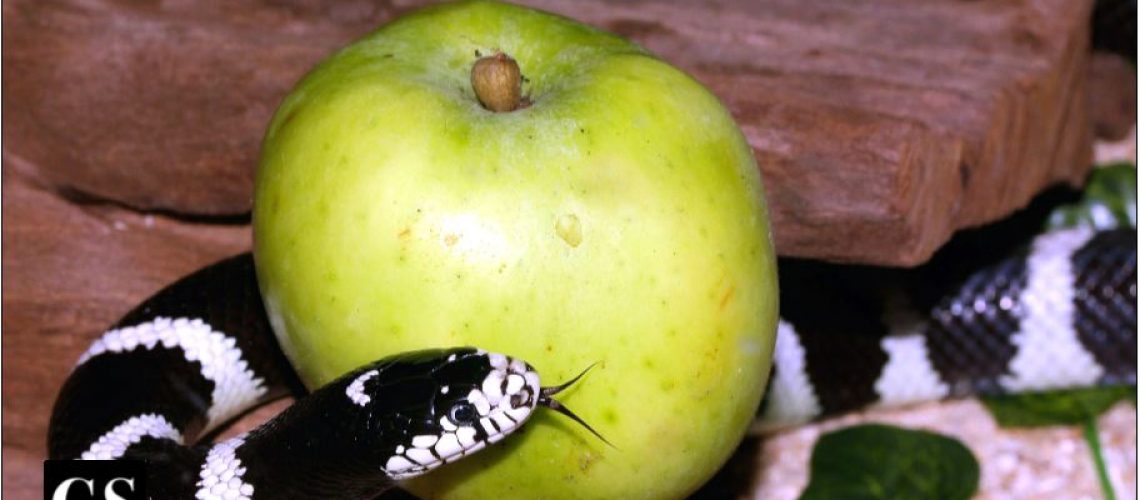
Fasting has always been a part of the world God created. As St. Basil the Great tells us “It was the first commandment that Adam received, “Of the tree of knowledge of good and evil ye shall not eat” (“On Fasting,” par. 3).
The Christian practice of fasting helps to release us from our attachments to worldly things and draws us nearer to our Lord. In the Bible, Moses, David, and John the Baptist were just a few of those who took on the spiritual exercise of fasting. And, of course, Christ fasted in the desert for forty days before starting His earthly mission.
Refraining from food for an elongated amount of time reminds us there are more important things in life than filling our bellies. It prompts us to recall Moses’ words to the Israelites (Deuteronomy 8:3), repeated by Jesus in Mathew 4:4, “One does not live by bread alone.”
Fasting Provides Benefits
In his Summa Theologica (Q147, Answer to Article 1), St. Thomas Aquinas wrote of the threefold purpose of fasting:
“First, in order to bridle the lusts of the flesh…Secondly, we have recourse to fasting in order that the mind may arise more freely to the contemplation of heavenly things…Thirdly, in order to satisfy for sins.”
More recently, in his 2009 Message for Lent (par. 8) Pope Benedict XVI noted:
“. . . fasting represents an important ascetical practice, a spiritual arm to do battle against every possible disordered attachment to ourselves. Freely chosen detachment from the pleasure of food and other material goods helps the disciple of Christ to control the appetites of nature, weakened by original sin, whose negative effects impact the entire human person.”
And St. Basil the Great also wrote in paragraph nine of his “On Fasting” homily, (linked to earlier):
“Fasting is a weapon against the army of demons.”
Fridays Are Fast Days
Friday, the day of Christ’s ultimate sacrifice, is the foremost day of the week for Catholics to also sacrifice. We do so by intensively praying and humbly fasting. In commemoration of His Passion, every Friday now serves as a sort of “mini-lent” in anticipation of Sunday, the Lord’s Day.
“Christian” fasting must have God as its essential purpose to be authentic. So there should be an intentional, supernatural motive for fasting from eating for many hours and abstaining from specific foods like meat. Yes, fasting or abstaining may also result in the person losing weight or improving one’s health. But the health benefits are supplemental.
It is further beneficial to also fast for divine intentions, making reparation for sin or seeking the Lord’s guidance. Fasting will also be more effective when one is also increasing a virtuous act while fasting. Increasing time in daily prayer on fast days is one such virtuous act. Increasing almsgiving by donating the money not spent on food to a charity is another.
Changes Over the Centuries
Throughout most of Church history, Catholics took fasting much more seriously than modern Catholics do. Written documentation of Lenten fasting dates as far back as 339 AD.
Early Christians broke their daily fast only after sunset, and then usually only with herbs, roots, and bread. They abstained throughout all the days of Lent not only from meat, but also from fish, eggs, milk, cheese, and butter. This is why “Fat Tuesday” – the day prior to Ash Wednesday – came into being. Catholics would feast on all these items from their pantries, lest they would go to waste over the next forty days.
Fasting and abstinence rules of the Church waxed and waned over the centuries. However, as recently as the first part of the 20th Century, the rules during Lent remained onerous. They included eating only one meal daily from Mondays through Thursdays and no food at all on Fridays and Saturdays. Additionally, there was a requirement to fast on the Wednesdays and Fridays during Advent, as well as to abstain from eating meat on Fridays all year long.
The Catholic Church dramatically downplayed fasting practices after the Second Vatican Council in the late 1960s. These softened rules for fasting and abstaining now state that Catholics between the ages of 14-59 are to fast, but only on two days all year – Ash Wednesday and Good Friday.
The Code of Canon Law allows each conference of bishops to “determine more precisely the observance of fast and abstinence.” It also states, “The law of abstinence binds those who have completed their fourteenth year.” In the U.S., “When fasting, a person is permitted to eat one full meal. Two smaller meals may also be taken, but not to equal a full meal.”
Every Friday Needs to Be Sacrificial
The average Catholic today may not realize that the “no-meat-on-Fridays” rule from past centuries is still on the books for all Fridays of the year, not just the seven Fridays of the Lenten season. However, not many know this because this rule was relaxed decades ago, and because most priests never mention it.
The Church’s relaxing of the perpetual Friday-rule has transformed to allowing the faithful to choose nowadays. One can either not eat meat or do some other form of intentional penance every Friday. The fundamental task is that Catholics are to discern how to best carry out the command to abstain or sacrifice on all Fridays year-round.
Some Catholics stick to the original no-meat rule. But other Catholics may choose to tailor their Friday fasting/abstaining/sacrificing to something like:
- Abstaining from sugar/sweets/soda;
- Forgoing the typical morning latte/mocha for a simple cup of black coffee;
- Only drinking water as the beverage throughout the day and at all meals;
- Forgoing all condiments on Friday meals (no salt, butter, sugar, cream, etc.);
- Denying oneself the nightly beer/wine/dessert;
- Fasting all day from any screen-time, social media, and/or music;
- Attending Friday’s daily Mass;
- Praying the Rosary (if this is not something already done daily);
- Praying the Chaplet of Divine Mercy.
God Loves When We Fast
Small sacrifices offered with love can be pleasing to God. This is why Catholics should make every Friday a weekly opportunity for intentional sacrificing, increased prayer, and/or fasting.
If you accept the directive to partake in this traditional, devotional observance each and every Friday, keep in mind throughout the day that you are not doing this just to obey the Church. Fasting honors our Almighty Father. You are also sacrificing in solidarity with Christ’s Friday crucifixion and with your fellow Catholics, as we all prepare for the Sunday Mass to come.
Recall that Jesus said to his disciples, “Whoever wishes to come after me must deny himself, take up his cross, and follow me” (Matthew 16:24).



6 thoughts on “Make Fridays Good Again”
This is a great take on making Fridays meaningful again! I never thought about fasting being the first commandment Adam received, as St. Basil the Great explains. That really puts the practice into a profound historical and theological context. Thanks for sharing!
This is an interesting article! I didn’t realize how much history there was behind the Friday meat fast. Makes you think about the meaning of sacrifice. Maybe I’ll try giving up something small on Fridays.
I followed the example of a holy Catholic mother & daughter and started fasting from meat on Fridays as they do. I like it. Takes me back to the Old Days and makes me appreciate the meat I eat during the rest of the week.
As cradle Catholic I do penance every day. It’s nice your life is so cushy you. need to take a cold shower or give up sweets to even approximate the sacrifice imposed upon your fellows.
I’ve always found it strange the idea that one should seek pain in life when it is so likely to come to you without trying. In Matthew 6:26, Jesus uses the example of birds to illustrate the need to trust in God’s provision. He says that while birds don’t work to provide for themselves, God still feeds them, and humans are far more valuable than birds. This encourages followers to not be anxious about their needs, but to trust in God’s care. When God calls you you will have no choice but to endure the trial He is calling you to face with His provision. I don’t think God is as impressed by our idea of “sacrifice” as we are.
You might consider becoming familiar with the requests from God through Our Lady of Fatima (The Blessed Virgen Mary), especially if you are Catholic.