
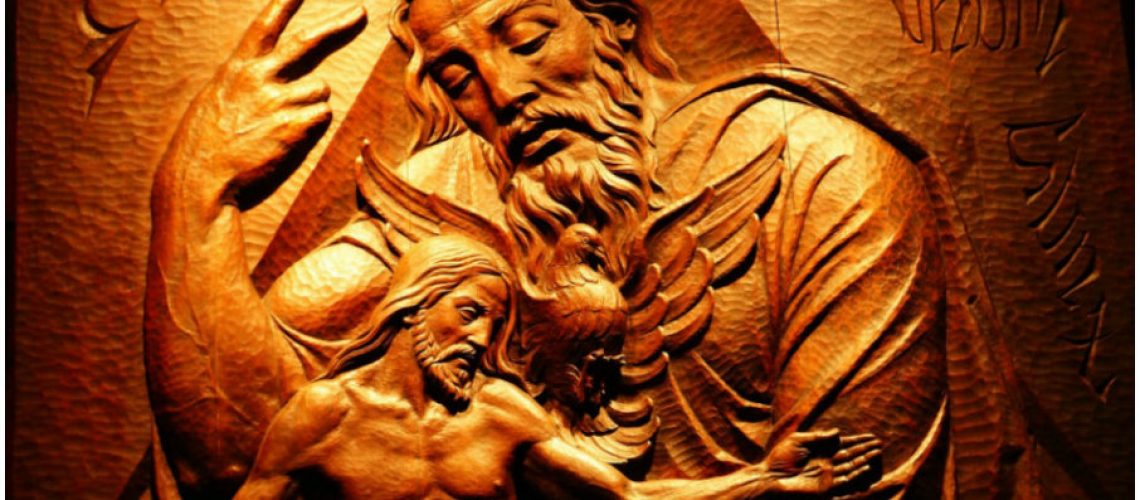
Love. Hate. Pride. Fifty years ago, these words suggested different concepts than today. Love was a fuzzy, feel-good word, accompanying cartoons of cute cherubs holding hands in a flowery field. Hate was a verb that expressed sentiments toward spinach or traffic jams. The noun was hatred, and it was not thrown about lightly. Hatred described reprehensible evils like racism or violent emotions against one’s fellow man. Pride was either the vice that “goeth before the fall,” or the virtue that inspired the expression, “Take pride in your work.”
New Meanings
The words love, hate, and pride have new meanings in the 21st century. We hear, “Love is love.” In 1960 that statement would have been met with a blank stare. Today, we understand it to mean this: Having romantic feelings justifies a relationship. Emotion, not morality, is the barometer. Today, the word “hate” is not reserved for extreme cases but is also used to accuse those who disagree with liberal views on sexuality, even when such disagreement is based on faith or moral convictions.
As for pride, it is a banner under which thousands march. Pride presents a perplexing challenge to those who lean conservative these days. It is difficult to argue against pride. Historically, people who feel downtrodden, guilty, or valueless do not have healthy outlooks on life. Everyone needs a sense of pride.
Love, hate, and pride are part of the human condition. This is why they strike such a chord on banners or in private conversations. We thrive on love. We abhor hatred. We recognize the importance of well-founded personal pride.
Social Upheaval in the Name of Love
Ironically, we are in a time of social upheaval that many claim is in the name of love. This oversimplifies the situation, really. The moral conflict relates to various aspects of sexuality. Anyone who disagrees with the powerful LGBTQ+ lobby is labeled a bigot. A social media meme heralding June announces, “Wishing all THE HOMOPHOBES a super uncomfortable month.” This negativity pervades society. The war of words can make our heads spin as we try to defend Catholic beliefs in an increasingly anti-Catholic society. For what it is worth, let us discuss love, hate, and pride from a Catholic perspective.
What is Love?
In 9th grade religion class, Sister Eileen defined love as “to wish one well.” At fourteen, I found that not exactly a romantic definition, but it made sense to me. I could pat myself on the back because I loved everyone in my school; I wished them all well, even the ones I didn’t like so much.
Of course, there is more to Christian teaching on love. To love is to fulfill our mission, as Jesus did when he came among us. Love is selfless. It needs to include sacrifice. Love is the Hill of Calvary. Love is the Body of Christ. Words fail when we consider the love of Christ for us.
Married Love
The aspect of love critical to this discussion is romantic love. In his work, Three to Get Married, Bishop Fulton Sheen describes Christian marriage in terms of the Holy Trinity. He discusses the doctrine that the love of the Father and the Son is the Holy Spirit of love. Husband and wife and children reflect the love of the Trinity. Sheen describes the love of husband and wife as “an eternal, mutual self-gift; the recovery in the flesh, or in the soul, or in heaven, of all that was given and surrendered. In love no fragment is lost” (Sheen 62). That statement leaves much to ponder about God’s plan for marriage.
The words from Bishop Sheen that would draw criticism from our friends across the aisle are, “Husband and wife.” This is the crux of the issue. For reasons excellently explained by John Paul II in Theology of the Body, Catholic marriage can only be between one man and one woman. The male and female reciprocity, the Creation of man and woman in the image of God, and the symbolism of husband and wife as modeling the love of Christ for his Church, all of these are truths that cannot change.
What is Hate?
There is enough history of hate against the LGBTQ community to fuel the current conflict between this group and those who object to their tenets. One word, Laramie, gives a sufficient example. Hate-filled young men beat and left young Matthew Shepard to die outside the municipality of Laramie, WY. They committed this crime because Matthew was gay. Sadly, Matthew is one of many who have suffered this way.
As often happens with reactions to injustice, the pendulum swings far in one direction, as if to counteract the violence. Truly hateful crimes have left an aftermath of anger and indignance. There is no tolerance now for the mildest disagreement with any LGBTQ cause. It is the price to be paid for past injustices.
Ways of Hate vs. Ways of Love
How do we respond to this? Catholic teaching cannot change. Truth cannot change. Even if it could, it would not erase the evil of past human brutality. To respond to current accusations of hate, Christians should first examine their own behavior.
Whereas love wishes well, hate wishes harm. By this definition, it is hateful for moral conservatives to delight in the thought that those who attack our religious convictions will wind up in eternal punishment. Similarly, to ridicule or call people crazy because of their struggles or moral confusion demonstrates an uncharitable attitude that may rightly be called hate.
On the other hand, to disagree while sincerely wishing a person well is not hate. We can speak the truth in love. To evangelize and to defend the faith in our culture are works of mercy. If we have the power of influence, it is our duty in all charity to attempt to bring the Gospel message to others. If I warn someone who is on a dangerous path, that is an act of love. I wish the person well; I want them to live in the grace of God. I love them.
It is not easy in this world, though. For one thing, many of our opponents in this discussion are devout Christians, who simply don’t understand or believe Church teaching on sexuality. Even when our opponents are irreligious, our discussions must be respectful rather than arrogant or condescending. Moreover, among those deeply affected by LGBTQ issues, not everyone is prepared to accept the truth. There are situations when the kindest thing we can offer is silent listening and prayer. This also is a way of love.
Rather than label our peaceful attempts to evangelize as hate, our opposition should observe the many instances of hostility aimed at Christians. Recently, a group of pro-life Catholics in New York City prayed the rosary in a public street to observe the second anniversary of the overturning of Roe v. Wade. Passersby repeatedly shouted blasphemy and profanity at them. I don’t understand what was in the hearts of the angry people there, but it had every appearance of hate. The pro-life group continued to pray. It was inspiring, their prayer of love.
Pride and Dignity
Finally, what do we do about the pride issue? Surely, every person has dignity as a child of God. That is something to be proud of. Whatever label a person adopts or invents, their first label was child of God. Therefore, we must support the idea of fostering pride in each individual.
We cannot, however, celebrate pride about sinfulness, not our own nor anyone else’s. So to participate in a pride parade is morally problematic for Catholics. Will that participation be viewed simply as recognition of the dignity of each human? Or will it appear to support actions that are sinful according to our faith? Further, it is our duty to object to any offensive behaviors during “Pride” events, such as sacrileges to churches or obscene displays in front of children.
In conclusion, to respect human dignity is well within our duty as Christians. If we cannot convince others of the truth, we can pray for their conversion, and for our own understanding and charity. For charity is of God, and everyone that loves is born of God. God is love. (1 John 4:7-8)
Work Cited
Sheen, Fulton J. Three to Get Married. New York, Scepter Publishers, Inc. 1996. (Originally published 1951).


In reply to CAPTCRISIS,
Thanks for the clarification of your meaning. I appreciate hearing your perspective.
So first, I wonder what Church teaching relating to gay couples you mean. Theology of the Body explains God’s plan for marriage. Church teaching is that one man and one woman marry, for life, being open to children according to God’s plan. People may spout opinions about the fate of a gay romance, but I haven’t heard any official Church teaching that gay couples are fated to be unfaithful, nor that their children will be miserable wretches.
Seeing gay couples in long-term legal marriages, raising apparently happy, healthy children does not prove that the Church is wrong about God’s plan for marriage. It means that the Lord is gracious, and that goodness can be found even in circumstances in which people are not observing God’s plan.
I was raised in very unconventional circumstances, and yet I am a healthy, reasonably happy adult. God was good to my family, despite whatever anyone did against his will.
In the New Testament, people asked Jesus about marriage after divorce, which was allowed by Moses. Jesus said that yes, Moses had allowed the Israelites to remarry after divorce, but that “In the beginning it was not so.” God may have tolerated transgressions, but Jesus came to teach us to do better.
Do I want to live a life that God will tolerate, knowing he won’t smite me for it? Or do I want to live according to his revealed word, as taught by his Church? Love for God drives us to follow him as closely as we can.
What about the examples of people ignoring the Church and making their own rules? Hope. Hope in Jesus to touch them, and to poke me into action if there’s a way I can help.
Regarding your words about the priesthood… Scandal has done its damage. I feel for those faithful and fervent priests who have a more difficult time proclaiming the truth now because of past scandals. Regarding the idea of someone being “in the closet” hiding their temptations, so what? To be blunt, priests aren’t allowed to have any kind of romantic relationship. The kind of romance they would be attracted to is irrelevant.
Remember, hope. We don’t give up on hope just because we see people not following the Law. We are all sinners. What makes us turn to salvation is hope.
Peace,
Mary
If the Official Catholic Teaching says: “Red!”
But with their own eyes, looking at gay friends and family members, Catholics see Blue.
And looking at the representatives of the Church each Sunday or even each day, they see Blue.
They’re going to believe Blue, not Red.
I think you’ve lost me, Capt.
Are you saying that people can’t believe Church teaching because no one follows it?
And if that’s what you’re saying, is your point that Church teaching is wrong?
Or is your point that the teaching is correct but everyone’s being led astray by the culture?
What the Church teaches about being actively gay, and what Catholics actually see with their gay friends, siblings, cousins, many of whom are now legally married and raising happy and healthy children, are two different things. It doesn’t help that the teaching is done by a priesthood where a large minority are gay themselves, nailed tightly in the closet, afraid to “come out” as same-sex-attracted.
Ironically, because you blindly repeat false narratives of theLGBQ ideology (concerning Mathew Sheppard) you are supporting the lies that promote hatred.
Steve,
Thank you for reading the article.
Please see my response to Dan.
Peace,
Mary
You might want to use a different example for so-called “lgbt hate.”
The real story is that Matthew Shepard was a meth dealer and user. He knew the men who beat him to death in a methamphetamine frenzy. In fact, Aaron McKinney was his sometimes sex partner. They met that night over a drug deal that went bad.
Here’s more of the real story of his murder:
https://www.amazon.com/Book-Matt-Hidden-Matthew-Shepard/dp/158642226X
https://www.yahoo.com/news/matthew-shepards-murder-almost-certainly-215841719.html
Dan,
Thanks for reading the article. Thanks also for your info on the controversy with the Shepard case.
I chose the Matthew Shepard case as an example of anti-homosexual violence that is well-known. A different example wouldn’t change my point. Nor does the fact that Shepard’s short life was rather rough.
Not having read the book that you mention, I can’t speak to its points. But I did read the Yahoo news article and other writings from various sources. Some pertinent facts:
1. Matthew Shepard was reported to have been addicted to and dealing meth.
2. The coroner reports that at the time of death, Shepard had no meth or opioids in his system. The coroner believes the murder to be a hate crime. (https://www.coloradoan.com/story/news/2018/10/30/matthew-shepard-autopsy-no-hard-drugs-hand-shaped-bruises-found-wyoming-coroner/1820019002/)
3. The defense attorney claimed that the crime resulted from the killer’s drug and alcohol use, his childhood history of sexual abuse, and unwanted advances by Shepard. (https://www.washingtonpost.com/wp-srv/national/daily/nov99/shepard110199.htm).
4. One of the killers himself in a 2009 interview claimed that he hated homosexuals at the time of the murder, and that this was a factor in the attack. (https://www.oxygen.com/uncovered-killed-by-hate/crime-news/matthew-shepards-killers-russell-henderson-aaron-mckinney-hate-crime).
5. Shepard had already handed over his wallet before he was dragged from the vehicle. If the motivation was robbery, the thieves had what they wanted. To prevent being caught, they could have killed the victim without torturing him. (http://famous-trials.com/mattshepard/2496-matthew-shepard-murder-a-chronology ).
6. None of the sources I checked (even those that claim it was a drug-based crime) report that Shepard had drugs on him.
7. The assailants had consumed “a few pitchers” of beer before the attack. When one assailant (Henderson) told the other (McKinney) to stop hitting Shepard, McKinney turned on Henderson and hit him. Minutes after leaving Shepard, the assailants got into another fight with two other men. (https://famous-trials.com/mattshepard/2496-matthew-shepard-murder-a-chronology).
The details paint a picture of two drunk men, acting on their impulses and passions.
We cannot prove the inner motivations of murderers. Likely, there may be more than one cause to violent crimes. Even if the attack were for robbery or a drug deal, the torture and the evidence that McKinney hated homosexuals give evidence of a hate crime.
In any case, my point remains: Violence gains sympathy for a cause, gives a group victim status, and spurs activism.
And the more important point: We must speak the truth in love, or discern when it is better simply to listen and pray.
Peace,
Mary
“There are situations when the kindest thing we can offer is silent listening and prayer. This also is a way of love.”
Hello Mary.
Thank you for a wonderful article. I am a non-confrontational borderline coward. I will do anything to avoid arguing—my husband calls it “discussing,” and I flee at the first indication of a raised voice.
But I’m so very good at listening and praying. The closer the issue is to me personally, the more I pray.
Thanks again.
Ida, thank you so much for your kindness. As always, you are the voice of peace and charity. Your prayers and listening to those close to you are surely great blessings.
I knew that writing this article would earn me some backlash, which you can see from some of the other comments. Perhaps you could add me to your prayers so that I may give a response that speaks the truth in love.
Thanks, Ida. You’re a gem!
Mary