

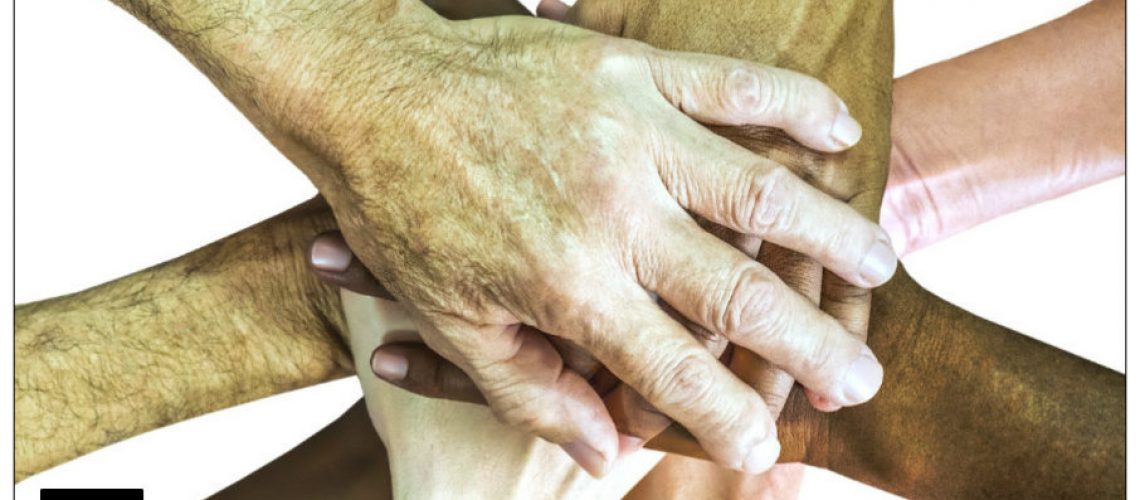
The Church’s Stance Through the Centuries

Ecumenism, the unification of all Christians under one ecclesial body, has been a topic of debate for centuries. Many have worked for the unification of Christendom since the two major breaks in Christianity, the first in 1054 with the schism with the Eastern Orthodox and the second during the Protestant Reformation in the 1500s.
The Church’s position on ecumenism has evolved over the centuries. In this article, we’ll take a brief look at three papal documents, which represent this evolution, in an effort to offer context for where we have been to inform where we might go from here.
19th Century Position
In 1894, Pope Leo XIII issued the encyclical Praeclara Gratulationis Publicae. The letter efforts to reunite the Eastern Orthodox Church and the Protestant ecclesial communities with the Catholic Church. The approach to this reunion begins with Pope Leo XIII explaining that this division of “a source of deep concern to Us; for it is impossible to think of such a large portion of mankind deviating, as it were, from the right path…”[1]
This statement illustrates the deep grief felt by the Church over this separation. From my perspective, when trying to convince another, it’s less effective to take the position of being “right” – whether or not it is in fact right — because opponents aren’t likely to let down their defensiveness and offer full willingness to listen.
Pope Leo XIII’s comment had me imagining a couple headed for divorce and the husband saying to the wife, “I am devastated by the fact that we are separated; if you’ll just see that my position is right, we can get back together.”
His approach didn’t bear a lot of fruit, but Pope Leo XIII did make strong arguments for why the Orthodox should reunite with the Catholic Church, including a defense of the Primacy of the Roman Pontiff, and a concession that the Church “would never diminish …the privileges of your Patriarchs or the established Ritual of any one of your Churches” [note the respect of capitalizing “church” paid to the Orthodox].
The pope then moves to Protestants “who, at a more recent date, were separated from the Roman Church by an extraordinary revolution of things and circumstances.” Leo asks them to not look at the human elements of the Church but instead “reflect within their hearts upon the Church as it was constituted by Christ.” He notes that the “actual state of Religion in these [ecclesial communities] will easily acknowledge that…they have drifted away, on many and important points, into the novelty of various errors…”
The tone and intent of this letter show a true and honest grief over the separation of these groups, but the approach is a mix of both charity and condescension.
Early 20th Century Shifts
Thirty-four years later, in 1928, during a time of increased focus on ecumenism from the Orthodox and Protestant groups, Pope Pius XI issued Mortalium Animos, which, sadly, discouraged Catholics from participating in ecumenical efforts.
For the Catholic Church, ecumenism at that time could only mean that non-Catholic Christians would return to the One True Church. This statement announced to the world the Catholic Church’s disinterest in unifying with those Christian groups that had separated. The pope expressed concern for Catholics who involve themselves with the efforts of the Orthodox and Protestant groups working for unity for fear they may get the idea that the Catholic Church is simply one among many to choose from and not the one and only Church that Christ founded on earth.
Mid-20th Century and Vatican II
It wasn’t until the late 1950s, when John XXIII was pope, that the Church shifted her stance on ecumenism and articulated a view that didn’t include condemnations but instead showed a deep longing for unity, drawn from Jesus’s own words “Father, may they all be One…” (John 17:21). During this time, it became clear the divisions among the Christian groups were damaging missionary efforts and bringing scandal on the “most holy cause of preaching the gospel to every creature.”
During the Second Vatican Council, the Church issued a new document on ecumenism–Unitatis Redintegratio–that focused not on past issues but on moving forward.
This document showed stark differences in the Church’s approach, including an acknowledgement that other Churches and ecclesial communities are not excluded from Christ’s salvation. “[T]he separated Churches and communities…have been by no means deprived of significance and importance in the mystery of salvation.”[2]
There was a shift in the Church’s attitude, evidenced by the language used, instead of calling non-Catholic Christians “heretics,” they referred to them as “separated brethren” – family members estranged.
The focus was on what we each share in common rather than disputing the differences. Significantly, the Church revised its stance on ecumenical efforts, including taking the initiative to participate.
[A]nything wrought by the grace of the Holy Spirit in the hearts of our separated brethren can contribute to our own edification. Whatever is truly Christian is never contrary to what genuinely belongs to the faith…[3]
True ecumenism doesn’t ignore the differences – I’m not suggesting religious indifferentism. Post-Vatican II, the Church didn’t change her belief that the fullness of Truth resides within her. “[T]here are very weighty differences not only of a historical, sociological, psychological and cultural character but especially in the interpretation of revealed truth.”[4] However, the document explains the importance in dialoging about the points we disagree on, showing respect, and listening carefully to each other, trusting the Holy Spirit will guide us to unity.
“Catholic belief must be explained more profoundly and precisely, in such a way and in such terms that our separated brethren can also really understand it.”[5] Unitatis Redintegratio made strides toward true ecumenism.
Pre-Dawn of the 21st Century
The final document we’ll look at briefly was written in 1995 by St. Pope John Paul II titled Ut Unum Sint. In typical form, St. Pope John Paul II offers a clear, hopeful, inspiring restatement of Unitatis Redintegratio at the predawn of the new millennium.
In addition to restating the essentials from the Vatican II document, he adds insight about ways to continue healing the fracture between the Church and her separated family members.
Complacency, indifference and insufficient knowledge of one another often make this situation worse. Consequently, the commitment to ecumenism must be based upon the conversion of hearts and upon prayer, which will also lead to the necessary purification of past memories.[6]
He believes these preconceived notions will remain obstacles unless and until we have “a calm, clear-sighted and truthful vision of things…”[7] Ut Unum Sint is a letter of encouragement to the world to continue to work toward this essential goal of finding unity.
More than the other documents, Ut Unum shows us practical ways to move forward and offers a reason to be hopeful.
During his homily at the World Council of Churches (WCC) in Geneva in 2018, Pope Francis shared, “Whenever we say ‘Our Father’, we feel an echo within us of our being sons and daughters, but also of our being brothers and sisters. Prayer is the oxygen of ecumenism.”
Today, the world is home to 45,000 Christian denominations. Is it naïve to think we can “be one” again? Maybe the more important question to ask is, “Do we want to be a people who stop striving to be one?” The result of our efforts is out of our hands. Only God can achieve such lofty feats. But our faith and resolve to not stop trying are critical ingredients that, like yeast, will activate and raise us up to become new.
And He who sits on the throne said, ‘Behold, I am making all things new.’ And He said, ‘Write, for these words are faithful and true’ (NASB 1995).
[1] Praeclara Gratulationis Publicae
[2] Unitatis Redintegratio, §3, italics in original.
[3] UR §4.
[4] UR §19.
[5] UR §11.
[6] Ut Unum Sint §2.
[7] Ibid.


12 thoughts on “Is Ecumenism Possible?”
True ecumenism is possible for catholics. Anyhting other than true ecumenism is false ecumenism.
Jesus, Catholic Church Founder, said He was building one Church (only). Only His Church has the fullness of truth-no other. So how can His One Church do ecumenism?
Jesus’s Church has dogmas and doctrines that must be assented to and believed by every member of the church. In many attempts at one-big-happy-ecumenical church, these dogmas and doctrines are totally negotiable, ignored, irrelevant, or unimportant. For a faithful catholic, ecumenism is the effort, in charity and in faith, to bring nonbelievers to the Catholic Church; the Church that is, in the words of the Catechism, “ . . .the sole Church of Christ,” [Catechism of the Catholic Church, 811, 816]; the “ . . . one Church,” [Id., 814]; the “ . . one and only church of God,” [Id.}
When Jesus taught about the unity of His Church, it was not a unity which would result in the rejection or denial of His Church’s doctrines and dogmas, or the intentional nudge-nudge-wink-wink ignoring of dogmas, etc. that others find uncomfortable or that hurt their feelings.
Jesus’s Church, prior to the Second Vatican Council, defined “ecumenism” as an effort to convince those not in the Church to return to a unity that they themselves had brought about.
Professor Alan Montefiore recognizes another type of ecumenism for those of different religions, even for those whose religions profess dogmas and beliefs that explicitly contradict each other. (Professor Alan Montefiore in “Ecumenical Movements and Truth”). For him, believers of different religions – to achieve an ecumenical goal – can accept that all believers are on an “equally valid path to religious fulfillment.” Religious truth, on this view, is relative, not absolute. This is based on an erroneous “equalization of truths.” Seeking unity at the expense of truth is false ecumenism.
In practical reality, “false ecumenism” requires that proponents of the various religions who want to engage in fruitful ecumenism resulting in one, almost certainly new, religion must jettison, or deny, one or some of their beliefs to create the new religion with a novel theology. This false ecumenism cannot be based on any agreement for the ecumenical partners to simply ignore dogmas and doctrines. Without doctrine-defeating, dogma-destroying ecumenical metanoia, no new religion can be achieved.
For Professor Montefiore, various beliefs of the ecumenical partners can, and often do, exhibit “mutual incompatibility.” Montefiore calls this the “problem of truth.” To achieve the new religion, there must be an approach beyond “mutual toleration,” because, in reality, principled “mutual respect” is not really possible.
It may be that a true believer of one religion can separate the believer of another religion from his or her beliefs (as some do in loving the sinner, hating the sin), but in real life, says Professor Montefiore, there can be a “tension” in trying to do this. This true believer who also wants an ecumenical solution to the disunity among religions must confront an inescapable conclusion. What there is about the other’s beliefs that is “genuinely incompatible” with the true beliefs “must be false.”
To achieve the ecumenical goal, the goal of false ecumenism, according to Professor Montefiore, this tension is to be resolved not by bringing the other believer to the true belief, but by compromising, rejecting, changing, or denying true beliefs:
“If, then, full and equal respect for one’s ecumenical partner implies a recognition that their own spirituality and their own “way to God” is as religiously valid as one’s own, one may have in all consistency to accept the prospect of having to revise certain of one’s own basic and Jong-standing beliefs. (The same will, of course, be true for one’s partners as well.) It is not likely to be easy for It is not likely to be easy for all those concerned to admit that their ecumenism harbors within it an acceptance of the principle that there may be more than one equally valid expression of the recognition of God, more than one equally acceptable form of His worship, more than one superficially incompatible but in fact equally valid diffraction of the one hidden Truth, but this, it does seem, must in the last resort be the inner sense of any really serious contemporary ecumenical movement.
It is always the case – in science or in theology – that embracing a new framework, a new paradigm requires embracing new – i.e. different – truths and rejecting what was previously accepted as truth.”
Here it is not a question of altering the deposit of faith, changing the meaning of dogmas, eliminating essential words from them, accommodating truth to the preferences of a particular age, or suppressing certain articles of the Creed under the false pretext that they are no longer understood today. The unity willed by God can be attained only by the adherence of all to the content of revealed faith in its entirety. In matters of faith, compromise is in contradiction with God who is Truth. In the Body of Christ, ‘[He who is] the way, and the truth, and the life’ (Jn 14:6), who could consider legitimate a reconciliation brought about at the expense of the truth?”(St. John Paul II, Encyclical Ut Unam Sint, On commitment to Ecumenism, emphasis added).
There is no authority in Catholic Church scripture, dogmas, doctrine or laws to refer to any group or entity as the single, one church of Jesus Christ other than the Catholic Church.
True ecumenism is the effort to help those who have, by their own actions, abandoned Jesus’s Church to return to it.
For full citations and biblical backup, see my article on this on this site last April.
https://catholicstand.com/true-ecumenism-leads-to-the-one-true-holy-catholic-church/
I have exactly zero desire to be in union with liberal Protestants, who are little more than cross-dressing pagans. Nor do I think that Jesus was mandating that I be in union with such people. As far as I’m concerned, they can all go to you-know-where.
Assuming they have a true faith in Jesus, what will you do when you have to sit next to them at the banquet table in heaven?
Pagans don’t have a true faith in Jesus. Believing Christians do. So the question is moot. And I’m getting tired of Catholics who don’t know thing one about Christianity.
Ecumenism across all 4 major religions is inevitable.
“May the force be with you. “
I’d like to think that’s true. Tell me why you think so.
First, the 4 great faiths (I don’t mean theologies) have nowhere to grow, each having reached perihelion and will start to retreat (shrink) from importance (ie: even the church labeling this era as post Christianity. The only path left is to meld and the only faith capable of abetting that is the CC. A simple encyclical could reel in Easter Deism by acknowledging that they got it right about the trans migration of souls (as opposed to Purgatory). Science has put to rest the A&E allegory, and with it, the concept of Original Sin, without disturbing the dogma of redemption as Jesus came to show us The Way (the Tao). Islam will collapse on its own over time, retaining the elemental tenets of its faith which include purity, perseverance grounded in continuous prayer and praise. Fifty years ago, one never heard of Jews for Jesus but today that concept is flourishing. Why ? Jesus is Jewish. Put it all together and ‘all will be one’ Otherwise, everything will blend into a post religion spirituality that the creation of Star Wars cliched.- May the force be with you
This is an interesting idea. You may not be wrong.
Pingback: VVEDNESDAY MID-DAY EDITION | BIG PULPIT
Thank you for this!
Thank you for reading!
Of course you would.