
Dr. Hugh Ross, founder of the website Reasons to Believe, has related an interesting story about science and Christianity in at least a couple of his podcasts (here, for instance, at the 1:10 mark).
As a young student Ross sat in a lecture hall listening to Dr. Carl Sagan discuss the concept of an ‘Encyclopedia Galactica.’ Sagan described this encyclopedia as a hypothetical compendium of all cosmic knowledge – a grand archive of everything intelligent civilizations might record which would allow humans to solve all the problems facing our race.
Ross says he leaned toward a classmate and whispered, “Don’t we already have that book? And isn’t Carl’s problem that he’s not willing to read it.” (Ross was referring, of course, to the Bible.)
Ross says Sagan overheard him and with his characteristic directness, Sagan said to Ross, “I know about that book. Nobody can live up to its moral standard.”
Dr. Ross says he then thought to himself, “Isn’t that the point?”
God’s High Expectations
God absolutely does have high expectations for us sinners. The Scriptures never hide this truth. From the first pages of Genesis to the final words of Revelation, God calls humanity to holiness, obedience to His law, repentance, reconciliation, and transformation.
God does not lower the bar or soften His standards. He does not revise the commandments to accommodate current cultural trends or personal weaknesses. Nothing changes His laws, not lobbyists, not law forms, not even celebrity endorsement.
God’s expectations exceed human strength. Be that as it may, He expects His children to rise after a fall, to grow, and to persevere.
Original Sin
God gave Adam and Eve only one boundary. “You are free to eat from any of the trees of the garden except the tree of knowledge of good and evil. From that tree you shall not eat; when you eat from it you shall die” (Genesis 2:16-17). This command was simple, clear, and direct.
However, the parents of all future generations faced an adversary who was anything but simple. The serpent is a fallen angel, superior to humans in intellect, cunning, and spiritual power. Adam and Eve did not face just a tempter. They faced a supernatural enemy. Did Eve really have a realistic chance resisting the serpent’s manipulations? Did Adam?
God, in His omnipotence, knew what was going to happen. He did not appear beside Eve in the moment and rescue her from the serpent’s lies. He did not whisper into Adam’s ear as Eve handed him the fruit. God certainly did not send a reminder notification to Adam’s iPhone that morning.
God expected them to obey His word. He expected them to resist temptation even though the tempter was stronger, smarter, and more experienced.
When they failed, consequences followed. God did not make excuses. He did not offer a plea bargain. He did not reduce the charges. He expelled them from paradise (Genesis 3:9-24).
Adam and Eve’s failure did not change His expectations. Their weakness did not initiate a rewrite to God’s law or redefined obedience.
Since that moment, all sons and daughters of Adam and Eve have struggled to meet God’s expectations. Every generation inherits the same battle against a fallen nature, a fallen world, and fallen angels who whisper the same lies the serpent whispered in Eden.
God’s Expectations are Consistent
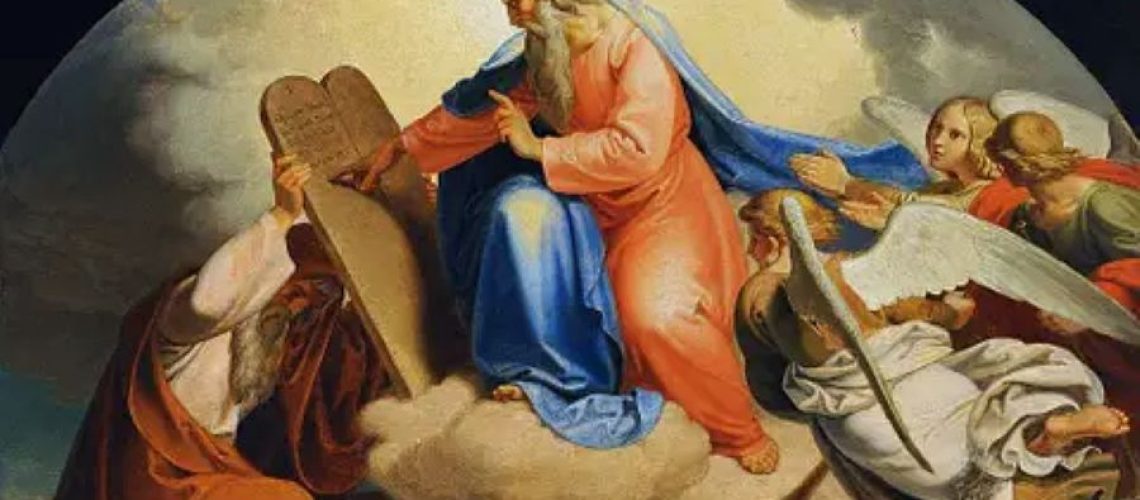
But God’s laws do not shift with cultural winds. They do not bend under social pressure. They do not evolve to match human preferences. The Ten Commandments, reiterated in Deuteronomy 5, remain the foundation of moral life.
Jesus reinforces them, deepens them, and elevates them. He commands one to love God with all one’s heart, soul, and mind. He further commands one to love one’s neighbor as oneself (Mathhew 22:37-39).
Humans struggle to honor these commands. They struggle to maintain virtue in a world that offers immediate gratification and unseen consequences for vice.
God expects resistance and vigilance against sins. He expects His children to ask for help, because grace is never withheld from those who seek it.
When failing, the recourse is clear. Examine the conscience, repent, reconcile and avoid future occasions of sin. This pattern is not optional. It is the rhythm of Christian life imbedded in the sacrament of confession. Moreover, the Sacrament of Reconciliation offers a path for spiritual maturity.
God’s Highest Expectations
God’s highest expectation is not merely obedience, but transformation. Christ commands His followers to take up their cross daily (Luke 9:23). He expects one to carry burdens, endure trials, and persevere through suffering. The cross is not a symbol of defeat, but rather a path of victory.
God expects His children to fight against despair and reject hopelessness even when circumstances appear impossible. The struggle to be better is itself an expectation. God does not demand perfection. He seeks our perseverance.
Human beings grow only with effort. Humans mature by accepting responsibility and practicing discipline.
God’s expectations are high because His love is high. He calls humanity to holiness not because He enjoys watching us struggle but because He desires our transformation.
His desire for human flourishing requires his creation to choose to be with Him. Our obedience and Love for God would be empty if humans were preprogrammed or coerced into following His law. Our obedience only has meaning if it is chosen freely.
God wants His children to become saints reflecting His image. Carl Sagan apparently doesn’t think this is possible. But God wants us to rise from sin, as often as it takes to become saints. If God expected less, humanity would aim lower. But He expects greatness.
And with God’s grace, even sinners can surprise themselves.


I think we should expect people to take responsibility for their mistakes, but also give them a chance to change. None of us gets everything right, and judging others is often easier than looking at ourselves. A little humility goes a long way, whether you’re religious or not.