
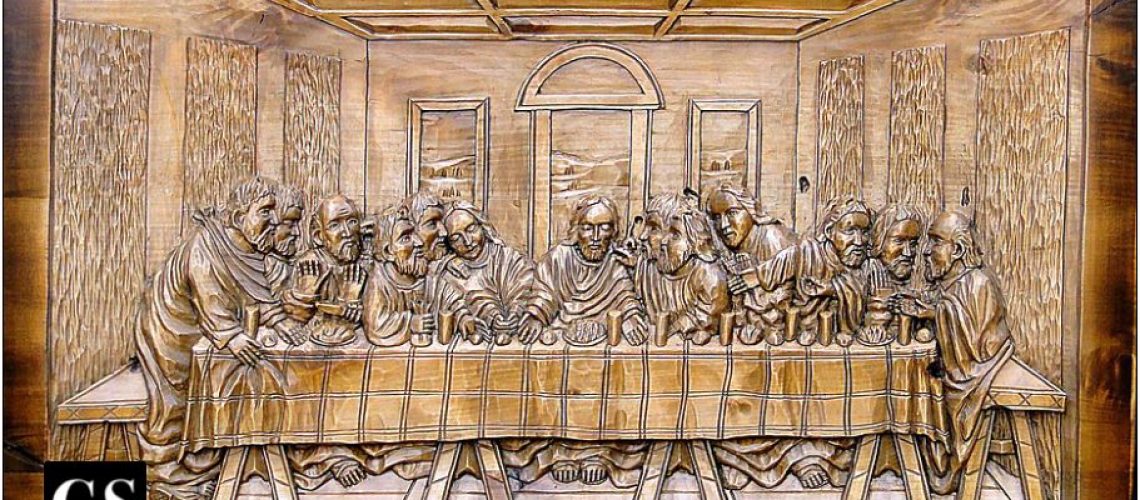
In Part I of this article we discussed the apparent contradiction in the timing of the celebration of Passover in the gospel passion accounts. But then posited an explanation for this by presenting a disparity in the methods of celebrating the feasts of Passover and Unleavened Bread by the Sadducees and the Pharisees.
After providing a brief summary of the central beliefs of the Sadducees and Pharisees, we discussed the Aristocratic method of celebrating the feasts of Passover and Unleavened Bread. This method was practiced by the Sadducees until their political dominance ended abruptly with the ouster of the Herodian family’s rule over Jerusalem by the Romans in 6 AD.
So with that as background, let us now turn our attention to the possibility that the celebrations of the
feasts of Passover and Unleavened Bread were observed by these two sects at different times and
discuss the implications this had on God’s plan for our salvation.
With the ascendancy to power by the Pharisees in 6 AD, the practice of the Aristocratic method, which had been adhered to by the Sadducees during the term of their supremacy of power, was greatly suppressed. Jesus followed the Aristocratic method when celebrating the Lord’s Supper, though as a rabbi he was tangentially affiliated with the Pharisaic sect.
So now let us turn our focus to the method used by the Pharisees in celebrating these two feasts. It is called the Hasidic method.
Hasidic Method as Practiced by the Pharisees
The Hasidic method was originally formulated by the Hasidim and subsequently affirmed and adopted by the Pharisees. Since the first century AD, this method of celebrating the Passover and the seven days of Unleavened Bread has been the most prevalent means by which the Jewish people observe these feasts.[i]
Unlike the Aristocratic method in which the celebration of Passover and Unleavened Bread were a combined seven days; pursuant to the Hasidic method it was eight days.[ii] Under the Hasidic method there was Passover which they called the Day of Preparation, followed by seven days of Unleavened Bread.
Under this method, the Passover lamb was sacrificed on the afternoon of the fourteenth day of Nisan.[iii] This despite the clear wording in Exodus 12:6 calling for a twilight sacrifice. As a consequence of this change in the timing of the lamb sacrifices in accordance with this method, their sacrifice would have corresponded to the exact time of our Lord’s crucifixion and death on the cross.
Pursuant to the Hasidic method the Passover Seder (meal) was to be celebrated on the fifteenth day of Nisan, which corresponded to the first day of the feast of Unleavened Bread. A full 24 hours after the Passover Seder was prescribed to be celebrated by those observing the Aristocratic method. In accordance with the Hasidic method the15th day of Nisan, not the 14th day, was a holy day in which no heavy work was to be performed. This difference in the holy day observance between the two methods is critically important as you will soon see.
What led to the formulation of this method? The Hasidim believed that they had found a more proper way to celebrate Passover and the seven days of Unleavened Bread. The scripture passage that they felt best supported this view is from the Book of Leviticus and is as follows:
The Passover of the LORD falls on the fourteenth day of the first month (Nisan), at the evening twilight. The fifteenth day of this month is the LORD’s feast of Unleavened Bread. For seven days you shall eat unleavened bread. On the first of these days you will declare a holy day; you shall do no heavy work. On each of the seven days you shall offer an oblation to the LORD. Then on the seventh day you will have a declared holy day; you shall do no heavy work (Lev 23:5-8).
The issues involved in this dispute are far too numerous to fully explore in this article, but suffice to mention two that are central to this discussion.
The first and most significant is the timing of the Passover lamb sacrifice and the subsequent eating of the Passover Seder. These methods varied greatly in their respective interpretations of Sacred Scripture on these matters.
The second is whether the day of Passover counts for purposes of the seven days of unleavened bread or is in addition to those seven days? It certainly was counted toward the seven days in the Aristocratic method. However, in the Hasidic method, leaven was only removed from the house by noontime on the 14th day of Nisan. Thus, unleavened bread was eaten from noon on the 14th through sunset on the 21st day of Nisan, for a total of seven and a quarter days pursuant to the Hasidic method.[iv]
From my perspective, moving the timing of the Passover sacrifice to the afternoon of the 14th day of Nisan as well as the timing of the celebration of the Passover Seder to the 15th day of Nisan seems to be contradictory with these two passages from the Book of Exodus:
You will keep it (the lamb) until the fourteenth day of this month (Nisan), and then, with the whole community of Israel assembled, it will be slaughtered during the evening twilight. This day will be a day of remembrance for you, which your future generations will celebrate with pilgrimage to the LORD; you will celebrate it as a statute forever (Ex 12:6 and 14).
They will consume the meat that same night, eating it roasted with unleavened bread and bitter herbs (Ex 12:8).
The Sadducees believed that the Hasidim and the Pharisees had overthought the instructions contained in the Scriptures for the celebration of these feasts. The Sadducees, being conservative, applied a literal interpretation to the relevant passages of Sacred Scripture which I’ve highlighted above. This seems not only plausible but from a non-Jew fairly straight forward.
Yet, suffice to say there have been strenuous arguments made among Jewish scholars on both sides of this controversy over the centuries.
How Does this Controversy Enter into God’s Plan for our Salvation?
I’m sure you have all heard the expression “God draws straight with crooked lines.” Well I can’t think of a better circumstance where that phrase is more applicable than this.
Salvation history is strewn with examples of actions taken by human beings that serve like crooked lines and God, being God, drawing straight utilizing these human beings’ limitations and weaknesses to bring about his plan for our salvation. So how does this circumstance demonstrate this par excellence.
Well consider that had there not been these competing methods of celebrating the Passover and had the Pharisees not ascended to power during the life of Christ, Jesus could not have been crucified on the Passover. For under the Aristocratic method the Passover was a holy day. Thus no work and certainly no executions could have been conducted had that method been in anything other than sporadic use.
By the time of Christ’s passion and death, the Aristocratic method had fallen into disuse. Even Caiaphas and Annus, the high priest and former high priest who were Sadducees, celebrated the Passover pursuant to the Hasidic method in the year of our Lord’s passion and death.[v] For pursuant to the Hasidic method of celebrating Passover the holy day was the 15th day of Nisan not the 14th day.
Why does the day of Jesus’ death matter? Well the Old Testament is filled with “types” that foretell their fulfillment in the New Testament. It’s a study of Sacred Scripture that is called typology. This is clearly seen in the death of Jesus, who was proclaimed by John the Baptist to be the “Lamb of God”. Jesus, the Lamb of God, is the fulfillment of the Passover lambs which serve as the “type” in the Old Testament.
Jesus’ death fulfills the original prescription for celebrating the Passover sacrifice as well as the meal of the victim as told in the Book of Exodus on the 14th day of Nisan!
The parallels to Christ’s sacrifice and that of the Passover lambs is unmistakable. Now add to this incredible parallel, that Christ’s death on the cross occurred at the very hour that the Passover lambs, slaughtered pursuant to the Hasidic method, were being sacrificed in the Temple! It’s as though the baton was being passed at that very hour!
I can only marvel at the small window of time that all of these necessary circumstances were in play in order to enable Jesus’ sacrifice to occur as it did. It couldn’t have happened before 6 AD nor after 70 AD and only if both methods of celebrating Passover existed and were vastly different, and lastly that the Hasidic method became the predominant method at the time of Christ’s passion and death. Talk about a grand design that only God could accomplish using crooked lines to draw straight, his plan for our salvation!
Note
The principal source of information for this article comes from the Yahu Ranger Report. It can be found at Yahuranger.com. Likewise, most of the references I utilize below for the main points covered in this article were taken from this same source. My purpose in writing this article was to address a much narrower point than those discussed on the Yahu Ranger Report. Mine was to explain how the gospel passion accounts, while apparently containing a critical contradiction could nonetheless be true. And how by virtue of God’s omnipotence and omnipresence could thread the needle on the culminating act of his plan for our salvation, in a way that only God could do!
i 1Mac 1:20-64; 2 Mac6:22-7:42; Jos Antiq. 12:5:4-5.
ii SHDL pp. 57f.
iii Jos. Antiq. 13:10:6.
iv Jos. Wars 2:7:3-2:8:1, Antiq. 17:13:1-18:1:1, 18:2:1.
v NBD p. 1124.
vi CBTEL 9, p. 235.
vii SHDL PP. 56f.
viii HJP 2, p. 411, cf., p. 413.
ix HJP 2, pp. 402, 414.
x HJP 2, p. 388.
xi MDB p. 785.
xii CBTEL 9, p. 235.
xiii ADB 3, p. 691.
xiv HJP 2, pp.397-401, 413.
xv Jos. Antiq. 2:15:1.
xvi Jub. 49:1-23.
xviiPes. 1:4-6; CBTEL 7, p. 737.
xviii Jos. Antiq. 18:1:3.


I just like the helpful information you supply to your articles. I’ll bookmark your weblog and check again right here frequently. I am reasonably sure I will be informed plenty of new stuff proper here! Best of luck for the following!
[…] in Part II, we will continue with a discussion of the Hasidic method for celebrating the feasts of Passover […]