
Timeless Lessons for Modern Catholics
The history of the Church glimmers with the radiant witness of the saints—men and women who stepped beyond the ordinary, answering God’s call with courage, humility, and burning devotion. For centuries, their lives have been more than stories; they are living gospels etched into the heart of tradition, guiding the faithful through ages of challenge, doubt, renewal, and longing. Yet in our modern world—so often hurried, distracted, and spiritually hungry—the importance of Catholic Saints shines brighter than ever.
At Journeys of Faith, we believe the lives of the saints are not just distant relics, but powerful testimonies still shaping discipleship today. Their joy, sacrifice, and relentless faith offer answers to questions we carry—about holiness, purpose, and the very meaning of the Christian journey. They invite us to rediscover what it means to follow Christ with “One Heart, One Mind, One Spirit, With One Vision.”
This article is more than a tribute. It’s a call to encounter the saints as living gospels—not just subjects of study, but companions and intercessors, holding up a mirror to our own spiritual vocations. Whether you’re a lifelong Catholic, a catechist, a seeker yearning for transformation, or someone seeking to deepen devotion to the Eucharist, Mary, and the Church’s living tradition, let these timeless lessons illuminate your path. The saints are waiting to show us that holiness isn’t out of reach; it’s written into the very fabric of who we’re called to be.
Understanding the Communion of Saints Today
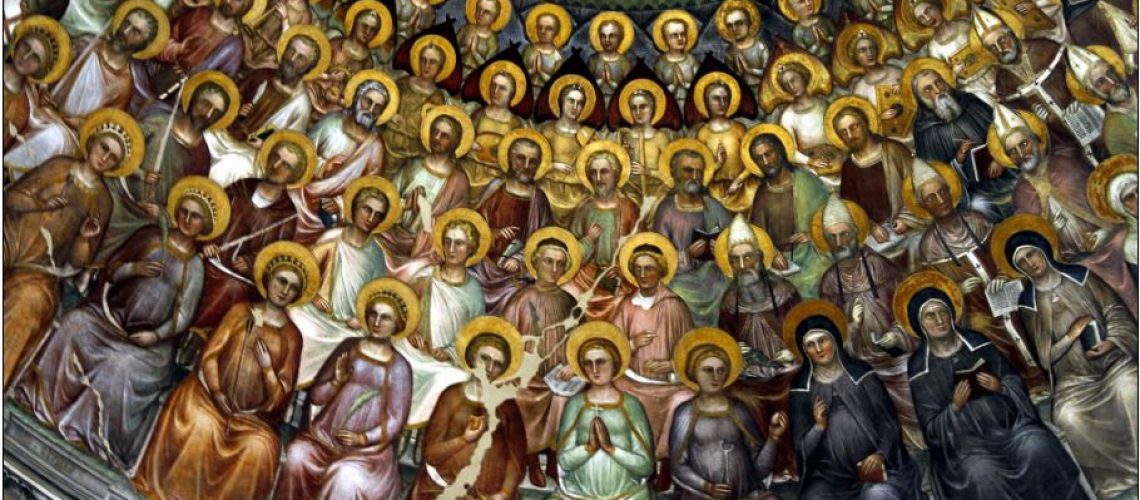
When we recite the Apostles’ Creed and profess belief in the “communion of saints,” we affirm a profound truth at the heart of our Catholic faith: that we are united not just to Christ, but to the entire Body of Christ—living and dead, across centuries and continents. The saints are not distant, unreachable icons frozen in stained glass; they are living members of God’s family, journeying with us, interceding for us, and inspiring us by their example.
For modern Catholics, the communion of saints is both a source of comfort and a challenge. It calls us to remember that sainthood is not just for the extraordinary few, but for each of us in the ordinary struggles of daily life. The stories of the saints—of Augustine transformed by grace, of Monica weeping in prayer for her son, of Francis embracing holy poverty—remind us that God’s transforming love is always at work. Each saint’s journey is a living gospel, proof that Christ’s call to holiness echoes through the ages and is fully alive in our present moment.
The communion of saints also grounds our spiritual life in tradition and community. In a world that often values individuality above all, the Church offers a radical alternative: a spiritual family united across boundaries of time and place. When we seek the intercession of the saints or meditate on their lives, we are not engaging in empty ritual—we are encountering real companions, friends who know our hopes and struggles. Their faithfulness invites us to persevere, keeping our eyes fixed on Christ.
To understand theCatholic Saints’ importance today is to recognize that their lives are blueprints for transformation and models of virtue for every age. Their witness encourages us to live passionately for God, to trust in His mercy, and to reach out in love to others. As we strive to follow in their footsteps, we draw closer not only to these holy men and women, but to Christ Himself, whose spirit unites the entire communion of saints in one heavenly chorus.
Saints as Living Commentaries on Scripture
When we look at the lives of the saints, we don’t just see stories from the past or legends shrouded in mystique—we encounter vivid, ongoing interpretations of the Gospel. Saints are not abstract icons perched upon unreachable pedestals. Instead, they are living commentaries on Scripture, their choices illuminating how Christ’s teachings can be woven into every era and life situation.
Think of Saint Augustine, whose restless longing echoes the Psalms’ cries for God. His confessions are more than memoirs; they’re a living exegesis, showing how the Lord’s mercy transforms a searching, wounded heart. Or consider Saint Francis of Assisi, whose radical embrace of poverty and peace reads like a walking, breathing homily on the Beatitudes.
In our modern world, distracted and fast-paced, the saints offer a tangible bridge between the Word written in Scripture and the Word lived out in action. They show us faith is not static; it’s daring, dynamic, and deeply personal. Through their struggles, doubts, and victories, saints reveal how the command to “love your neighbor as yourself” can break open the hardest hearts and transform societies.
By contemplating their lives, Catholics discover that the Gospel is not a distant echo but an urgent summons. The saints make the teachings of Christ visible and accessible, urging us to not only study God’s Word, but to embody it. In their footsteps, we find a daily call to make our lives a testimony—a living Gospel meant for the world to read.
Intercession Versus Worship: Clarifying Catholic Practice
It’s a question that echoes through centuries: why do Catholics honor the saints? If you peek into the heart of Catholic tradition, you’ll find a profound distinction between intercession and worship—one that not only clarifies doctrine, but also deepens personal devotion.
Worship, in the Catholic faith, is reserved for God alone. The Father, the Son, and the Holy Spirit are the source and summit of all praise, adoration, and sacrifice. Saints, on the other hand, are never worshipped. Instead, they are honored as faithful followers of Christ, men and women who allowed God’s grace to shape every fiber of their being. The language of the Church uses two different terms: latria (worship given only to God) and dulia (veneration or honor given to the saints), with hyperdulia reserved especially for the Virgin Mary as the greatest of saints.
Intercession is rooted in both Scripture and tradition. Just as Catholics ask friends and family to pray for them, they believe the saints—fully alive in Christ—can present prayers to God on their behalf. This isn’t a sign of spiritual weakness; it’s an act of faith in the “communion of saints.” As St. Paul writes, “The prayer of a righteous person is powerful and effective” (James 5:16). The saints, closer to God and purified by His love, pray with and for the Church on earth, forming a living bridge between heaven and our daily struggles.
Far from distracting from Christ, the intercession of saints focuses believers more intensely on Him. The saints’ lives become living gospels, practical models for holiness, and their prayers are powerful currents carrying the faithful closer to God. Learning to distinguish between worship given to God and honor given to the saints is not only at the heart of Catholic piety—it is a source of peace, clarity, and inspiration in the spiritual journey.
Learning Virtue through lives of Catholic Saints

Peering into the lives of Catholic saints is to encounter living Gospels—stories that leap off the pages of history and ripple through our present-day yearning for holiness. Every saint’s biography is more than an account of miraculous events or distant piety; it’s a masterclass in virtue, offered as a roadmap for anyone navigating the Christian journey.
What makes these narratives so gripping? Saints weren’t immune to failure, pain, or doubt. Yet, their relentless pursuit of Christ amidst life’s turmoil transforms them into authentic witnesses to the power of grace. Saint Augustine, wrestling with restless desires, embodies the thunderous arrival of conversion and the patient cultivation of humility. Saint Teresa of Calcutta, embracing the poorest of the poor, radiates relentless charity despite decades of spiritual dryness. These stories dismantle the notion that sanctity is unattainable or reserved for a chosen few. Every page pulsates with the invitation: “This could be you.”
Through each saintly biography, Catholics discover the tangible ways to embody the Beatitudes. Whether it’s Saint Francis’ simplicity, Saint Maximilian Kolbe’s sacrificial love, or Saint Thérèse’s little way of trust, the virtues lived out in their daily choices shine a light on what faithfulness looks like. These examples renew the soul’s imagination, helping believers to see ordinary routines—work, family life, even suffering—as arenas for heroic virtue.
More than just admirable stories, these biographies become spiritual fuel. The saints’ struggles and triumphs inspire us (and challenge us) to imitate Christ with courage. In a world obsessed with fleeting heroes and shallow influencers, the Catholic saints point us back to eternal values—reminding us through their lived testimonies that holiness isn’t a relic of the past, but a call echoing for each of us today.
Eucharistic Miracles and the Witness of the Saints
Throughout history, Catholic Saints have been powerful witnesses to the living presence of Christ in the Eucharist. Their lives are not just tales of piety, but bold testaments to the miraculous—a tangible reminder that God meets His people in the most ordinary, yet extraordinary, forms of bread and wine. Saints like Clare of Assisi, whose unwavering faith in the Real Presence drove away invaders wielding only the Blessed Sacrament, show us the fierce trust that defines true devotion.
Consider St. Thomas Aquinas, whose theological insights didn’t remain locked in academic circles. He experienced mystical moments in adoration, compelling him to write hymns that still echo through the Church. Then there’s the humble St. Tarcisius, a young martyr, who risked—and gave—his life to protect the Eucharist from desecration. Through these stories, Catholics glimpse the intensity of divine love that the saints encountered, and how those encounters transformed simple souls into living gospels.
Today, these Eucharistic miracles aren’t just relics of the past—they’re invitations. The saints teach that the Eucharist is not symbolic; it’s an ongoing miracle offered for the life of the world. Their witness calls every believer to greater reverence and awe, urging us to become bearers of Christ’s presence in a skeptical and hungry world. The lives of the saints prove that faith in the Eucharist is anything but passive; it’s a call to courage, conversion, and extraordinary charity, anchored in holy tradition and burning with personal conviction.
Conclusion: Walking in the Footsteps of the Saints
The Catholic Saints’ importance transcends mere stories from the past—they are living gospels, ever teaching, guiding, and interceding for us on our journey toward God. Through their lives, we witness the radical power of faith, the beauty of courage in adversity, and the unceasing presence of Christ in human history. Their witness is not locked away in distant centuries or unreachable sanctity. Every miracle, every act of charity, every silent sacrifice is a beacon calling us deeper.
At Journeys of Faith, our mission is to share the treasures of these holy men and women, making their lessons and inspirations accessible for all Catholics today. Whether you are seeking resources for personal devotion, teaching, or spiritual renewal, we invite you to walk this path as one community—“One Heart, One Mind, One Spirit, With One Vision!” As we look to the saints, may their love, wisdom, and unwavering devotion ignite our own pursuit of holiness. Let us answer the universal call to become living witnesses of the Gospel—carrying the light of Christ to our families, communities, and the world.
Brother Joseph Freyldenhoven is a lay third order Augustinian at Journeys of Faith. He is a cyber apostle carrying on work of Bob and Penny Lord at Journeys of Faith in Morrilton Arkansas for over 30 years.


[…] Analysis, Punditry, and News:Catholic Saints as Living Gospels – Brother Joseph Freyaldenhoven at Catholic Stand […]