

By: Unknown Centurion
A few years ago I wrote an open letter to our U.S. Bishops: https://catholicstand.com/never-again-an-open-letter-to-our-bishops/ urging and encouraging them to stand up, speak out, and act in accordance with the sacred duties of their office. Since then, and in the face of additional outrages and offenses against Christ from within His Mystical Body, including, scandal, schism, and synodality, intentional ambiguity, codified confusion, and religious relativism (all religions are from God and lead to God), the promotion and protection of predators, reprisals against and removal of good priests and bishops, devastating restrictions on the Traditional Latin Mass, and an ongoing covert campaign to undermine the Deposit of the Faith, among others, the public reaction of the vast majority of American bishops has been one of silence.
This shared silence and collective cowardice is astounding, especially because each and every bishop has been entrusted to guard and defend the Faith, and to teach, sanctify, and govern their increasingly confused, sinful, and shrinking flock. Their lack of reaction seems to indicate either their tacit approval of the current direction of the Church, or perhaps instead their utter indifference to it. Either of these are dangerous, for they discourage the faithful and encourage and embolden those who wish to remake the Church that they can go farther and farther without opposition.
A Providential Opportunity?
In the 1960’s, the Church tragically misjudged the moment in opening its windows to the world for an ecumenical council at a time when an evil anti-Christian spirit of revolution was spreading across the globe. Will she now miss the moment when a far holier spirit of revival and restoration begins to blow, choosing to continue to cowardly close in upon herself in a misguided, self-referential act of self-preservation? Despite what our spiritual leaders may think, the Church does not exist merely to continue to exist. Besides, God is the One responsible for its creation and continued existence; the Church exists despite, not because of, its bishops. This divine/human institution doesn’t need bishops, risk managers, attorneys, or public relations firms, and their collective efforts to conspire, conceal, and cover-up. It needs holy bishops, priests, religious and laity who repent and beg for His mercy. The Church should exist to save souls, and the bishops are given the incredible responsibility to do just this. Everything else they do, or fail to do, is a distant second to their primary mission. But is it?
Many can sense a new-found hope concerning the future of our nation – that it may have been given one last chance to return to God in faith, reason, morality, and freedom. But God’s perfect will goes far beyond political parties, governments, laws, and material matters; He wants His people and His Church to freely and fully repent, reorient, and return to Him, so that many might be saved. When the winds of authentic revival are at our back and the Holy Spirit is active and on the move, our bishops need to get off the sidelines and into the fight, leading the forces of good and fulfilling the critical role for which they were ordained. When the Church is deeply divided, clouded in confusion, devoid of defenders, untrusted, almost irrelevant, and hemorrhaging hundreds of thousands of precious souls, our bishops responsible for those souls must put their faith into action, standing up and speaking out in opposition to the enemies of the Church, wherever and whomever they are, rather than continuing to kick the can and doing the same things which bear no fruit and even drives many from the fold. For this may just be our last chance.
Jesus told us to interpret the signs of the times (Matthew 16:3). In these times, with the myriad of problems in the Church, and the amazing spiritual opportunity unfolding before us, the agenda of the USCCB Fall Plenary Assembly (in Baltimore November 11-14, 2024) focused not on matters of salvation, transparency, catechesis, increasing Mass attendance, fostering personal relationships with Jesus, or following the Holy Spirit. Instead, according to their own press release, the USCCB devoted their time and resources on how best to mark the 10th anniversary of Laudato Si’ (as if it’s the 5th Gospel) and doing so synodally by adjusting the bishops seating to enhance table discussions, listening to reports from the dubious CCHD, and discussing ways to reshape the national narrative on migration to be more welcoming and responsive to the needs of migrants.
But more, at this Plenary Meeting, there was even a push by heterodox bishops at the meeting for the implementation of the Synod on Synodality and consideration of the ordination of female deacons, both of which are inconsistent with and antithetical to the history of the Church, another obvious attempt by modernists to remake the Body of Christ according to a secular progressive model. Meanwhile, outside the meeting hall, there was a holy, zealous spiritual father, who was removed from his position, praying and crying out in the wilderness, calling upon his brother bishops to stand up for the truth and fulfill their divine duties, and he, not the modernists, is treated as a pariah.
And if the USCCB wants to delve into matters of prudential judgement such as immigration unelated to their divine directive, maybe they should look into why an institution that for generations committed and covered up countless crimes against children would be involved in the trafficking of immigrant children where more than 300,000 have been lost, many no doubt subject to sexual and other slavery? Were the hundreds of millions of dollars they received a valid justification to violate federal law, cause an increase in violent crimes against American citizens, and participate in the trafficking of children? And if the goal of the Church is to save souls, are the souls of the immigrants spiritually better or worse off here than they were in their home countries?
What would Jesus, who in His final priestly prayer told the Father that none given to Him were lost, say to our bishops if He returned and showed up at one of the USCCB annual meetings? With the twenty percent Mass attendance, would he go around with a huge smile saying atta boy and keep up the good work to all gathered or would he remove his cincture and start turning over some tables? And wouldn’t the bishops want to know how He viewed them and their job performance so they could course correct before their final, eternal, exit interview?
At this moment of great problems and great opportunities, it’s clearly not the time for ostensibly orthodox bishops to hang out and hand out high fives to each other for not being as bad as their brother bishops who are heterodox, homosexual predators, worldly, duplicitous, don’t believe in the supernatural, or are outright enemies within. And it’s nowhere near enough when the biggest stand of these “good bishops” is to anonymously deny the truly bad bishops leadership positions in the USCCB bureaucracy.
How about when the bishops gather, instead of adopting a business model aping the irreligious corporate world, full of board meetings and irrelevant agendas drafted by anonymous staffers, the bishops as a body get on their knees and pray for hours before the Blessed Sacrament, listening to the Holy Spirit and discerning what God wants and what the Church needs?
USCCB: Blessing or Curse?
The Church was established by Jesus to be led by the Holy Spirit, not by the personal hidden agendas of anonymous laymen who are unaccountable and unauthorized to lead it. I hope those bishops in Baltimore took to heart these words of St. John warning of deceivers and antichrists within from the first Mass reading on their final day of meetings: “Anyone who is so progressive as not to remain in the teaching of the Christ does not have God; whoever remains in the teaching has the Father and the Son” (2 John 1:9). A radical reorientation of the role of bishop is required, which includes all of the established episcopal structures within dioceses, chanceries, and bishops’ conferences. Only a spirit-led Church with holy, humble bishops centered on Christ doing their divine duties can meet the moment and not miss it, so that the people and the land will again be blessed and many souls lost in the secular wilderness may return.
A compelling case could be made that on balance, and through a spiritual lens, the USCCB has done more harm than good. A chief example of which few are aware, is that the reason most churches built (or wreckovated) in the last quarter of the 20th Century are so disordered, disorienting, and devoid of beauty is because some unauthorized committee of the forerunner to the USCCB disseminated a document (Environment and Art in Catholic Worship (EACW, the 1978 statement of the Bishops’ Committee on the Liturgy)) without the signature or approval of the Bishops’ Committee or even a single bishop, leaving modernist monument after monument of sterile, not sacred, communal spaces across the country.
And many of the good things the USCCB is asked to do, such as the implementation of CONGREGATIO PRO CLERICIS requested by Pope Benedict XVI on December 8, 2007 (https://www.usccb.org/beliefs-and-teachings/vocations/vocation-directors/promotion-of-continuous-eucharistic-adoration-in-diocese-for-the-benefit-of-priests ) which called for the appointment of a priest in each diocese to promote Eucharistic Adoration and help construct Adoration Chapels, are ignored. Though not the brainchild of the USCCB, the National Eucharistic Revival was a definite plus, but was it a one-off event, and could the commitment to creation of adoration chapels and promotion of perpetual adoration be an even more positive, sustained effort which leads to mass conversion and deepening of many people’s relationships with Jesus?
Not Bad Men, But A Bad System?
This is not intended to imply that most bishops are bad men. There are some, perhaps many, who entered the episcopacy with good intentions. But just like the deep secular state which sustains itself through corruption, compromise, cowardice and control, those who enter chanceries and bishop’s conferences, like politicians who go to Washington, tend to grow less virtuous not more. Plus, Satan and his forces focus far more of their firepower on the successors to the apostles who, whether they realize it or not, have been appointed generals to lead us and defend the Church in the spiritual battles in this realm, than they do a congressman or senator with no authority over higher, spiritual matters. And unless a bishop remains a deep man of prayer, in a state of grace, connected to the vine that is Christ, in spite of the many distractions and demands for his time, he will not prevail against such a powerful, preternatural enemy.
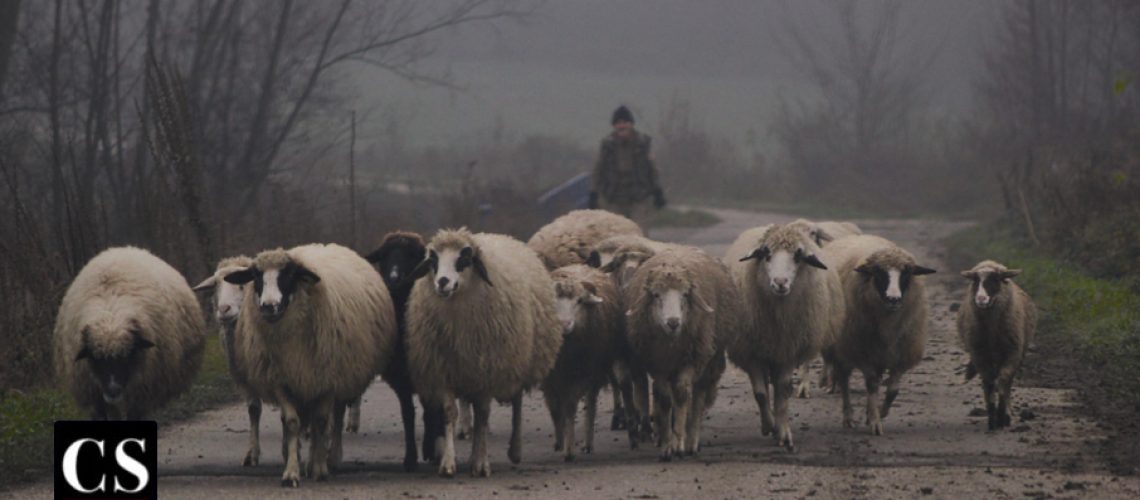
Those bishops the Enemy couldn’t corrupt, he made comfortable and changed the job description of a bishop from an orthodox, outspoken defender of the Faith, a masculine model of deep prayer centered on the Eucharist, and a selfless shepherd with a courageous, missionary heart who seeks out all sheep who are lost or have been driven out of the pasture, to a mediocre, milquetoast, middle manager who takes no risks, fights no battles, and sees no urgency in the precipitous decline occurring on his watch. In neutralizing our prelates, the Evil One also replaced fraternal correction with collegiality, zeal with contentment, responsibility with indifference, sacrifice with comfort, mysticism with worldliness, and martyrdom with an unhealthy desire for accolades and acceptance. And perhaps worst of all, he stripped the Holy Sacrifice of the Mass of many of its sacred prayers, gestures, language and rituals, along with its reverence, awe, perceptible sacrificial nature, and unlimited supernatural power, even enlisting its own bishops to root out and restrict the most faithful remnant who participate in the Mass of the ages and of the saints.
I’m sure the orientation and onboarding process of bishops today is quite different than it was during the time of the Apostolic and Church Fathers, when, unlike today, a huge number of bishops became saints. When a priest is made a bishop, he is unfortunately indoctrinated into a system likely by a metropolitan, brother bishops, and those working in the chancery that teach him this is what a bishop is, and does, and doesn’t do. And he looks across the episcopal landscape and is hard pressed to find an example of a bishop who is courageous and countercultural or orthodox and outspoken, leaving him no desire to be ostracized as an odd outlier. But unless a bishop, or rather many of them banding together, break free from this clerical country club mindset, this inverted idea of what a bishop is, and this system that silences, stagnates and stifles, he will still be a bishop, but will he be a true, worthy successor to the Apostles?
Perhaps it’s not so much the bishops who are bad, but that the entire episcopal system is bad – in orientation, mission, motivation, and priorities, such that the modern model of bishop has fallen so far from what it was intended to be. How much of their time and effort is spent on serving, sanctifying, and saving souls, compared to the time spent on the confirmation and ceremonial circuit, or managing the decline of a bleary, bloated bureaucracy? For too many, the only time we hear from our bishop is once a year during their annual appeal when they ask for more money to run a near bankrupt NGO filled with departments which have little or nothing to do with the salvation of souls. And the only time we see them actually serve their flock is once a year on Holy Thursday where they ceremoniously wash a total of twelve feet. Sure, it’s a personal sacrifice to spend so much time carrying out the day-to-day functions of a modern-day bishop. But is it effective, the highest and best use of a bishop’s spiritual authority, or consistent with the example of their predecessors, many of whom earned the title of bishop and martyr?
Few are the bishops who zealously defend doctrine or the deposit of faith, fewer outspokenly oppose the sinful, secular cesspool of our post-Christian culture, and fewer still effectively and urgently address the great apostasy of souls lost on their watch, for which they will be responsible. But many perform ceremonies where they are the centers of attention, even more enjoy the imagined accolades and perceived position, power and esteem it once held, and many more love being bestowed places of honor roaming in circles among dignitaries and other earthly elites. If the winds of hope are in our favor, those on the deck of the ark of salvation either need to set a new course, for themselves and for the Church they lead, or step down so that we don’t end up shipwrecked or even farther from our ultimate home.
A Providential Paradigm Shift?
At this moment, a complete clerical paradigm shift is needed, and our bishops need to find their voices and their courage, for our sake and for theirs. This may require that bishops spend more time in prayer (before the Blessed Sacrament) than they do managing so-called “ministries”, the latter of which can be greatly reduced and run by laymen. This essentially means that bishops make tending and feeding their sheep (John 21:15-17) the one given by Jesus Himself, their top priority and reducing or eliminating all other official functions which do not align with that priority. They must be spiritual fathers and masculine models of holiness, charity, clarity, courage, fairness, zeal, transparency, faith and action to the priests and people of their dioceses, not isolated, ineffective, unknown overlords or pusillanimous pampered, princes who fail to speak or act out of indifference or cowardice, be it concern of reprisals, fear of offending, or capitulation.
None can deny under the modern model of their laxity and laisse faire leadership the amount of scattering has been several fold more than the gathering. And perhaps the worst part, aside from the sheer number of potentially lost souls, is the silence, the lack of outrage, the absence of action, the lack of introspection, and the unwillingness to even acknowledge the problems, those responsible for the problems, and the possible solutions to the problems. With the palpable shift in momentum in the spiritual war, it would be a tragedy for our generals to continue on their course of compromise and capitulation to the world and its Prince, retreating to their porous, perishable, palaces when God, the heavenly host, and all children of the light are awaiting orders of attack.
For this is an undeserved but most acceptable time. It is not time for whispered agreement, secretive support, or patting oneself on the back for possessing a supernatural, biblical, catholic worldview; it’s time for such tepid, timid bishops to boldly and unapologetically put their faith into action, standing up and speaking out in full-throated opposition to those who undermine the Body of Christ. We don’t need any more weak and worldly leaders; we need courageous clerics filled with the Holy Spirit, oriented to the Father, and conformed to Christ.
A good first step, beyond the bishops’ renewed commitment to prayer, sacrifice, and repentance, would be refusing to be pigeonholed into a failed, fruitless system, breaking the mold, and choosing to follow the Holy Spirit over the fealty to compromised clerics. They should personally and collectively commit public acts of contrition, reparation, accountability, and transparency to regain our trust and respect. They should collectively call out the errors and outrages from whatever corner of the Church, whenever it occurs, so that their faithful are not further scandalized and scattered. They should call on the faithful to pray, sacrifice, repent and reorient so that the revival will take hold, increasing our faith, restoring Christian morality, so that God may bestow blessings upon our families, the Church, and our nation. Lastly, they should follow the example of the great bishops down through history who spent their lives zealously pouring themselves out for the love of God and the salvation of their flocks, surrendering to the will of God, and employing the powerful supernatural gifts inherent in their sacred office, rather than relying totally upon fallen human wisdom and their own deficient management skills.
If anything in this article strikes you as true or resonates with you on a spiritual level in any manner, please share it with your bishop.



8 thoughts on “Bad Bishops or a Bad System?”
Although it could be simply cowardice,I am hoping some bishops are prudently lying low until the opportune time.
Pingback: THVRSDAY MORNING EDITION | BIG PULPIT
This essay on the bishops sounds very petulant to me. Why can’t you just take it on the chin and count blessings. There are 1.3 billion Catholics in the world which about 30% practice. That’s 400 million. Juxtapose this with the 125,000 Zoroastrians worldwide. This religion is over 3000 years old and had a very notable influence on Christianity, Islam and Buddhism. They do not seek converts and believe in a perpetual battle between good and evil. Their mantra is to think good thoughts, speak good words and do good deeds as the way to live life. And as far as Vat 2 goes, it’s only been 60 years, a drop in the bucket of time, give it a chance until Vat 3 convenes and see what come out of that.
Ordinary Papist,
Apparently one man’s petulant is another man’s urgent call to reorientation and revival.
If the stakes weren’t so eternally high, I could understand your indifference, complacency, and contentment that 70-80% of Catholics don’t practice their faith, and are likely living outside a state of grace. But it’s not about numbers – it’s about souls. At the risk of further petulance, such a blase’ attitude toward what is due God and what would best benefit our fellow men may be that of most ordinary Catholics, but why settle for being an ordinary papist, when you could be an extraordinary papist?
And despite the Pope’s recent ecumenical comments, Islam, Buddhism, and Zoroastrianism are not part of God’s perfect will, nor His plan or path to salvation. In fact, I wouldn’t be surprised if the Enemy has the trademark on those Coexist bumper stickers. With souls entering hell like snowflakes (see Fatima), we don’t have time to wait another 60 years for a promised “springtime” nor for a Vatican III which the enemies within will undoubtedly use to remake the Church according to the Spirit of the Age. We have to pray, sacrifice, and work tirelessly (which includes encouraging our bishops to greater fidelity and courage) to accomplish His will now, in our time, with the life He has given us.
You see, the whole trouble with the church today is that it doesn’t want to acknowledge or reap the whirlwind from its own actions. It doesn’t even listen to itself. Take Timothy 1 chapter 3. It spells out in no uncertain
terms the qualifications of a bishop. Why put it in the BIBLE if it’s irrelevant ? Another thing I gleaned from the state of Catholicism is that since the reformation the church has a severe aversion to the symptoms that follow its winding course through history. If you had a disease of your own making would you rail against the effects ? Someone smokes most of their life, they develop cancer and every discomfort and pain that ensues – would you prefer that they just go away ? Let the cup pass ? The state of the church today resulted from very specific actions, the roots of which can be traced to sources that guaranteed the outcome. Seventy percent of a major religion doesn’t just, up and leave because of some council. That’s called ‘gaslighting’.
“In the 1960’s, the Church tragically misjudged the moment in opening its windows to the world for an ecumenical council at a time when an evil anti-Christian spirit of revolution was spreading across the globe.”
You must mean Vatican II, called by John XXIII in 1959, which opened in 1962 and closed in 1965. Your timeline is a bit off.
Pope John XXIII is said to have made the statement that he was opening the windows of the Church to the world in 1962 in reference to the council. By 1972, his successor Pope Paul VI lamented that the smoke of Satan had indeed entered the Temple of God. This is consistent with the spirit of revolution in the world and in the Church between those two papal statements. The ambiguities in conciliar documents coupled with inverted interpretations that followed by the revolutionary world and its Prince began in the mid to late 1960’s and continued, after some setbacks, opposition, and attempts to interpret the council through a hermeneutic of continuity, to today, as evidenced by the high number of high-profile, heterodox voices in vogue with the current Vatican regime.
Are you saying that Vatican II was a mistake?
Before Vatican II, the Church was opposed to democracy, free speech, separation of church and state, and equal rights for women.
Are you saying we should go back to those positions?