

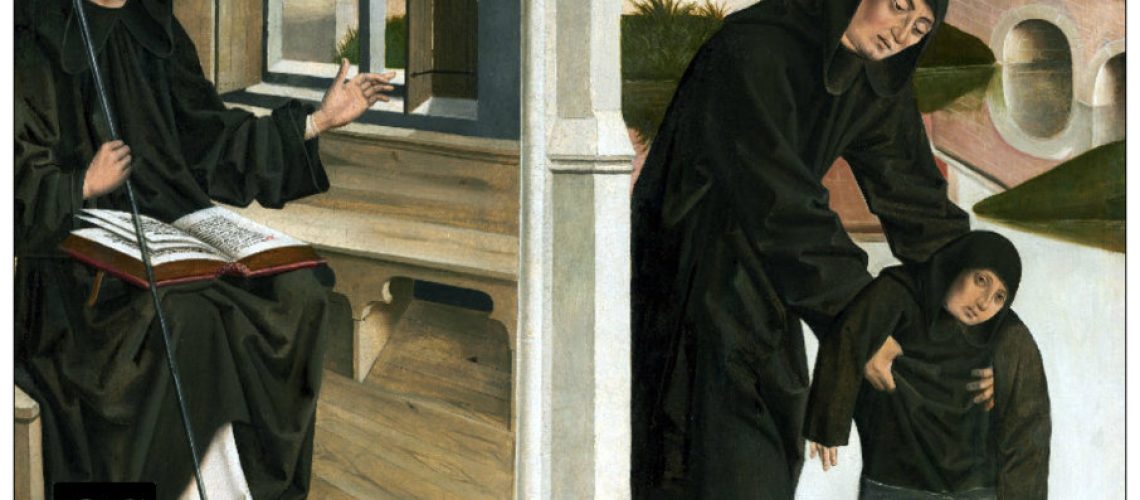
In the tapestry of Catholic tradition, countless threads of holiness and wonder are woven together, drawing the faithful into deeper relationship with Jesus Christ and His Church. Yet few saints have left a mark so enduring and miraculous as Saint Benedict, the spiritual father of Western monasticism. Revered not only for his extraordinary wisdom and ascetic discipline but also for the signs and wonders that adorned his life, Saint Benedict stands as a radiant beacon for all seeking to draw closer to God amidst the everyday struggles of the world.
At Journeys of Faith, our mission is to introduce hearts to the transforming power of divine grace by sharing the stories of the saints—those heroic witnesses whose lives are ablaze with God’s presence. Saint Benedict’s story, marked by mysticism, spiritual warfare, and tangible miracles, is an invitation to rediscover the treasures of the Catholic faith. His life’s journey, from the solitude of Subiaco to the establishment of Monte Cassino, reveals not only a profound trust in divine Providence, but also the exhilarating truth that God is still at work in the world—calling each of us to holiness, offering protection, and granting signs of His loving care.
Whether you are a catechist, a parish volunteer, a mother or father, or simply a pilgrim longing for spiritual renewal, the life of Saint Benedict offers both inspiration and practical tools for your own “journey of faith.” Allow us to walk with you through the miracles and mystical experiences that shaped this holy man—so that, through his intercession and example, you can encounter anew the awe and adventure of Catholic living.
Early Life and Benedict’s Call to Holiness
Saint Benedict was born around the year 480 in Nursia, a small town nestled in the hills of central Italy. From the beginning, Benedict’s life was marked by a spiritual hunger rare even in the tumultuous times into which he was born. Raised in a noble Roman family, he was given every comfort and opportunity that the world could offer—a solid education, social standing, even a path to worldly success. But God had planted a deeper longing in his heart: a thirst for truth, for integrity, and above all, for intimate communion with Christ.
As Benedict came of age, the dark shadows of a decaying Roman culture loomed all around him. Pagan practices mingled with tepid faith, and moral confusion was the norm. Sensing the dangers—both spiritual and moral—young Benedict left behind the city of Rome and its vanities. He journeyed into the mountains, yearning to find God in silence and solitude.
It was in the quiet wilderness of Subiaco that Benedict’s soul awakened to the fullness of his call. He sought holiness not by mighty deeds or loud proclamations, but by retreating into a hidden cave. In this secret place, the young saint devoted himself to unceasing prayer, fasting, and the daily reading of Scripture. Here, Benedict encountered temptations and spiritual trials—battling the Evil One with the weapons of faith, mortification, and trust in divine Providence.
His humility and radical detachment from the world drew others to him. Young men, stirred by stories of his holy example, began to seek Benedict out, asking to join him in his way of life. Thus, in God’s providential plan, the roots of what would become Western monasticism were planted—quietly, in the heart of a young man whose only desire was to give himself completely to Jesus Christ.
The First Miracles
From the earliest days of his monastic life, Saint Benedict of Nursia was surrounded by an atmosphere charged with the supernatural. The ancient biographies, especially the Dialogues of Saint Gregory the Great, recount that even before founding the famous abbey at Monte Cassino, Benedict’s sanctity was powerfully confirmed by divine signs.
One of the first miracles attributed to Saint Benedict occurred during his time as a hermit near Subiaco. Devoting himself entirely to prayer and asceticism in a hidden cave, Benedict was protected and sustained by God in mysterious ways. When the devil stirred resentment among local monks, who sought to poison him, Benedict made the Sign of the Cross over the cup offered to him, and it shattered instantly—deflecting the plot against his life. This dramatic event was not simply a tale of survival but a powerful demonstration that Christ was guarding his faithful servant.
Benedict’s miracles were never performed for spectacle or self-glory but emerged as spontaneous manifestations of God’s merciful love. When a fellow monk was tormented by lustful thoughts, Saint Benedict prayed earnestly for him. According to tradition, the monk was instantly liberated, experiencing deep serenity and peace from that moment. Such miracles reveal the saint’s supernatural gift of intercession and his role as a spiritual father who leads souls to freedom in Christ.
Saint Benedict’s early miracles also included multiplying food to feed the hungry brethren, driving out evil spirits, and converting stubborn hearts. Always rooted in obedience, faith, and humility, each miracle pointed not to Benedict himself, but to the living power of Jesus Christ in His Church. For those seeking holiness today, these mighty wonders are a call to trust in the Lord and seek deeper transformation through prayer, sacrament, and devotion—just as Saint Benedict did.
Spiritual Warfare and Temptation
In every great saint’s journey, the shadow of temptation and the battle with evil is ever present. For Saint Benedict, this warfare took on a vivid and sometimes terrifying form. His life, from the green hills of Nursia to the craggy peaks of Subiaco and the communal heart of Monte Cassino, was marked by intense spiritual conflict—pitting faith against the prowling snares of the enemy.
The very foundation of Benedict’s vocation was laid in the furnace of temptation. Early accounts tell how, as a young man seeking silence and prayer in a cave, Benedict came face to face with relentless assaults from the devil. The enemy attempted to draw him away from his ascetical path through visions of pleasure and pangs of loneliness. Tradition tells us that, at one pivotal moment, Benedict was tormented by a memory of a woman, kindling such temptation within him that it threatened to break his resolve. In a gesture of radical fidelity, Benedict rolled himself in a patch of thorns and nettles, using the pain—a tool of mortification—to subdue the fire of passion and claim victory with Christ’s grace.
Miraculously, Benedict’s resistance transformed him into a spiritual warrior whose very presence became intolerable to evil. Demons are said to have shrieked as he entered places, and his prayers broke spells and lifted curses. His weapon was the Cross; his shield, unwavering faith and constant prayer. The famous “Benedictine Medal,” later derived from his legacy, bears inscriptions invoking God’s protection against the evil one, a testament to the spiritual battles he fought and won.
Benedict’s wisdom, preserved in his Rule, urges his followers to “listen carefully, my son, to the master’s instructions, and attend to them with the ear of your heart.” He teaches that spiritual warfare is a daily struggle—an invitation to vigilance, humility, and perseverance. Through his own life, Saint Benedict shows every generation that victory over temptation is possible, not by human effort alone, but by clinging to Christ, uniting our will to His, and persevering through the storms with hope and trust in God’s unfailing mercy.
Miracles of Healing and Deliverance
Saint Benedict’s life is a testimony to God’s power made manifest through faith, prayer, and unwavering trust in divine providence. From the earliest days of his monastic vocation, stories emerged of Benedict being chosen by God as a vessel of miraculous grace—stories deeply cherished within Catholic tradition.
Perhaps the most widely known accounts revolve around Benedict’s charism for healing and deliverance from evil. The sick and the troubled flocked to him, seeking relief from ailments both spiritual and physical. Through his intercessory prayers and the simple touch of his hand, many were restored to health; the chronicles recount feverish monks suddenly made well, eyesight restored, even the paralyzed strengthened enough to walk.
But it was not only bodily affliction that trembled before Benedict’s sanctity. The spiritual warfare he waged on behalf of the suffering became legendary. Time and again, Benedict was approached by those tormented by evil spirits. With the powerful sign of the Cross and words invoking Christ’s authority, Benedict cast out demons, breaking chains of oppression and leading souls back to peace.
One dramatic episode tells of a young monk poisoned by jealous enemies. Benedict, discerning the danger through the gift of prophecy, made the sign of the Cross over the cup—and instantly, the vessel shattered, sparing the monk’s life. Similar tales tell of lives saved, deadly plots foiled, and communities preserved through Benedict’s supernatural awareness and bold faith.
Poisoned Bread and Cup
Among the many miracles attributed to Saint Benedict, few capture the imagination and heart like the harrowing tale of the poisoned bread and cup. This episode stands as a testament not only to Benedict’s holiness and close communion with God but also to the unseen battle between good and evil that marks the journey of every Christian.
After founding the monastery at Monte Cassino, Benedict’s fervor for reform and uncompromising commitment to Christ stirred up both admiration and resentment. Some in the wider monastic community felt threatened by his authority and zeal. In an act of jealousy and malice, detractors sought to silence Benedict by poisoning his daily bread and wine.
The traditional account, preserved in the writings of Pope Saint Gregory the Great, tells us that when Benedict was offered the poisoned cup, he made the sign of the cross over it. Instantly, the vessel shattered as if struck by an invisible force, spilling its deadly contents. Likewise, when the tainted loaf was presented to him, Benedict discerned the danger. He calmly rebuked his would-be assassins, urging them to repent and turn their hearts back to God.
In this moment of spiritual warfare, Saint Benedict’s trust in Christ triumphed over wickedness. The sign of the Cross became not only a shield of protection but a proclamation of the power of Christ’s victory over sin and death. For the monks and all who heard this story, it was a profound catechesis: holiness is inseparable from spiritual vigilance, and every Christian, relying on grace, can overcome evil with faith.
This miracle, recounted through generations, continues to inspire believers to seek refuge in prayer and to make the sign of the Cross with devotion, remembering that the saints are living witnesses to God’s abiding protection, even in the face of mortal danger.
Power Over Evil Spirits
The life of Saint Benedict is marked not only by deep prayer and rigorous discipline but also by astounding spiritual authority over the forces of evil. Time and again, the holy founder of Western monasticism confronted demonic attacks—sometimes subtle, sometimes terrifyingly direct—and, by God’s grace, emerged as a victorious champion of faith.
Benedict’s battles with evil spirits were not abstract tales but living realities witnessed by those around him. According to his biographer, Saint Gregory the Great, Benedict once discerned a dark shadow lurking in the heart of a monk consumed by envy. With a simple but powerful prayer, he delivered the afflicted soul, breaking the chains of demonic influence. On another occasion, a cup containing poisoned wine was presented to Benedict by jealous monks. As he blessed it with the sign of the cross, the cup shattered, revealing the presence of evil and protecting Benedict from harm.
These miracles are not mere legends but testimonies to the holiness that flows from a life united to Christ. Saint Benedict’s unwavering faith, constant use of sacramentals, and recourse to prayer and the cross made him a terror to demons—and a refuge for all seeking freedom from spiritual attack. His example continues to inspire countless Catholics who turn to the medal that bears his name, invoking his intercession against temptation, oppression, and every snare of the enemy.
Saint Benedict’s power over evil is not simply a story of past victories, but a living legacy, reminding us that in Christ, the saints are mighty warriors, and the darkness can never overcome the light. Through devotion, the sacramental life, and faith in Jesus Christ, every believer can walk in confidence, sheltered by the same spiritual armor that clothed Benedict.
Saint Benedict Items at Journeys of Faith

