
For even the Son of Man came not to be served but to serve others (Mark 10:45).
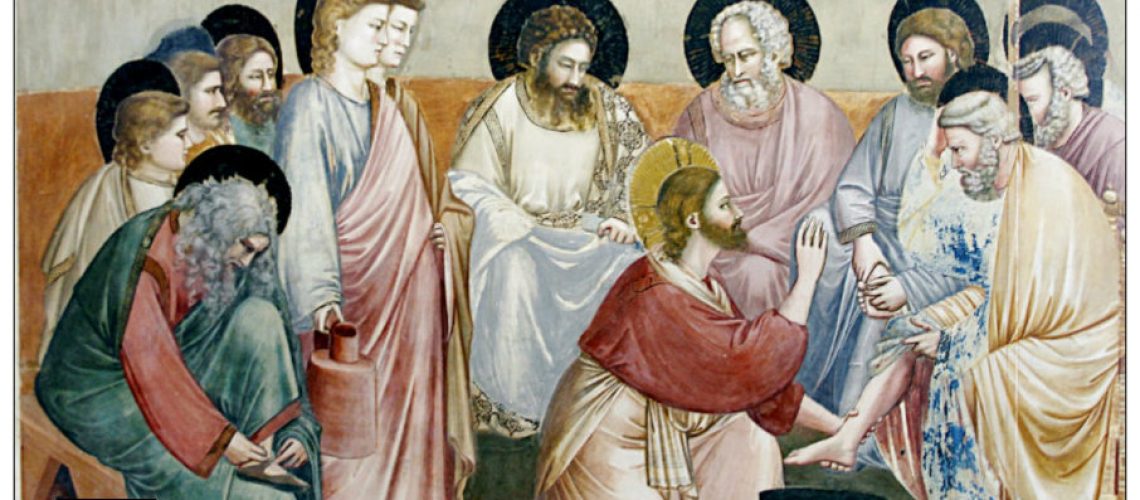
The call to serve is one of the most repeated and powerful tenets of Jesus’ ministry. Never was that message more evident than in the story in the 13th chapter of John’s Gospel (John 13:1-20). The scene is set in the last moments of Jesus’ life at the Last Supper. He knows He has been betrayed by Judas, and that even His most trusted friends will soon turn their backs on Him in His final moment.
Yet, His last gesture to His apostles is not one of regret or remorse. Instead, He kneels before them and performs the ultimate symbol of servitude and love, gently washing their feet; a task reserved for the lowest of servants. This simple act of humility and love would remain in their hearts as they served each other and those that would soon follow them after His passion.
Jesus’ call to his disciples to serve others is reminiscent of a line from a movie I will never forget. The movie itself is insignificant, but the words have always held great meaning to me.
In the movie, a high school wrestler who is very successful in his weight class has a dream. That vision is to drop two weight classes in a dramatically short period of time so that he can get on the mat with a boy who is arguably the most intimidating wrestler in his state. No one thought he could do it, but he eventually made the weight through sacrifice and dedication.
In the final scene, he is down by points with just 30 seconds left in the match. His coach pulls him over to the side, looks into his eyes, and asks him, “Have you done everything you came here to do?”
The boy paused, then shook his head. “No,” he replied.
The coach added, “Well, you have just 30 seconds to get it done.”
I think about those words in my own life, not in the context of a sporting event, but in how I hope to live my remaining days. And I pray that each of you ponder that same question.
‘Have you done everything you came on earth to do?’ Have you fully leveraged all the gifts and blessings God has given you to serve Him and others? Whether we have 30 seconds or 30 years remaining, the truth is we will never know. All that is certain is that our lives in this world are finite. Consider the message of sacrifice and service Jesus sent us in the thirteenth chapter of John’s gospel. Ask the Lord each day how you can fulfill this powerful message to serve.
33 AD
As the day of Passover began, a scarlet sun crept above the mountains surrounding Jerusalem. Shafts of sunlight peeked through the clouds, casting an amber haze on buildings that had stood for centuries. The winds of early Spring swept across the desert, bringing the sweet smell of wisteria, which bloomed in shades of lilac and violet along the countryside. It was a time of joy, reverence, and prayer.
As had been tradition for generations, thousands of pilgrims had traveled great distances to celebrate and worship the Lord. The population of the historic city swelled to five times its normal level, and tents and make-shift shelters were sprinkled along the hillsides as far as the eye could see.
On this cool, crisp morning, an innkeeper and his daughter prepared the Passover meal in their modest home near the Temple. Though the celebration would be filled with joy and reverence, the young girl sensed an uneasiness in her father’s weathered face. She watched as he kneaded the dough for the unleavened bread, and after a moment, she spoke.
“Who are these men who will visit us, Father?” she asked.
The man stopped his work and wiped his hands with a cloth before turning to his only child. Her hazel eyes glistened like jewels in the sunlight, and he knelt beside her, placing his hands on her thin shoulders.
“A man and his followers will honor us by celebrating Passover in our humble home.” He paused, studying her face. “He is the one called Jesus whom the people have spoken of.”
She tilted her head, pondering his words. “I’ve heard his name from the men and women in the marketplace.” She peered into her father’s dark eyes. “They say he is the son of God sent to free us. Could that possibly be true?”
The man stood and squinted out the window into the midday sun. “I cannot say for certain.” He paused, running his hand through his coarse hair. “But yesterday, a voice came down from the sky, the voice of an angel. It told me a man would come, and I must prepare the Passover meal for him and his disciples.” He turned to his daughter and watched her inquisitive eyes studying his face. “I believe my child, that what the people in the marketplace say is true. We have been blessed that he would even enter our home. For what reason, it is not for us to know.”
*
That evening, Jesus sat at the center of a long dining table surrounded on both sides by his 12 followers. As was the tradition of Passover, a menagerie of fruits and bitter herbs lay before them on platters. Candles on the table flickered, casting shadows that danced along the stone walls, and the pleasant aroma of cooked lamb hovered in the air.
At the end of a darkened hallway, the curious young girl crouched, her inquisitive eyes focused on the man they called the Messiah. She watched as he rose from the table and took a piece of bread, holding it high in the air in front of him. He turned to each of his followers and spoke, but she was too far away to hear his words. Then he passed the bread to the others, motioning for them to eat.
Grasping a chalice of wine, he held it in front of him and offered it to his apostles. She could see the disciples’ confusion as they ate the bread and drank from the cup. Then Jesus stepped away from the others and removed his outer garments, wrapping a towel around his waist. He poured water from a pitcher into a shallow basin, knelt beside the first apostle, and began to wash his feet.
The men stirred uncomfortably, stunned by what their Master was doing. She could hear their confused mutterings as he moved from man to man, performing an act usually reserved for the lowest of servants. The girl watched in dismay as the Son of God humbled himself before those he loved. For a moment, she wore a bewildered look on her face as she processed what lay before her. Then he suddenly turned toward her and smiled, their eyes locking. A myriad of images flashed through her mind, and she could see the next day’s events in his life unfold before her. She closed her eyes and turned away, feeling a pain like none other before.
Some things are too unfathomable for the human mind to comprehend; events that stretch the very fabric of imagination. This was one such moment. For three years, the disciples had followed their Master across Israel. They had seen him perform miracles beyond belief. It soon became apparent he was no mere prophet among all the others. He was the Messiah, sent to save them from years of bondage. Word of his deeds spread quickly across Israel, and soon he became a beacon of light for those around him. Though he had foretold that he would one day suffer and die, there must surely have been a flicker of hope among the Apostles that he would remain and free Israel from centuries of suffering and despair.
In this moment in time, as Jesus performed the ultimate display of servitude and love for his disciples, he knew he was just hours from being seized and taken before Pilate for judgment. He would soon be beaten, spat upon, even abandoned by his trusted apostles. And though he was God, he was equally human, so the depth of the pain that would be inflicted upon him as he made his way up the hill called Golgotha was all too apparent to him. The hours he would endure being impaled upon a cross would bring misery beyond any he could imagine.
Yet, among all the lessons he had taught them through the years, his last message to those carrying on his ministry was one of servitude, humility, and love.
The disciples must have been stunned to see the Son of God kneel before them and lovingly cleanse their feet. Peter, the impetuous one, initially refused to allow his Master to wash his feet.
You will never wash my feet (John 13:8).
Afterward, Jesus spoke to them. “Do you realize what I have done for you?”
I can sense a stunned silence as they ponder the question, trying to process what they have witnessed. Perhaps understanding the capabilities of his flock, Jesus summarized his desires for them after he would pass.
If I, therefore, the master and teacher, have washed your feet, you should wash one another’s feet. I say to you, no slave is greater than his master. I have given you a model to follow, so that as I have done for you, you should also do (John 13:14-15).
This poignant message of servitude and sacrifice is amplified in Tomas à Kempis’ book, The Imitation of Christ. Written 800 years ago, its meaning is as relevant now as it was then.
Seek child, to do the will of others rather than your own. Always choose to have less rather than more. Look always for the last place and seek to be beneath all others. Always wish and pray that the will of God be fully carried out in you.


[…] MagazineThe Church & the Dangers of Bureaucracy – Patrick Neve at The Catholic HeraldOur Call to Serve – Bob Blundell at Catholic Stand MagazineModern Sacred Art With Pre-Modern Visual & […]