
There are times when I feel as if I have enough faith, and others when I wish I had a little more. But more faith for what? Is it faith that provides a particular kind of certainty, perhaps even a feeling of superiority? Is increasing faith meant as a goal or maybe a mystical experience to help me cope with life’s ordinary challenges? With enough faith, would I conquer doubt, illness, or even economic hardship?
No, I wish for a little more faith to trust that the Lord God truly controls the world. A bit more to believe that everything will be alright, despite everyday struggles. I am here because I know I have at least a little faith. I find comfort in knowing I am not alone in wishing for a little more faith. Even the disciples sometimes struggled with believing and trusting in God; yet they had the Lord Jesus (in flesh) with them. They left everything to follow Him and keenly listened to His teachings, many of which presented as challenging sayings.
Jesus said to his disciples,
Occasions for stumbling are bound to come, but woe to anyone by whom they come! It would be better for you if a millstone were hung around your neck and you were thrown into the sea than for you to cause one of these little ones to stumble. Be on your guard! If another disciple sins, you must rebuke the offender, and if there is repentance, you must forgive. And if the same person sins against you seven times a day, and turns back to you seven times and says, ‘I repent,’ you must forgive (Luke 17:1-4).
Lord, Increase Our Faith!
The disciples were tasked with the responsibility of continually forgiving every offence of every person. This seemed so difficult that they realised, without an extraordinary amount of faith, they could never obey this command. It is no surprise their response to these teachings was a desperate plea: “Increase our faith!” This sincere request resonates with anyone who has ever longed for a little more faith, trust, and belief that everything will be all right—that God is in control and cares for us all. We only need just a little (more) faith. But how much faith is enough? The apostles felt they needed more faith to face the challenges Jesus set before them. They asked Jesus to increase their faith. If they were to do everything the Lord asked, they believed they would undoubtedly require more faith. But it turns out this wasn’t the case. The Lord Jesus responded to the plea with what sounds like a rebuke,
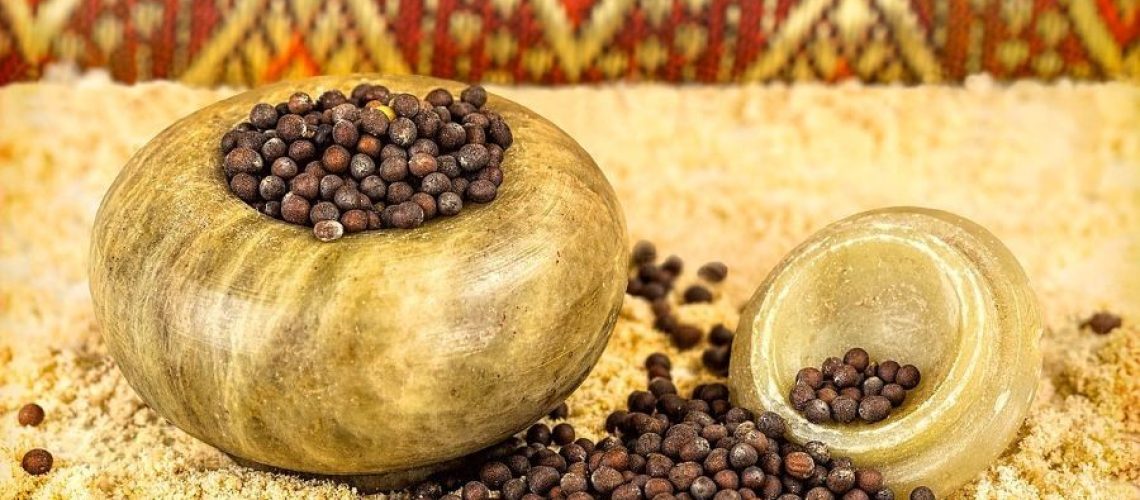
If you had faith the size of a mustard seed, you could say to this mulberry tree, ‘Be uprooted and planted in the sea,’ and it would obey you (Luke 17:6).
We often believe faith is shown through dramatic, miraculous acts. However, the greatest miracles of faith involve restoring relationships. Forgiving injuries is a duty that humanity is called to, yet it is often the hardest practice to adopt. Truly, without a foundation of faith, forgiveness cannot be established. The mulberry tree is thought to have strong roots that can hold it in place for centuries. Vices like unforgiveness and bitterness may be deeply rooted within you, but through faith in the Lord Jesus, you can completely uproot those roots. The mustard seed metaphor highlights that the amount of faith matters less than the object of faith, which is the Lord Jesus Himself. The power to uproot a mulberry tree and cast it into the sea doesn’t depend on the size of the believer’s faith, but on the power of God, who can achieve the impossible.
The point is that the disciples didn’t need more faith. If they had faith the size of a mustard seed, that would be more than enough. The Lord Jesus used a tiny seed, well known to the disciples, to illustrate His point. Having faith as small as this means having any faith at all, which is in itself enough. If you have some faith that you can ask for more, it means you do have enough faith. You have the ‘any faith’ that is more than enough.
Faith the size of a mustard seed is plenty because it considers not how much faith we have, but who we put our faith in. Mustard-sized faith is not about having faith without ever having any doubts.
What About Doubt?
Doubt is an element of faith because it signifies an authentic and active belief rather than a blind, thoughtless one. Doubt prompts questions, encourages believers to seek a deeper understanding, and provides an opportunity to strengthen faith through exploration and validation. Doubt is not the same as a complete lack of faith. While doubt can be a temporary challenge, it should not become a permanent state of unbelief. Your faith should equip you to defend the hope you hold, including the ability to respond to difficult questions. Faith is about noticing the mess and waiting for the light to shine. It is about trusting God even when things seem very dark. It is enough that we hold onto our mustard seed-sized faith and trust that it is enough. It is not because of the amount of faith, but because of who we are placing our faith in.
God Is Always In Charge
The Gospel reading for the 27th Sunday in Ordinary Time (Year C) continues with the unusual example of an enslaved person doing what is commanded (Luke 17:5-10). The Lord Jesus teaches the disciples (reminding us) that we don’t need certainty. We don’t have to have everything figured out. We don’t need to see the whole picture. We are not in charge; God is in charge. God knows what He is doing. There is always more going on—more than any of us thinks we know or understand. We must take the necessary steps without waiting until everything is figured out. Figuring it out means trusting the Lord and doing our job anyway.
As St. Augustine put it, we believe in order to understand, and we understand better to believe. We must first consider a foundational truth to grasp the deeper reality or knowledge that arises from it; this belief opens the door to understanding. We trust in the Lord, and in time, we come to understand His purpose and plan. We see as in a mirror dimly, so we need faith. We trust and follow Him, and then it will become clear. We know only in part; then we will know fully, even as we are fully known (1 Corinthians 13:12). Not in our time, but in God’s.
We believe that God has a perfect (possibly different) timeline for events than we do. His perspective is broader, and His timing is always right. This brings comfort during periods of waiting or uncertainty, encouraging faith that things will happen as they are meant to. We must be patient, trusting that God sees the whole picture from a view beyond our understanding. Our waiting allows God to work on our character and prepares us for when the promise is finally fulfilled. Worry tries to control things outside of our power, whereas trusting God’s timing involves letting go of that control.
Growing Our Faith
A mustard seed has the ability to grow into a tree, large enough to shelter the birds of the air. Similarly, our faith can begin small but develop into a place of refuge, safety, and stability. We can start by asking for more faith in prayer. When struggling to believe, we can turn to God and say, “Lord, I believe. Help my unbelief” (Mark 9:24). When finding it hard to believe, we must pray for an increase in faith.
Our faith should focus more on its nature rather than its size. A faith as small as a mustard seed can accomplish great things when trusted in a mighty God. While even small faith can perform remarkable acts, greater faith can achieve even more extraordinary things. The most vital aspect is the object of our faith. Just as the eye cannot see itself except through a mirror’s reflection, so too will you find evidence of your faith, but cannot see the faith itself directly. Faith looks beyond itself to its object, even to Christ.
When our faith is low, we can still come to church. We shouldn’t wait to believe before attending because the church is where our faith is best nurtured. When we hear God’s word proclaimed and partake in the sacraments, our faith grows. When we fellowship with others who share the same faith, we become spiritually stronger. It is helpful to share our struggles and doubts with a trusted Christian friend. For where two or three are gathered in His name, whether for prayer, fellowship, or other religious activities, He is present among them (cf. Matthew 18:20). Even a mustard-seed-sized faith can be enough to bring about profound change in the church.
Take-Home Message
Your faith, no matter how small it seems, is more than sufficient. Mustard seed faith requires only modest discipleship, not unshakeable confidence or spectacular feats. Faith as tiny as a mustard seed can accomplish remarkable and seemingly impossible things because God’s power works through that faith. It has never been about how large your faith is, but always about whom you trust that faith in. No matter how small your faith may be, when you place it in the Lord Jesus, you will achieve magnificent results.
*NB: Unless specifically stated, all Bible quotations are from the NRSVCE.


[…] Faith As Small As A Mustard Seed – Pamela Mandela at Catholic Stand Magazine […]
[…] – Lila RoseWhen Love Feels Dry: How to Keep Going When Prayer Is Hard – Scepter BlogFaith As Small As A Mustard Seed – Pamela Mandela at Catholic Stand MagazineWhat was Mary’s Lineage – Was She from the […]