
For Christians worldwide, Easter Sunday is the day to observe the resurrection of our lord, Jesus Christ. As it turns out, each Christian country has developed and maintained its own national traditions. According to a study by the World Atlas, the author listed many of these different celebrations: Sweden features a children’s Easter Parade; Haiti’s celebrations underscore the mix of African and Christian beliefs; and France has a favorite Easter treat, a giant omelet.
But serving splendid meals is a popular way to celebrate Easter and to bring family and friends together over a luscious meal. Looking at the dining celebrations in the following three countries offers some delightful and inspiring celebratory foods:
Easter Food Traditions in Spain
Throughout Catholic Spain, Easter week starts with Domingo de Ramos, or Palm Sunday. From that Sunday until Easter, natives organize processions that commemorate the passion of Christ.
They have also created delicious food treats, and as it turns out Spanish Easter recipes vary across different parts of Spain. But to observe their Catholic faith, no recipes incorporate meat. For example, a common dish in the interior parts of Spain, with a recipe that differ on the location, is a dish called pottage. Its ingredients include beans, spinach, chickpeas, and salted cod.
Another traditional favorite is torrijas, a treat that resembles French toast, but the bread is soaked in wine, not in milk. Another special is called sopa de ajo, or garlic soup. According to history its original version was made with broth, garlic, olive oil, bread, paprika, and eggs. The bread adds texture to the soup and a hard-boiled or fried egg sets in the center of the bowl. And a fried empanada filled with custard, called bartolillo madrileño, originated in Madrid and is readily available in all local bakeries during Holy Week. Another popular Holy Week dessert is called Flores de Semana Santa, or Easter Flowers.
Easter Food Traditions in Italy
Obviously, Easter celebrations in Italy are one of the country’s most important and exciting holidays and the celebrations span over a two-day period: Pasqua (Easter day) and Pasquetta, the Monday following Easter (literally “little Easter”).
Italians also have inspired a wealth of popular food traditions that people enjoy during Easter week. For example, traditional Italian Easter foods usually include lamb or goat; artichokes; Easter breads, some shaped like a dove; boiled eggs; and pannetone sweet bread. So a typical Easter dinner usually includes a soup, salad, pasta, and lamb served with wines. Lamb symbolizes life and eggs symbolize rebirth.
Also known as crescia di Pasqua or torta al formaggio, Pizza di Pasqua is a salt cake made with flour, eggs, pecorino, and parmigiano cheese. In central Italy, it is served for Easter breakfast. Another popular Easter food is the Colomba, a very popular bread that symbolizes the peace dove. Its tradition only dates back to the early 1900s, but today it has become very popular throughout the country.
Easter Food Traditions in the United States
In the United States, Easter festivities are very traditional and may vary from family to family, whether it is going to church; hosting Easter egg hunts out back; and/or wearing fancy Easter bonnets. But food traditions have been consistent over the decades.
For one, the classic Easter ham has usually become the focal point of an Easter dinner. Whether it is a honey-baked ham, a maple-glazed ham, or a simple spiral-cut ham, ham has been an Easter staple because of its availability.
If not ham, however, another popular Easter dinner staple is roast lamb. After all, Jesus Christ is known as the Lamb of God. And as it turns out, lamb is plentiful in the spring, which makes it an appropriate and accessible Easter main course meat. If that if your choice, try a simple and slow-cooked roast leg of lamb accompanied by a drizzle of mint sauce.
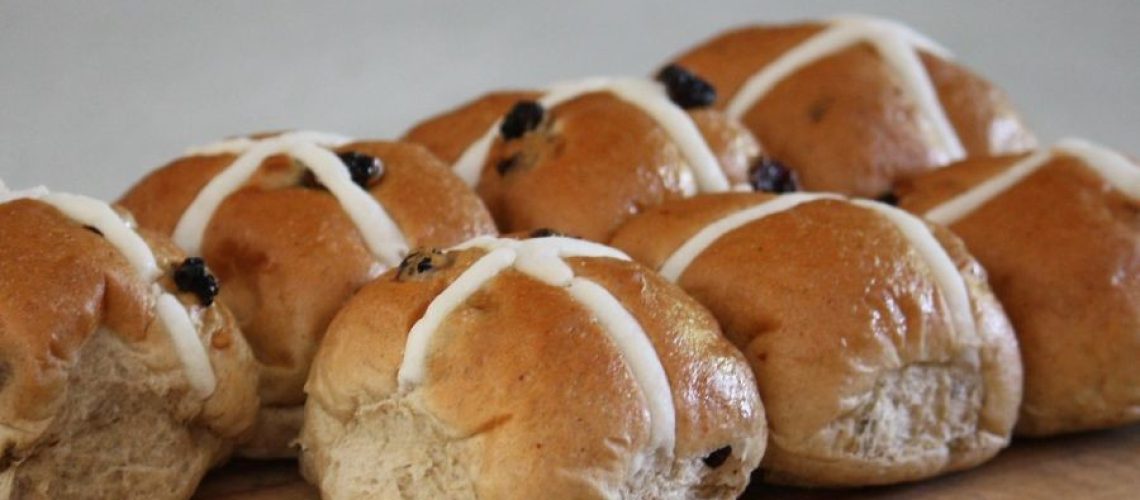
Another must-eat in many American homes are the hot cross buns, with a history that may date back to the 5th century AD. These sweet yeast buns are made with butter, milk, cinnamon, and raisins and are decorated with a cross on top. Most American bakeries and markets offer them around Easter time. Another popular baked good is the braided bread shaped like a wreath with dyed hard-boiled eggs baked into the bread. Another renowned Easter food with Christian roots is the pretzel, a word that means “little arms.” The pretzel twists represent arms connected in prayer.
To end the Easter feast, the simnel cake, filled with rich fruits, spices, and marzipan, has been a centuries-long tradition in the British Isles and is a welcome Easter dessert in America. It is a delicate fruitcake layered with marzipan. And the cake’s decoration comes from the marzipan, which is rolled into 12 balls to represent the 12 disciples, minus Judas.
Pashka
Also spelled “pascha” or “pasha,” this Russian Easter dessert originated in Eastern Orthodox countries and was prepared during Holy Week. Families then carried this dessert for a priest’s blessing at the Easter Vigil Mass. The white cheese ingredients represent the purity of Christ and the dome shape symbolizes the church and the tomb of Christ.
This particular recipe was given to me by a friend more than 40 years ago, and it has been a staple at family Easter meals. Note that cooks can change up the recipe by adding brandy, assorted dried fruits and chopped nuts, and thin orange or lemon zest.
Plan to make this at least two days before Easter so it chills thoroughly until serving.
Serves 6 to 8
Four 8-ounce packages cream cheese, at room temperature
1 cup unsalted butter, at room temperature
2 cups confectioner’s sugar, sifted
3 egg yolks
3 teaspoons vanilla extract, or more to taste
3/4 cup sliced almonds or more, as needed
Candied fruit , orange zest, and lemon peel, to taste
1 two-quart clay flowerpot
1 pint raspberries, rinsed
Cheesecloth
Combine the cream cheese and butter in a large mixing bowl, and with an electric beater blend them until smooth and well combined. Add the confectioner’s sugar, egg yolks, and vanilla, and blend again. Fold in the almonds and candied fruit and lemon peel. Set aside.
Line a moistened flowerpot with double layers of moistened cheesecloth. Scoop in the mixture, cover with plastic wrap, and place a weight on top. Refrigerate for 48 houts.
To serve, gently extract the firm pashka from the flower pot, and unwrap it. Place it on a serving dish and garnish pashka with the the raspberries..


[…] The Meaning of Holy Thursday: 5 Essential Facts Every Catholic Should Know – ChurchPOP10. Easter Meal Traditions – Alexandra Greeley at Catholic […]