
Some folks are all about taking risks while others are all about playing it safe. But both tactics pose problems.
The problem with risk taking is that one must take intelligent and not reckless risks. The problem with playing it safe is that safe takers rarely achieve greatness.
As with many things in life, there are some folks at each of these extremes. But most people are somewhere in between. How we manage our path along this continuum is what will determine if we ever become the saints we are each meant to be.
Sanctity is Our Destiny
There is no doubt that we are each called to be saints. Scripture tells us that we are each called to be partakers in the Divine Nature (2 Peter 1:3-4). We achieve saintliness by grace and not by our own nature. Our sinful, imperfect natures alone would not allow us to rise to this potential for holiness. It is only through God’s grace that we can achieve our destiny (Romans 8:7-9).
Theosis is the concept that we have the ability and the capacity to experience union with God and share in His Divine nature. But we can do so only through grace and not by our own nature. It is God allowing us, through love, to aspire to a sanctity and holiness we could or would never be capable of achieving on our own.
Many are confused on this point in regard to theosis. They wrongly interpret theosis as saying that we can become like God or share anything with God by our mere whim. But this interpretation is wrong.
Rather, what is intended is that we each have the capacity, given by God through loving grace, to share a destiny for and of perfection. Simply put, our journey here on this earth is, for each of us, a testing and proving ground. It is an opportunity, to grow into the saints we can each fully become as God wants us to become.
The Divine Irony of This Destiny of Sanctity
Irony is a state of affairs that seems contrary to the expected. The Divine Irony of our destiny of sanctity is that the more we seek greatness here on earth through vanity, pride, and arrogance, the less we will be able to achieve our eternal destiny of greatness in heaven before God. Conversely, the more humbly we journey here on earth, the greater our chance to achieve the greatness in heaven that is our destiny.
If we aspire to sanctity through our conduct and efforts, we will be on our way to actualize the sacred potential God has willed for us. If we aspire to greatness on earth, any greatness we achieve, if it happens at all, is earthly greatness. And it will promptly become dust when we become dust. Conversely and worse, if we aspire to be great sinners, directly or indirectly, intentionally or negligently, on this earth, we may well become outstanding examples of eternal damnation.
Safety is a Poor Choice If One Aspires to Sanctity
We may each have favorite saints and many of us love to read about the lives of saints. Any such reading will surely point out that the road to sanctity is not a bed of roses or a pleasure cruise. And why should it be, given that any follower of Christ should aspire, expect, and even embrace his or her own Via Dolorosa, complete with crosses to carry along the way?
Surely we can see that Christ did not choose the safe route at any point in His mission. Common sense dictates that expecting safety and security to be neighbors of sanctity on this earth is a very foolish expectation.
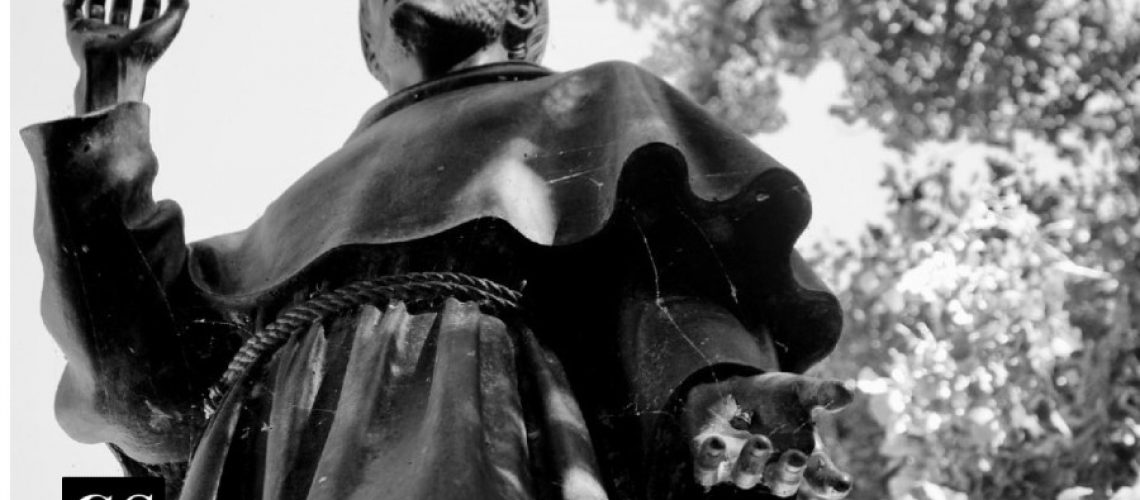
The lives of the saints show us that the world, in all of its ages, has often represented the contrast, even the complete opposite, of what becoming a saint is all about. Augustine was a great sinner wrapped in lust before he broke free toward his destiny. Francis and Clare were mocked when they chose their path to that sacred destiny. Many even thought them insane.
Scores of saints were considered losers and failures by this world. But they became the ultimate winners in the challenge of becoming the saints they were each destined to be.
The Parable of The Talents (Mt 25:14-30) reminds us that putting our potential under a pillow, out of fear or mistrust of our mission or ourselves, is a great tragedy and waste. The sorrowful son in The Parable of The Prodigal Son (Lk 15:11-32) took a great risk, in his eyes, by returning, hat in hand, to his father, facing rejection and shame. Certainly Peter faced great risk of greater shame, at least in the eyes and convention of this world, in asking Our Lord’s forgiveness after denying him three times (Mt 26:69-75).
Any Greatness Demands Great Risk
In many ways and instances in our lives, we will face a gap, often great, between where we are and where we aspire to be. Our present state may well be a function of our weakness and sinfulness. Our aspired destiny will likewise be a function of just what our trust, expectations, and love of God measures out to be.
The student who merely wants to pass most often merely passes. The student who expects to fail very often does just that. The student who expects excellence, and does everything in his or her power to achieve it, will very often achieve that excellence.
The much more interesting case, however, is the student who aspires to greatness, yet is fully aware of his or her weakness or challenges. Some such students rise far above what convention would have dictated they could achieve. Conversely, others sink and wallow in mediocrity. Even worse, a lack of trust, faith, and sheer drive to overcome what may come along the way could pull them further down. Most of us fall into the mediocrity category when it comes to aspiring to our destiny of sanctity.
Playing it Safe
I tend to think that the vast majority of people are neither guaranteed heaven nor hell, but are fully capable of achieving either one, or purgatory in between. Many falsely believe that playing it safe is a path of great virtue.
However, recall the servant who hid his talents in the Parable of The Talents. Recall, too, the so-called good son who remained with his father in The Parable of The Prodigal Son. In both cases, these individuals played it safe. Some combination of fear, mistrust, or even a lack of sincere love of the other gripped them. In both cases, the culprit loved himself more than daring to love another.
The play it safe servant in the Talents Parable was more concerned with saving his neck than trusting and loving to serve his master well. And the good son did not so much serve his father out of sincere love as much as a sense of duty, waiting his chance to grab that inheritance. Note his resentment that his father never gave him an animal to celebrate with his friends, without the father around.
For most of us, the distance between sinner and saint appears great. It seemingly takes a great leap of faith, of love, of being all in, for God and others, to traverse that great distance. That leap of faith and love requires that we recognize, accept, and embrace the great distance between our human sinfulness and our sacred destiny. That leap also demands that once we recognize and embrace the distance we must leap anyway. We need to give an all-out effort, despite a mocking and incredulous world all around us.
A Tale of Two Risks
As already noted, there are intelligent risks and foolish risks. The foolish kind involves risking our eternal destiny on temporary, superficial, earthly treasures and promises. We all face daily trees with apples promising that we can become our own gods. Like eternal and moral side view mirrors, earthly treasures will cause immediate rewards to appear far greater than they truly are.
Conversely, the intelligent risks are those taken toward God, toward trusting, serving, and loving that Eternal Father who will always have our back, even when we turn that back on Him. The closer we allow ourselves to grow toward God, the more easily we will be able to discern which risks are the foolish ones and which are the intelligent variety.
Discern and Leap
We are all in that boat tossed about in the storms of this world. We see Christ in the distance but are too afraid to leap toward him. Even if we do leap, do we keep our eyes and hearts fixed on him or do we become so obsessed with our circumstances that we sink?
The greatest irony of all is that, if we leap toward Our Lord’s waiting arms, we will discover that he was with us in the boat all the time. He is just waiting for us to take the great risk to achieve the great reward that awaits each of us.
From great leaps come great achievements, and securing our destiny of sanctity is surely the greatest achievement of all.

