
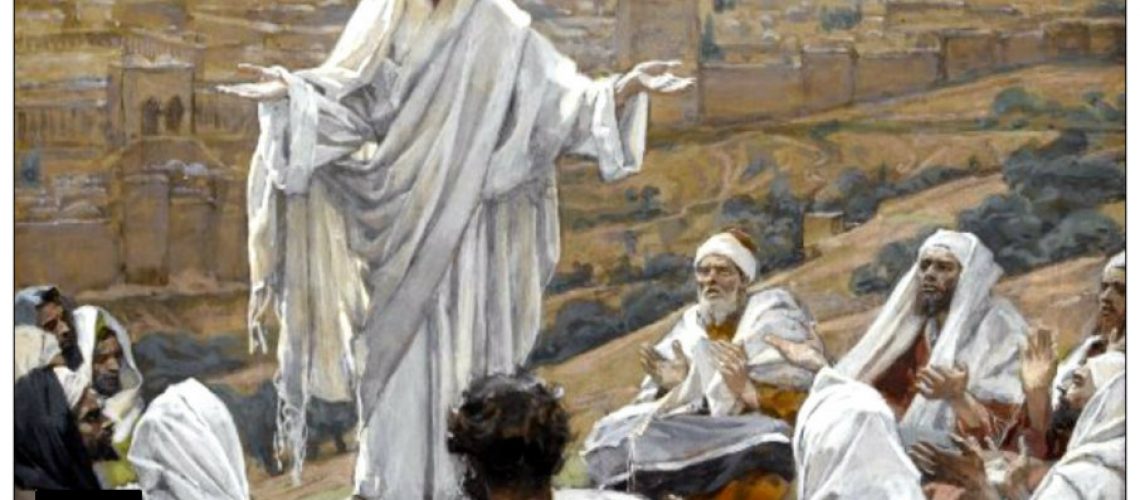
What is prayer and how ought we to pray? It is nearly impossible to hear a homily or read a religious article without receiving the encouragement to engage in more timely and fervent prayer. Do we really know what prayer is? How well do we know how to pray?
Prayer is, after all, the life of the heart of Christians (CCC 2697). So, we would do well to take time to deepen our understanding of how we can better engage in prayer.
While there are many different forms and varieties of prayer, “the Christian tradition comprises three major expressions of the life of prayer: vocal prayer, meditation, and contemplative prayer” (CCC 2721).
Vocal prayer is that type of prayer in which we use our words to communicate with the Lord. Meditation is that type of prayer in which we use our minds to ponder things from the Lord. Contemplation is that type of prayer in which we simply gaze upon the Lord.
While these three forms of prayer differ in their expressions, “they have in common the recollection of the heart” (CCC 2721). Vocal prayer, meditation, and contemplation all come from the heart and are oriented towards God.
Vocal Prayer
One simple way to understand prayer is to recognize it as our dialogue with God. This is most clearly seen in vocal prayer, the form of prayer in which we use our words to communicate our requests, troubles, joys, and fears with the Lord.
The Catechism of the Catholic Church summarizes this form of prayer saying: “Vocal prayer, founded on the union of body and soul in human nature, associates the body with the interior prayer of the heart, following Christ’s example of praying to his Father and teaching the Our Father to his disciples” (CCC 2722).
Because human beings are body-soul composites, meaning we are both material and spiritual due to our having both a body and soul, it is fitting that our communications with God utilize both our body and soul. By vocal prayer, we use our words to express our hearts to God.
When Jesus was asked by his disciples to teach them how to pray, he taught them to pray with their words, to address the Lord as Father (Luke 11:1-4). The Our Father is perhaps the most famous vocal prayer, one that was handed on to us by Christ.
In addition to praying with our words, we ought to pray with our minds – this is meditative prayer.
Meditation
The Christian life requires total dedication to the Lord; not only do we praise God in word and deed, but we must also love and honor him with our thoughts and in our minds. Meditation – far from being a spiritual act belonging only to Eastern religions – is central to the Christian faith and is the form of prayer in which we reflect, day and night, on the Lord and his word.
The Catechism explains that “Meditation is a prayerful quest engaging thought, imagination, emotion, and desire. Its goal is to make our own faith the subject considered, by confronting it with the reality of our own life” (CCC 2723).
For many of us, we excuse our lack of prayer and meditation by saying there is simply not enough time in the day. This is not a novel excuse; people have been busy for centuries. The great spiritual writer, Thomas à Kempis, gives a pithy answer to all those that complain there is simply not enough time for mediation. His response is just as appropriate today as it was in the 15th century. He writes in the Imitation of Christ: “If you avoid unnecessary conversation and idle visits, as well as a preoccupation with the news and various reports, you will find sufficient and appropriate time for good meditations.”
By meditative prayer, we reflect on and absorb the teachings of the Faith, allowing them to nurture and nourish us. By prayerfully reading and meditating on the Scriptures, we can allow them to better shape our thoughts and our heart.
Contemplation
Perhaps the most difficult, but certainly the most rewarding, form of prayer is contemplation. Through contemplative prayer, we simply gaze upon the Lord and allow Him to work in us.
The Catechism explains that “Contemplative prayer is the simple expression of the mystery of prayer. It is a gaze of faith fixed on Jesus, an attentiveness to the Word of God, a silent love” (CCC 2724).
It is by contemplation that we quiet our minds, sit still in the presence of the Lord, and simply look at Him with love – and allow Him to look upon us.
The 16th-century spiritual writer and Doctor of the Church, St. Teresa of Avila, gives a moving call to contemplation that helpfully distinguishes it from meditation and is timely for modern-day Christians. She writes in The Way of Perfection (Chapter 26, pg. 83):
I am not asking you now to think of Him, or to form numerous conceptions of Him, or to make long and subtle meditations with your understanding. I am asking you only to look at Him. For who can prevent you from turning the eyes of your soul (just for a moment, if you can do no more) upon this Lord? You are capable of looking at very ugly and loathsome things: can you not, then, look at the most beautiful thing imaginable? Your Spouse [Jesus] never takes His eyes off you.
It’s easy to spend countless hours gazing upon our screens in a mindless daze – simply scrolling and scrolling. Yet it can be so difficult for us to sit quietly in leisure with the Lord. An episode of our favorite show seems to be over in the blink of an eye, while a handful of minutes in Adoration often seems like an eternity.
St. Teresa of Avila is correct. If we can give our attention to ugly things, how much more ought we give our attention to beautiful things? And what is more beautiful than our God?
A Call to Prayer
For a Christian, prayer is non-negotiable. Just as a regular conversation between friends and loved ones is essential for a mature relationship, so too, regular prayer is necessary for a real and lasting relationship with the Lord.
Throughout the Scriptures and the spiritual tradition of the Church, the necessity of prayer is made clear. In her wisdom, the Church has distinguished three main forms of prayer – vocal, meditative, and contemplative – that act as a spiritual stairway to the Lord.
By vocal prayer, we express our hearts to the Lord, making plain what is in our minds and on our hearts. We share our thoughts, worries, fears, and desires with the Lord who truly listens and cares.
By meditative prayer, we reflect on the Lord, especially on His word spoken to us in the Bible. We move beyond words to think, reflect, and focus on the Lord and His action in our lives.
By contemplative prayer, we reach the pinnacle of our relationship with the Lord. Beyond words and images, we come to the Lord Himself. We gaze upon the face of God in prayer, allowing our Father to look with love upon us.
Surely, there are other forms of prayer, other ways in which we encounter the Lord that may or may not fit neatly within these three categories. The important thing to remember is that there is a tried-and-true tradition in which the Christian soul draws near to the Lord.
For those who feel so compelled, and, hopefully, there are many, I invite you (just as I constantly invite myself) to dedicate yourself with a fervent passion to engage in prayer anew. Ask the Lord how best to speak to Him, listen to His response, and look upon Him and experience His love.


[…] Bel & the Dragon in the Liturgy of Lent – Gregory DiPippo at New Liturgical Movement How To Pray? Three Ways to Encounter the Lord – Hunter Leonard at Catholic Stand Is Facebook Censoring Catholics, New Changes May Provide […]