
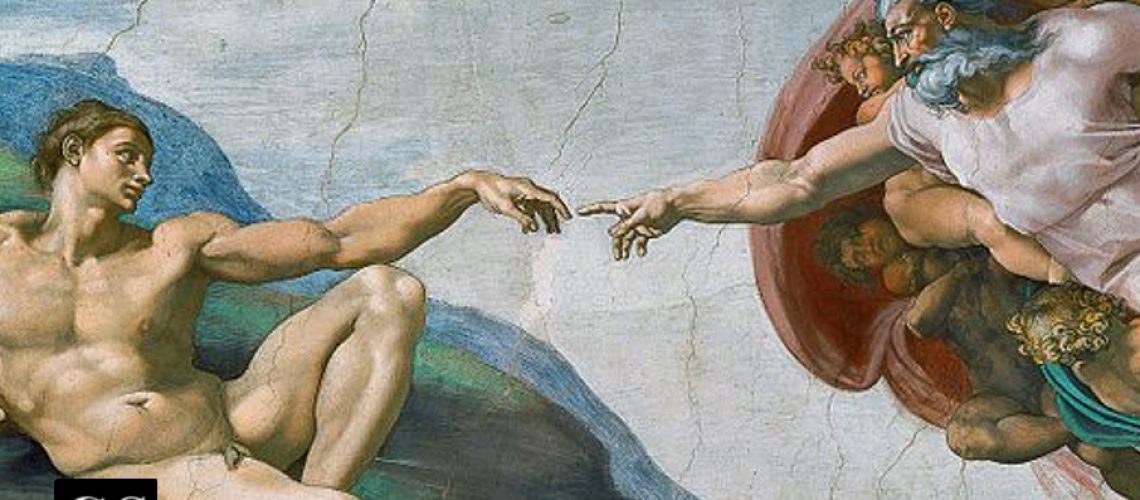
Who’s your God? Asked another way: “Where is your happiness?” Is it in God, the Almighty, the source of infinite light, love, mercy and goodness? Or do you look for happiness elsewhere? Perhaps you’re looking to “share the love,” looking both to God and to some other source to find fulfillment. Yet, Our Lord Himself tells us we must choose–we cannot take a middle-of-the-road position. It simply will not work:
No one can serve two masters; for either he will hate the one and love the other, or he will be devoted to the one and despise the other. You cannot serve God and mammon. (Mt 6:24)
The One, True Source of Love and Happiness
Our interior drive for love and happiness is a powerful motivator. It can lead us either to spiritually good or bad outcomes, depending on where we seek that love and happiness. When we look outside of God, this drive actually can become the root of our problems. This is because true love and happiness come only from God, the source of all true love (1 John 4:16). His is the only love that will satisfy our needs. He is perfect, infinite love. So many of us look for love “in all the wrong places” as the old country western song tells us. And it never really satisfies. Sure, it provides an immediate burst of satisfaction, but that soon fades. Over time, we require more and more of whatever that misplaced love is, to continue to feel satisfied, and it’s easy to become addicted to it.
Pleasure Won’t Provide Lasting Happiness
Where is your happiness–who’s your God? Do you look for the fulfillment of all your desires in pleasure? Will you find true love and happiness in sexual activity? In a similar vein, will eating and drinking–be it measured by the quantity or the quality–provide lasting peace and joy? How about the time you spend with Netflix or other media and entertainment sources? Do they provide you with peace and joy? Even if they do, how long does the warm glow last?
St. Ignatius of Loyola comes to mind here. Recuperating from a war injury, he spent some of his time reading about the saints and the life of Christ. At other times, he daydreamed about romancing a lady of high-ranking nobility. He noticed that, at the end of his reading about Jesus and the saints, he felt satisfied–he was at peace. On the other hand, after his daydreams about the noble lady, he felt restless and dissatisfied. Making the pursuit of pleasure your god will not lead to peace and joy, but actually quite the opposite.
Have You Made Power Your God?
Speaking of peace and joy, if you’re lacking in it, that’s because you are not open to God’s love. You’re pursuing happiness elsewhere. Some people just feel a need to accumulate power over others. When you ask them, “Who’s your God?” they might not admit it, but they have made power the source of their happiness. I suspect, based on my years of working with executives, that some temperaments run the risk of this form of idolatry more than others.
In any event, if staying on top of the heap, wielding the most power, is where you place your happiness, you’re going to become disappointed sooner or later. It’s a tough, competitive world, with many vying for power and willing to do any number of things to obtain it. What they lack in humility, they make up for in obstinacy and perseverance. And consider what Christ tells us: we must humble ourselves and become like children to enter the Kingdom of Heaven (Mt 18:1-4). Doesn’t sound like power will be a true source of happiness either, does it?
Don’t Look to Others’ Opinions for Happiness
Let’s not forget about vanity while we’re considering the false sources of happiness. Trying to gain the approbation from, or esteem in the eyes of, others never results in true happiness. For one thing, everyone’s fickle. Their idea of what’s praiseworthy will change from time to time. For another, what good is their praise and honor to you in your quest for eternal union with God? As Fr. John Paul Thomas (his pen name) tells us in The Path to Holiness: Becoming a Living Sacrifice of Love, desire for approval, praise and honor only leads to anxiety, worry, fear and anger. The one person whose opinion we must care about is Our Lord. His is the only opinion that matters.
Do Your Possessions Own You?
If someone would have asked me, “Who’s your God?” some years ago, I probably wouldn’t have answered it forthrightly. Yet, considering that what you or I do reveals what’s inside of you or me–who our God is, it would have been obvious to even a casual observer. My motto used to be, “You can’t have too many fly rods or fly reels.” My diversion from the pressures of work and the world was spending time on a trout stream (a pursuit of pleasure–see above) with one of many rods and reels.
There’s nothing wrong with enjoying some recreation, as long as it doesn’t become an obstacle to your pursuit of the relationship God wants you to have with Him. And there’s nothing wrong with “stuff,” as long as it doesn’t get in the way of your life with God. It is worth considering whether and how much your possessions own you, though. The choices we make say a lot about us and Who or what we pursue for the sake of love and happiness.
Choices Have Consequences
Where we look for love and happiness has consequences. We’re always choosing either God or our ourselves. When we choose unwisely and we end up with problems in this life, it should be obvious that they’re of our own making. Fr. Michael Casey, OCSO, reminds us of that in A Guide to Living in the Truth. He asks, in so many words, “Who’s your God?” And he suggests that positive attachment to Christ, with detachment from things and people are what we need to pursue. To help with that, we may need help in understanding our own situation, he tells us, because sometimes our desires assume a disguise. They can deceive us.
We’re just not the best judges at times; as Dan Burke from the Avila Institute is fond of saying, we have an infinite capacity to delude ourselves. That’s why we can use the assistance of a spiritual director or confessor. We must engage consistently in mental prayer. Growing in a relationship with another person requires that we spend time with them. Growing in our loving relationship with God requires that we spend time with Him, in mental prayer, as well. As we do so, He’ll help us see those idols we’re pursuing. He’ll give us the grace to abandon them and grow closer to Him if ask for it.
“Believe that He loves you. He wants to help you Himself in the struggles which you must undergo. Believe in His Love, His exceeding Love.” ― St. Elizabeth of the Trinity


[…] He has loved us? After all, that’s going to cost us something. Dying to self always does.So, how attached are we to our will, our stuff, our relationships, and others’ opinions of us? If we’re not […]
[…] how attached are we to our will, our stuff, our relationships, and others’ opinions of us? If we’re not […]
[…] valuable enough to be of concern at this time? Perhaps they have prioritized other prizes–(other gods)–over the gift of eternal […]
[…] Power Shines Even in ‘Creepiest’ Exorcism Case, Says Psychiatrist – The Daily Register Who’s Your God? – Com Cingoranelli at Catholic Stand Francis, Supreme Legislator? No, the Law’s Gravedigger […]