
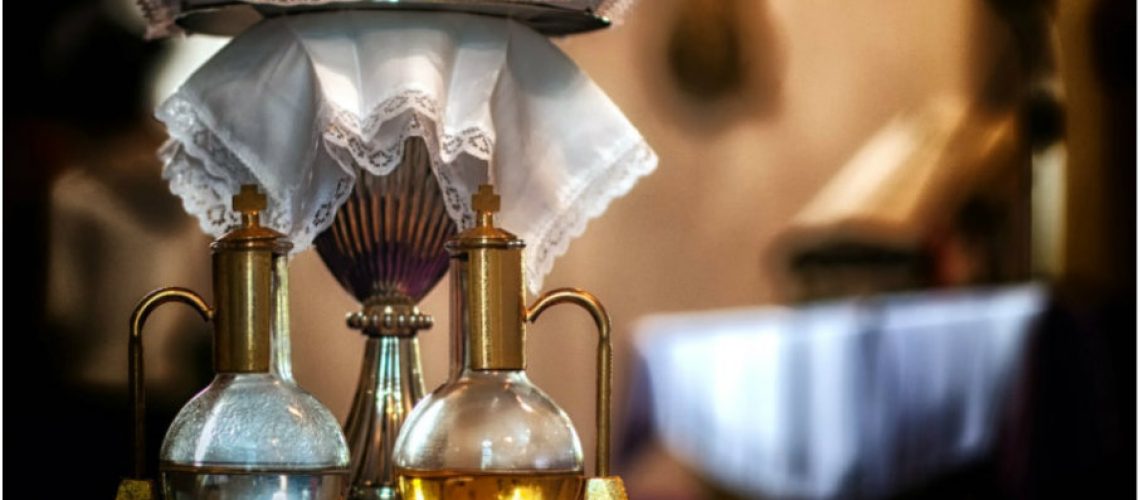
We are living the Joyful Mysteries of the Rosary, specifically the fifth Joyful Mystery in the loss of Jesus, before his finding in the Temple and his reunion with Mary and Joseph.
The First Joyful Mystery
The Joyful mysteries begin with the Annunciation at which the archangel Gabriel reveals God’s plan to Mary and she accepts the Incarnation of God within her womb.
“Look, the virgin shall conceive and bear a son, and they shall name him Emmanuel,” which means, “God is with us.” (Matthew 1:23)
It is fine that we gentiles should understand through philosophy the moral code written by God in our hearts (Romans 2:14-15). But it is astounding that the Word became flesh and lived among us (John 1:14), thanks to the consent of our Blessed Mother. This is the beginning of God’s being with us incarnationally.
The Second Joyful Mystery
In the second Joyful Mystery, Elizabeth wonders, “Why has this happened to me, that the mother of my Lord comes to me?”
When Elizabeth heard Mary’s greeting, the child leaped in her womb. And Elizabeth was filled with the Holy Spirit and exclaimed with a loud cry, “Blessed are you among women, and blessed is the fruit of your womb. And why has this happened to me, that the mother of my Lord comes to me? For as soon as I heard the sound of your greeting, the child in my womb leaped for joy. (Luke 1:41-44)
Elizabeth’s question implies the question of wonderment: Why has this happened to me that my Lord comes to me personally and materially in the flesh in Holy Communion?
The Third Joyful Mystery
In the third Joyful Mystery, God manifests himself as incarnate with us. He does so to the shepherds as representative of God’s chosen people. Nearly at this same time, Magi from the East, as representative of the gentiles, prompted by their own personal and strange enlightenment, come to pay homage to the newborn King of the Jews, who was to prove to be the Savior of all people. God is to be with us incarnationally all over the world in the new covenant.
The Fourth Joyful Mystery
The fourth Joyful Mystery commemorates the offering of the infant Jesus, the Incarnate Word, to God in accord with the Jewish prescription for every firstborn male child. On this occasion, the prophetess Anna and the holy man Samuel speak highly of the child. Samuel identifies Jesus as the Messiah,
“A light for revelation to the gentiles and glory for your people Israel.” (Luke 2:32)
The Joyful Mysteries in Summary: God with Us
We know of these mysteries through the teaching of the Church. We experience Emmanuel, God with us, intimately in the Mass. We are present at Mass each weekend during the observance of Sunday. We participate in the sacrifice of the Lamb of God for the forgiveness of sin and consummate our participation by consuming the Lamb of Sacrifice. The Catholic Faith is at its core a material reality, the personal, material experience of God with us in the flesh.
Suddenly, inexplicably, we have lost Him in the coronavirus pandemic. It is not just relatively small groups subject to persecution. It is all of the laity worldwide. He was Emmanuel, God with us. Now he is gone. The Catholic Faith is not so much the creed or moral code. It is a material friendship with God Incarnate. And now he is gone.
The Fifth Joyful Mystery
We are living the loss of Jesus as his mother and father experienced it when he was twelve years old. We commemorate their anxiety in the fifth Joyful Mystery. But now it is our personal experience of loss, our bewilderment. Why have you abandoned us? We will probably never know in this life, just as his answer to his mother Mary was enigmatic:
When his parents saw him they were astonished; and his mother said to him, “Child, why have you treated us like this? Look, your father and I have been searching for you in great anxiety.” He said to them, “Why were you searching for me? Did you not know that I must be in my Father’s house?” (Luke 3:48-49)
Mary and Joseph in heaven must understand our anxiety and bewilderment. Of course, God in the person of Jesus, our Emmanuel, does too. But, we don’t.
Receiving of Communion by the Laity
In the earliest days of the Church, the Christians were known for the breaking of the bread:
They devoted themselves to the apostles’ teaching and fellowship, to the breaking of bread and the prayers. (Acts 2:42)
St. Augustine in Letter to Januarius 3 considered whether it is permissible to refrain from Holy Communion, if not excommunicated by one’s bishop. (The present weakness of the Episcopacy is evident in the rarity of exercising the power of excommunication by bishops. They rely on so-called “automatic” excommunication as if one could by force prevent his own entry into the assembly for Mass.)
The practical discipline for the receiving of Holy Communion has varied over the centuries. In the nineteenth and early twentieth centuries, the custom was for the laity to receive infrequently. However, during his pontificate from 1903 to 1914, St. Pius X tried to restore the practice of frequent reception by the laity. His efforts did not come to fruition until 1983 when the communion fast was relaxed to one hour, which was the consequence of the introduction of evening vigil Masses in 1953.
It is in the present context of such frequent experience of “God with us” in the intimacy of consuming the Lamb sacrificed for our sins, that throughout the entire world we are suddenly cut off. We are even barred from attending Mass.
In our anxiety, we repeat the words of Mary, “Why have you done this to us?” Yet, we are certain to be bewildered by any answer. We will not understand it in this life.

