

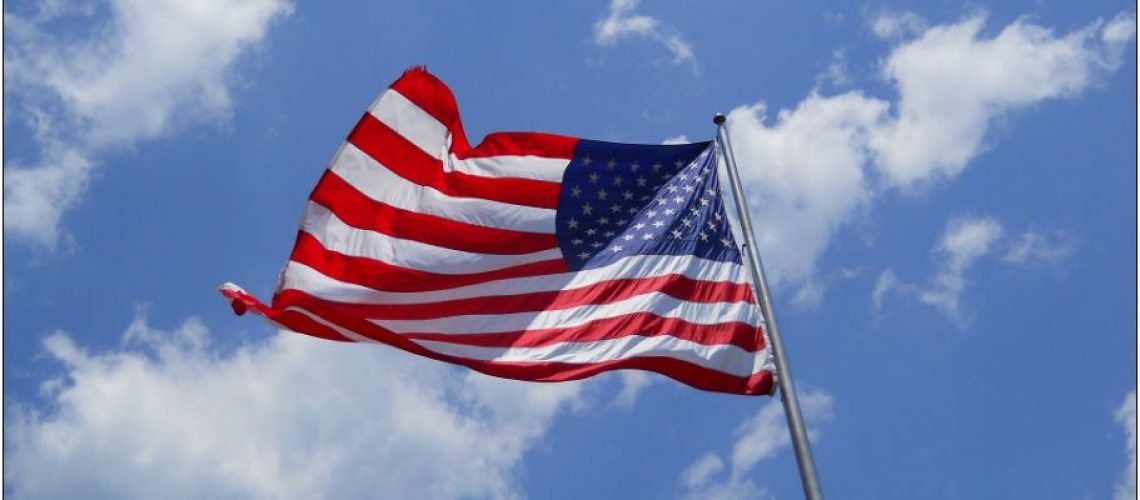
There are many themes associated with the 250th anniversary of the founding of the United States. Some of the most noteworthy themes are liberty, freedom, equality, and unity.
But there is another theme linked to our founding, especially among the founders, that I have personally experienced at many levels. This concept is “brotherhood.” And it can have many implications.
Our country’s Founding Fathers are central to our 250th birthday. These men forged a brotherhood that created a nation. In this respect the last sentence of the Declaration of Independence is an example that epitomizes the notion of brotherhood that could have propound consequences:
“And for the support of this Declaration, with a firm reliance on the protection of divine Providence, we mutually pledge to each other our Lives, our Fortunes and our sacred Honor.”
This pledge served as a “death warrant” if these men were captured by the British. It reflects the guilt by association aspect of brotherhood. While not all brotherhoods necessarily put one in harm’s way, those that do cause the closest bonding – the necessity of relying on one another for survival.
Brotherhood
The term “brotherhood” can refer to an association, society, or community of people linked by a common interest, values, religion, trade, or mission. A key characteristic of a brotherhood is that of human bonding.
The “bonds of brotherhood” involve mutual respect, loyalty, and a deep-seated feeling of connection. There is an emphasis on mutual support, trust, and shared experiences within a given group with a strong commitment to collective goals and values.
Brotherhood bonds are commonly associated with organizations that foster strong relationships such as the military, public safety, sports teams, and fraternal organizations with a strong sense of mission.
There is an importance of emotional ties and camaraderie with a sense of unity in brotherhoods. Such brotherhoods use uniforms, patches, pins, and tattoos to foster this unity. In turn, such displays allow both internal and external recognition for belonging to a given brotherhood.
Brotherhood Example: the Military
There is perhaps no better illustration of the bonds of brotherhood than the military. The military call to duty definitely puts those in this brotherhood in harm’s way. Stephan Ambrose’s book, and the later television series “Band of Brothers,” highlights this type of brotherhood in a modern context.
The title of the book is from a line in Shakespeare’s play “Henry V.” In the play King Henry gives a rousing speech to his outnumbered troops on St. Crispin’s Day, right before the Battle of Agincourt. He tells his troops “We few, we happy few, we band of brothers” shall be remembered to the end of the world.
Ambrose’s “Band of Brothers” follows the true experiences of a group of paratroopers in World War II. Paratroopers are a unique band of military brothers like Rangers or Marines. Each of these groups takes on special demands. Such a brotherhood I have personally experienced.
That notion of special demands is noted in some of the phrases that are part of the Paratrooper Creed I had to memorize in Army Jump School many years ago:
“I shall never fail my comrades by shirking my duty or training, but will always keep myself mentally and physically fit and will shoulder my full share of the task, no matter what ever it may be.
“Surrender is not in my creed. I shall display a higher degree of initiative than is required of other troops and will fight on to my objective and mission, though I be the lone survivor.”
My personal experience belonging to such a “band of brothers” was that we maintained contact for close to 60 years helping each other out when need be. Sadly all of my brothers have passed. I am the last man standing from my outfit.
Ongoing Brotherhood
Such brotherhoods continue long after active service through related associations. Veterans organizations such as American Legion, Veterans of Foreign Wars, 82nd Airborne Association, etc., focus on community service and also provide aid for “wounded warriors.”
But such brotherhoods can go beyond one’s close circle of comrades. There is also an unofficial international “fraternity” whereby I have been privileged to meet former paratroopers from other nations all over the world. We call each other “brother” and many of my brothers have offered me a free beer.
The military brotherhood has been a critical element of our nations history for the last 250 years. From the revolution’s patriots to today’s troops, these brotherhoods provided the security for our freedoms to unfold over the years. Yet, the cost of these freedoms has been great. I reflected upon them in my last essay about Memorial Day noting that “Freedom is not free.”
Work and Social Brotherhoods
Many different work settings can forge brotherhoods. A strong sense of “mission” is all that it needed. Law enforcement, fire, and emergency services have similar chemistries to that found in the military. In each of these first responder services being in harm’s way is an occupational risk.
Trade unions also often use “Brotherhood of . . . “ as part of the Union’s title, and have their own “Union Halls” for social events. I belonged to the United Mine Workers for heavy construction jobs in the past and saw first-hand how some members had very strong bonds to the union and brother workers.
I was also privileged to work years ago with a team of dedicated physical fitness professionals. We installed exercise programs to prevent delinquency and substance abuse among inner city youth. We also installed physical readiness programs in military and law enforcement agencies. The nature of the work “mission” forged a brotherhood bond, and we have gotten together once a year for over 20 years.
College fraternities and sororities also foster a brotherhood and sisterhood that can last for decades. I was fortunate to be in a unique fraternity, and, like with my Army buddies, we have helped our fraternal brothers out who had difficulties over the years. For the last 34 years we’ve held reunions every other year, but our numbers are diminishing now, due to age.
Social brotherhoods such as the Elks, Rotary, etc., are social associations that have a heavy emphasis on community service. Members often use the term “brother (name)” when greeting each other reflecting the brotherhood aspect of their relationship.
The Brotherhood of Faith
There is also a definite brotherhood among the Christian faithful, especially among Catholics, that has been in existence for centuries. We often hear the terms priestly brotherhood and brotherhood of Bishops. “Brothers” and “sisters” also make up the wide variety of monastic and other religious orders.
Along the lines of a military brotherhood, the Knights Templer and Knights Hospitallers, during the Crusades, were representative of a brotherhood bond. And even today, lay driven fraternal service orders such as the Knights of Columbus have a brotherhood ethos. As a Knight of Columbus, I pledge to uphold the four pillars of the order – Charity, Fraternity, Unity, and Patriotism. We also call one another “Brother” in our interactions.
The Church often uses the term “brotherhood of believers” reflective of 1 Peter 2:17. Different Bible versions use slightly different language to denote this brotherhood. The Douay-Rheims Bible passage, for instance, states, “Honour all men. Love the brotherhood. Fear God. Honour the king.” The Revised Standard Version Second Catholic Edition is similar, saying, “Honor all men. Love the brotherhood. Fear God. Honor the emperor.” The New American Bible (Revised Edition), however, uses more ‘inclusive’ language: “Give honor to all, love the community, fear God, honor the king.”
1 John 1:3 expands the love for brotherhood to love of fellowship. It says, “…what we have seen and heard we proclaim now to you so that you to may have fellowship with us for our fellowship is with the father and with his son Jesus Christ.”
John makes it clear that while among believers there is a brotherhood that is bond of fellowship, that brotherhood, more importantly, is also a bond to The Holy Trinity.
Conclusion
The United States was conceived of, created, and sustained over the years with a brotherhood ethos among its citizens in many dimensions. I am blessed to have been part of brotherhoods over the years that have contributed to our country’s well-being. And, in my mid-80s, I still appreciate the bonds of fellowship that have enriched my life.
However, the greatest brotherhood is that I have developed with my faith and fellowship with God.

