
Wouldn’t it be wonderful if someone you love and who loves you very much won the Lottery and wanted to share it with you? You could have as much as you needed to pay off all your bills and not only that, but also all the debts of your friends and family who could no longer work. Why would you say no? Oh, but there is a catch. First you have to balance your bank account, gather all the bills together. And you have to come to their house for a celebration and a great feast. Considering what you will gain, why would you turn the gift down?
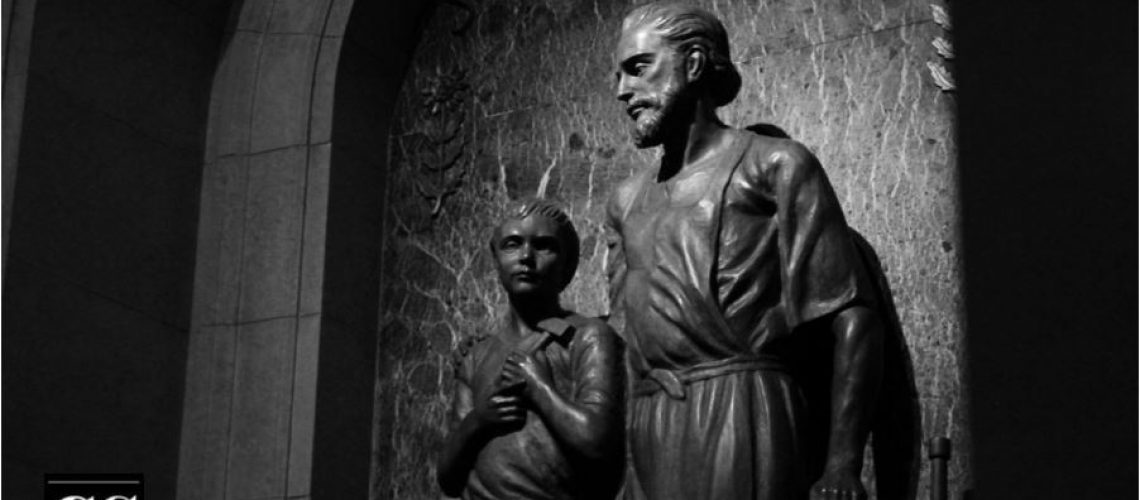
Well, basically, that is what the Church is offering to all the faithful during this Year of Saint Joseph. Until 8 December 2021, all the faithful have the opportunity to commit themselves, with prayer and good works, to obtain, with the help of St Joseph, head of the heavenly Family of Nazareth, comfort and relief from the serious human and social tribulations that besiege the contemporary world today. (cf Decree of Plenary Indulgences)
That is worth repeating: to obtain comfort and relief from the serious human and social tribulations that besiege the contemporary world today.
A Plenary Indulgence is granted to the faithful who, with a soul detached from any sin, shall participate in the Year of Saint Joseph, in the occasions and with the modalities indicated by this Apostolic Penitentiary under the three customary conditions of sacramental confession, Eucharistic communion and prayers for the Holy Father’s intentions.
What, though, is an Indulgence? What is it for and what does it do?
An indulgence is a remission of the temporal punishment due to sins whose guilt has already been forgiven by Sacramental Confession.
An indulgence is obtained through the Church who, by virtue of the power of binding and loosing granted her by Christ Jesus, intervenes in favour of individual Christians and opens for them the treasury of the merits of Christ and the saints to obtain from the Father of mercies the remission of the temporal punishments due for their sins. Thus the Church does not want simply to come to the aid of these Christians, but also to spur them to works of devotion, penance, and charity.
Since the faithful departed now being purified are also members of the same communion of saints, one way we can help them is to obtain indulgences for them, so that the temporal punishments due for their sins may be remitted. Catechism of the Catholic Church 1478-79
The Treasury of the Church
Back to my opening analogy, the debts are the ones owed because of our sins. The one who loves us very much is our Lord, Jesus Christ, and the treasure used to pay the debts is the ‘treasury of the Church’.
The ‘treasury of the Church’ is the infinite value, which can never be exhausted, which Christ’s merits have before God. They were offered so that the whole of mankind could be set free from sin and attain communion with the Father. In Christ, the Redeemer himself, the satisfactions and merits of his Redemption exist and find their efficacy.
This treasury also includes the prayers and good works of the Blessed Virgin Mary. They are truly immense, unfathomable, and even pristine in their value before God. In the treasury, too, are the prayers and good works of all the saints, all those who have followed in the footsteps of Christ the Lord and by his grace have made their lives holy and carried out the mission the Father entrusted to them. In this way they attained their own salvation and at the same time cooperated in saving their brothers in the unity of the Mystical Body. CCC1478-9
To Bind and to Loose
Let us go back to the early years of the Church. We know there was a time when all Christians were converts, baptised as adults. This baptism was a rebirth giving forgiveness of all past guilt as well as all punishment due to sins committed before baptism. Afterwards, for the rest of your life all sin was to be avoided.
Unfortunately, this ideal was not the reality and after many years, many prayers, and with the help of the Holy Spirit a way was developed to better fully express the loving mercy of our Lord so that the faithful could return to fullness of communion. This is the Sacrament of Reconciliation (or Penance). At the end of Confession, we are given a penance to do – usually a few prayers or a verse of the Bible to read and pray over. We are free from the guilt of our sin, but we may still have work ahead of us. By meeting the conditions to gain an Indulgence, we are clearing away the debt.
We are able to do this with the help of St Joseph, Guardian of the Redeemer, Patron of the Catholic Church, and according to St Teresa of Avila ‘protector for all the circumstances of life.’
Several ways to gain Plenary Indulgences during this Year of St Joseph:
- Contemplate the Lord’s Prayer for at least 30 minutes or participate in a Spiritual Retreat of at least one day which involves a meditation on Saint Joseph,
- Fulfil a corporal or spiritual work of mercy after the example of Saint Joseph, a “just man” who can spur us to rediscover the value of silence, prudence and integrity in carrying out our duties,
- The recitation of the Holy Rosary in families and among betrothed couples in order to create an atmosphere of intimate communion, love and prayer as lived by the Holy Family,
- Entrust your life daily to the protection of Saint Joseph and ask for the intercession of the Worker of Nazareth that those in search of work may find employment and the work of all people may be more dignified,
- Recite the Litany to Saint Joseph or another prayer to Saint Joseph in their entirety in favour of the Church persecuted ad intra and ad extra and for the relief of all Christians who suffer any form of persecution.
In addition to the above and to reaffirm the universality of Saint Joseph’s patronage over the Church, the Plenary Indulgence is granted to the faithful who recite any prayer legitimately approved or act of piety in honour of Saint Joseph on the following dates:
- 19 March, St. Joseph, Husband of the Blessed Virgin Mary;
- 1 May, St Joseph the Worker and Day of Prayer for Human Work;
- the 19th of every month; and
- every Wednesday, the day dedicated to Saint Joseph’s memory.
For Those Who Cannot Get to Mass and Confession
In this time of the Covid pandemic, the gift of the Plenary Indulgence extends especially to the elderly, the sick, the suffering and all those who for legitimate reasons are unable to leave the house. The Indulgence can be gained when, with a soul detached from any sin and with the intention to fulfil, as soon as possible, the three customary conditions (confession, communion and prayer for the Pope’s intentions) they shall recite an act of piety in honour of Saint Joseph, Comfort of the Sick and Patron of a Happy Death, faithfully offering to God their suffering and the hardships of their life. This can be done in their own home or wherever the impediment detains them.
It is best if everything is done the same day, but the rites and prayers can be carried out several days before or after the indulgenced work. One confession is enough for several indulgences as long as you remain without sin, but each indulgence needs its own Eucharistic Communion and Prayers for the Holy Father’s intentions.
At first sight, this may all seem easy, but there are a few things to note. Firstly, for a plenary indulgence, a soul detached from every sin is essential. There is an account of St. Philip Neri preaching a jubilee indulgence in a crowded church. Although many were there, a revelation was given to him that only two people in the church were actually getting it, an old beggar woman and the saint himself.
You must be completely free from even the slightest affection for even the most venial sin. To be certain we meet these criteria, we must spend time looking at ourselves honestly. In what ways are we more attached to creatures and the created than we are to God? What choices do we make, and why?
Further Resources about Indulgences
A broader, yet still brief definition and examples of Indulgences can be found here and for those who would like to dig deeper, much more detailed information about Indulgences is located in the “Handbook of Indulgences”.
If you have a chance, look at some old prayer cards and you will see the indulgences granted for saying them. For example, a Prayer to St Joseph has an indulgence of 300 days. The indulgence for reciting the Angelus was 100 days. These are not days off from time served in Purgatory because there is no time there. Rather, these were the equivalent days you would have had to do penance in the days of the early church before a private confession was brought to Europe by the Irish monks.
But that, my friends, is a subject for another column.


[…] New Year – Top 3 Fundraising Tips for Catholics – B. Sokolowski at CatholicFundraiser.net Sharing in the Treasury of the Church – Charlette Mills at Catholic […]